

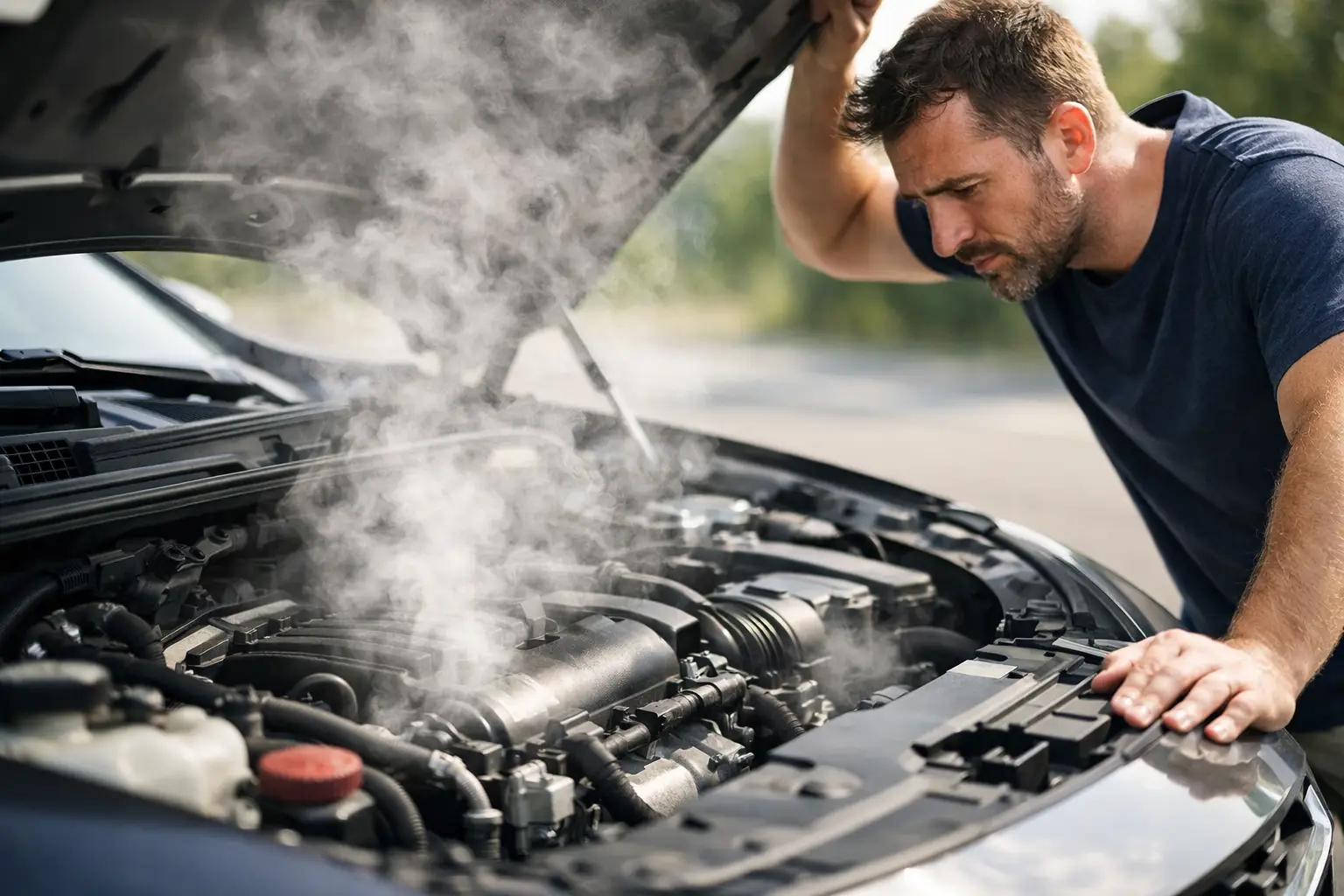
A temperature gauge climbing toward red in traffic is not a warning to ignore until you get home. Car engine overheating causes range from a simple coolant leak to a failed cooling fan or a more serious internal engine problem. Acting quickly can be the difference between a straightforward repair and expensive damage to the head gasket, cylinder head, or engine.
What to Do When Your Engine Starts Overheating
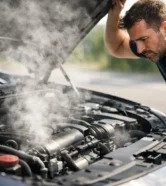
If you see a temperature warning light, notice steam from under the hood, or smell a sweet coolant odor, turn off the air conditioning immediately. If the gauge is still rising, turn on the heater and fan to maximum. It is uncomfortable, but the heater core can draw some heat away from the engine while you find a safe place to stop.
Pull over as soon as it is safe, shift into park, and shut the engine off. Do not continue driving just because the warning light comes and goes. An engine can overheat quickly under load, especially in heavy traffic, on a hot day, or while towing.
Do not open the radiator cap or coolant reservoir cap while the engine is hot. The cooling system is pressurized, and hot coolant can spray out with enough force to cause serious burns. Let the vehicle cool completely before checking anything under the hood. If there is heavy steam, a strong burning smell, or coolant pouring onto the ground, arrange a tow rather than restarting the vehicle.
The Most Common Car Engine Overheating Causes
A modern cooling system depends on coolant, airflow, circulation, and pressure. When one part fails, engine temperature can rise. Professional diagnostics matter because the symptom may look the same even when the underlying repair is very different.
Low Coolant or a Coolant Leak
Low coolant is one of the most frequent causes of overheating. Coolant absorbs engine heat and carries it to the radiator, where that heat is released. When the level drops too far, there is not enough fluid to control temperature properly.
Leaks can come from cracked hoses, loose clamps, a damaged radiator, a leaking water pump, a worn reservoir, or a failing radiator cap. Some leaks are easy to spot as a puddle of green, orange, pink, or yellow fluid. Others only appear when the system is hot and pressurized, or they evaporate on engine components before reaching the ground.
Adding coolant may temporarily bring the level back up, but it does not fix the leak. Using the wrong coolant type or mixing incompatible products can also reduce corrosion protection. The right repair is to find the source, fix it, and refill the system with the manufacturer-approved coolant mixture.
A Stuck Thermostat
The thermostat controls when coolant flows from the engine to the radiator. When the engine is cold, it stays closed to help the engine reach operating temperature efficiently. Once the engine warms up, it opens and allows coolant to circulate.
If the thermostat sticks closed, hot coolant remains trapped in the engine. The temperature gauge may rise quickly, often after a few minutes of driving. A thermostat is usually not the most expensive cooling-system part, but ignoring a failed one can lead to major engine repairs.
Faulty Radiator Fans or Electrical Problems
Radiator fans pull air through the radiator when the vehicle is stopped, idling, or moving slowly. At highway speeds, natural airflow often does most of the work. That is why a vehicle that runs hot in stop-and-go traffic but cools down on the highway may have a fan-related problem.
The issue could be a failed fan motor, blown fuse, damaged wiring, faulty relay, temperature sensor, or control module. On some vehicles, the fan may run but not at the correct speed. Accurate testing prevents replacing parts based on guesswork.
A Clogged or Damaged Radiator
The radiator needs clear internal passages and unobstructed external airflow. Over time, old coolant can break down and leave deposits that restrict coolant flow. Rust, sediment, and contaminated coolant can create hot spots inside the engine even if the radiator looks fine from the outside.
Externally, leaves, road debris, dirt, or bent cooling fins can reduce airflow through the radiator and air-conditioning condenser. A minor blockage may only become noticeable during a heat wave, long uphill drive, or extended idle. A technician can assess radiator flow, condition, and cooling performance before recommending a flush or replacement.
Water Pump Failure
The water pump circulates coolant through the engine, heater core, hoses, and radiator. If its impeller is damaged, bearing is worn, or drive belt is slipping, coolant may not move fast enough to remove heat.
A failing water pump may leave coolant around the front of the engine, make a whining or grinding sound, or cause repeated overheating. However, not every failing pump leaks or makes noise. Because access can vary widely by vehicle, the repair cost depends on the pump location and whether related parts, such as a timing belt, should be serviced at the same time.
A Failed Radiator Cap or Loss of System Pressure
The radiator cap does more than seal the system. It helps maintain pressure, which raises the coolant’s boiling point. A weak cap can allow coolant to boil or escape at temperatures where a properly sealed system would still operate normally.
This is a small part with a big job. Replacing a cap without checking the rest of the system is not always the answer, but pressure testing can identify whether a cap, hose, radiator, or another component is losing pressure.
Head Gasket or Internal Engine Damage
A blown head gasket can allow combustion gases into the cooling system or coolant into the engine cylinders. This can cause persistent overheating, coolant loss with no visible external leak, white exhaust smoke, rough running, bubbling in the coolant reservoir, or milky-looking engine oil.
These symptoms need prompt professional attention. Head-gasket problems are more likely after a severe overheating event, but they can also be the original cause. Continuing to drive risks warping the cylinder head or causing more extensive engine damage.
Why Overheating May Only Happen in Certain Conditions
The driving pattern provides useful clues. Overheating at idle often points to reduced radiator airflow, such as a bad cooling fan. Overheating at highway speeds can suggest low coolant, poor circulation, a clogged radiator, or a thermostat issue. If the temperature rises while towing, climbing hills, or carrying a heavy load, the cooling system may be marginal even though it seems normal on short local trips.
A heater that suddenly blows cold while the engine is overheating can indicate low coolant or an air pocket in the system. On the other hand, a temperature gauge that moves erratically may involve a sensor or electrical problem. The gauge should never be dismissed as “just a sensor” until the actual engine temperature has been tested.
How to Prevent an Overheating Repair
Prevention is usually less costly than roadside trouble. Check your coolant level periodically when the engine is cold, and watch for puddles, sweet odors, or residue around hoses and the radiator. Follow the recommended coolant service interval for your vehicle, not a one-size-fits-all schedule.
Pay attention to changes that seem minor: a temperature gauge running higher than usual, cooling fans that never come on, frequent coolant top-offs, or a heater that performs inconsistently. These are early warnings, not inconveniences to put off until the next oil change.
Regular inspections are especially valuable for commuters, delivery drivers, fleet vehicles, SUVs, and trucks that spend long hours in traffic or carry heavier loads. A cooling-system pressure test, fan operation check, and inspection of belts, hoses, coolant condition, and radiator flow can reveal problems before the engine overheats.
When to Schedule a Cooling-System Inspection
If your vehicle has overheated once, it deserves an inspection even if it seems to be running normally again. Repeated overheating, visible coolant leaks, steam, warning lights, or unexplained coolant loss should be treated as urgent. A certified technician can test the system under the conditions where it fails and provide clear answers about the repair your vehicle actually needs.
At JAK Tire Service, the focus is on precision diagnostics, honest recommendations, and repairs that help keep your vehicle dependable on busy daily drives. Addressing an overheating concern early protects your engine, your schedule, and your budget – and helps you drive away with confidence.