

The oil-pressure light comes on during a commute, and it is tempting to tell yourself you will check it after work. That is one warning worth taking seriously. Can low oil damage engines? Yes. Oil is what keeps fast-moving engine parts separated, cooled, and clean. When the level drops too far, damage can begin quickly, especially under highway speeds, heavy loads, or stop-and-go traffic.
A low oil level does not always mean the engine is already ruined. Catching it early can be as simple as adding the correct oil and finding out why it was low. Ignoring the warning signs, however, can turn a routine maintenance visit into an expensive engine repair or replacement.
Why Engine Oil Matters So Much
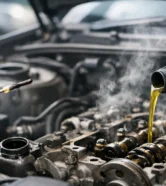
Engine oil does much more than make parts slippery. It forms a thin protective film between components that move at high speed, including the crankshaft, bearings, camshafts, pistons, and cylinder walls. That film reduces friction so metal parts do not grind directly against one another.
Oil also carries heat away from critical components. Your cooling system handles much of the engine’s heat, but oil protects areas coolant cannot reach as effectively. It helps suspend dirt and combustion deposits until the oil filter can capture them, and it helps limit corrosion inside the engine.
When the oil level is low, the oil pump may not be able to supply a consistent amount of oil in every driving condition. A hard brake, sharp turn, steep hill, or rapid acceleration can shift oil away from the pickup tube in the oil pan. The result can be a brief loss of pressure. Even short periods of poor lubrication can create wear that adds up over time.
Can Low Oil Damage Engines Right Away?
It depends on how low the oil is, how long the vehicle is driven, and the engine’s condition. Being a half-quart low may not cause immediate trouble in many vehicles, although it still deserves attention. Driving with little or no oil, or continuing to drive after an oil-pressure warning appears, can cause severe damage in minutes.
The first damage often occurs at engine bearings. These precision parts rely on a pressurized oil film. Without it, friction creates extreme heat and can score the bearing surfaces. If a bearing fails, you may hear a deep knocking sound from the engine. At that point, the crankshaft and other internal parts may also be damaged.
Low oil can also affect variable valve timing systems, timing chains, turbochargers, and hydraulic lifters. Many modern engines depend on clean, pressurized oil for these systems to work correctly. A turbocharger is particularly vulnerable because it spins at exceptionally high speeds and relies on oil for lubrication and cooling.
In the worst case, the engine can seize. That means internal parts become so overheated or damaged that the engine can no longer turn freely. A seized engine is rarely a simple repair.
Warning Signs You Should Not Ignore
The oil-pressure warning light is the most urgent signal. It often looks like a small oil can. Unlike a maintenance reminder, this light can indicate that the engine does not have enough oil pressure to operate safely. Pull over as soon as it is safe, turn off the engine, and check the oil level after the engine has had a few minutes to settle.
Do not confuse an oil-pressure light with an oil-change reminder. A reminder is based on mileage or time and usually means service is due soon. A red oil-pressure warning means stop driving until the problem is checked.
Other signs of low oil or lubrication trouble include ticking or tapping from the top of the engine, a louder-than-normal engine, burning-oil smells, smoke from the exhaust, reduced performance, or visible oil spots where you park. A burning smell may mean oil is leaking onto hot engine or exhaust components. Blue-gray exhaust smoke can mean the engine is burning oil internally.
A deep knock, grinding noise, or sudden loss of power requires immediate attention. Continuing to drive may substantially increase the repair cost.
How to Check Your Engine Oil Correctly
Checking the oil takes only a few minutes and gives you useful information before a small issue becomes a major one. Park on level ground and turn off the engine. Many vehicles provide the most accurate reading after the engine has been off for several minutes. Check your owner’s manual for the manufacturer’s recommendation, since procedures can vary.
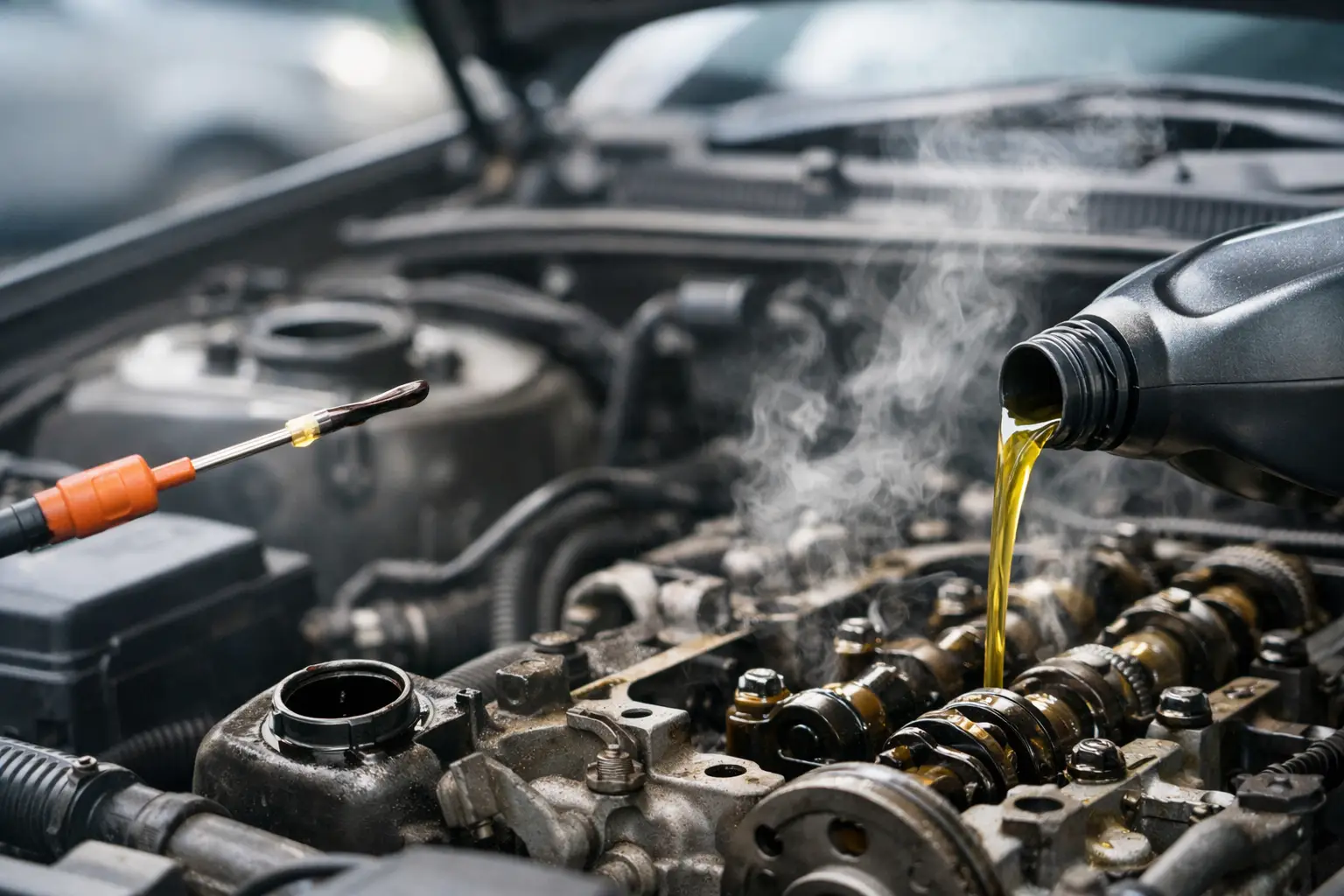
Pull out the dipstick, wipe it clean, fully reinsert it, then remove it again. The oil level should fall between the low and full marks. If it is near or below the low mark, add the oil type and viscosity specified for your vehicle in small amounts. Wait a moment and recheck rather than overfilling.
Overfilling is not harmless either. Too much oil can foam, increase pressure, and create leaks or other problems. If you are unsure which oil your vehicle needs, a professional oil change service can confirm the correct specification.
Some newer vehicles do not have a traditional dipstick. They display oil level information through the instrument panel. Follow the vehicle’s menu instructions and make sure it is parked level before relying on the reading.
Why Is the Oil Level Low?
Oil does not disappear without a reason. Older engines may use a modest amount of oil between changes, but a noticeable drop should be investigated. Leaks are common and can come from valve cover gaskets, oil pans, drain plugs, filters, seals, or timing covers. A small leak may leave only a few drops on the driveway, while other leaks collect on underbody covers and remain hidden.
An engine can also burn oil. Worn piston rings, valve seals, turbocharger issues, or problems with the crankcase ventilation system can allow oil into the combustion chamber. You may notice blue-gray exhaust smoke, frequent low readings, or oil consumption that keeps increasing.
Sometimes the cause is less complicated: an oil filter or drain plug may not have been sealed correctly after service, or the wrong filter may have been installed. This is one reason professional workmanship matters. A proper oil service includes checking for leaks, verifying the level, and using the right oil and filter for the vehicle.
What to Do If Your Oil Is Low
If the dipstick shows low oil but the engine is running normally and there is no oil-pressure warning, add the correct oil until it reaches the proper range. Then schedule an inspection if you do not know why the level dropped. Keep an eye on the level over the next several days and note any fresh leaks, smoke, or unusual noise.
If the oil-pressure warning light is on, the level is extremely low, or the engine is making knocking or grinding sounds, do not keep driving. Shut the engine off and arrange for the vehicle to be inspected. Adding oil may correct the issue if the level is low, but it will not fix a failed oil pump, blocked pickup screen, faulty sensor, or internal engine damage.
For drivers who depend on their vehicles for school runs, commuting, rideshare work, deliveries, or fleet service, this caution is especially practical. Downtime costs more than a timely inspection, and a preventable engine failure can put a vehicle out of service for weeks.
Preventing Low-Oil Damage
Follow your manufacturer’s recommended oil-change interval, but do not assume the interval alone eliminates the need to check the level. Vehicles that make frequent short trips, tow, idle extensively, drive in heavy traffic, or have higher mileage may need closer attention.
Checking the oil about once a month is a sensible habit for most drivers. Check it more often before a long road trip, after noticing a leak, or if your vehicle has a history of using oil. Keep a quart of the manufacturer-approved oil in the vehicle if appropriate, but treat it as a backup, not a permanent solution to falling oil levels.
At JAK Tire Service in North York, technicians can inspect for external leaks, assess oil consumption concerns, and diagnose warning lights before they become larger repairs. Clear answers and accurate service are the goal, not unnecessary work.
Your engine rarely gets a second chance after prolonged oil starvation. Check the level, respond quickly to a warning light, and have the cause of low oil diagnosed so your vehicle stays safe, dependable, and ready for the road.