New tires should make your vehicle feel quieter, smoother, and more confident on the road. But wheel alignment after new tires is a question worth asking before you drive away. An alignment is not automatically required every time tires are replaced, but skipping a needed alignment can wear down a brand-new set surprisingly fast.
The practical answer is this: install the tires, inspect the vehicle, and align it if the measurements or driving symptoms show it is needed. This approach protects your budget without selling you service your vehicle does not require.
What wheel alignment actually changes
Wheel alignment is the adjustment of the angles that position your wheels in relation to the vehicle and the road. Technicians measure and adjust angles including toe, camber, and caster according to the manufacturer’s specifications.
Toe is the direction the tires point when viewed from above. Even a small toe error can scrub rubber across the pavement as you drive. Camber is the inward or outward tilt of the tire when viewed from the front. Too much positive or negative camber often wears one edge of the tire sooner than the other. Caster helps the steering return to center and supports straight-line stability.
An alignment does not balance a wheel, repair a damaged tire, or correct low tire pressure. Wheel balancing addresses vibration caused by uneven weight distribution in the tire and wheel assembly. Proper tire pressure supports handling and even wear. Each service matters, but they solve different problems.
Is wheel alignment after new tires always necessary?
No. Replacing tires alone does not knock a vehicle out of alignment. If the old tires wore evenly, the steering wheel was centered, the vehicle drove straight, and a professional inspection shows the alignment angles are within specification, an alignment may not be necessary.
That said, new tires are an excellent time to check. Old tires can hide mild alignment concerns because their worn tread has adapted to the vehicle’s condition. Fresh tread makes uneven wear patterns easier to prevent, not easier to ignore. If the vehicle is out of specification, correcting it before the new tires accumulate miles is the smart move.
A reputable shop should be able to explain why an alignment is recommended. That may include a measurement report, a visible tread-wear pattern, a road-test concern, or worn suspension and steering components that need attention first. Clear answers and fair pricing matter, especially when you have just invested in new tires.
Signs you should schedule an alignment with new tires
The clearest sign is uneven wear on the tires you removed. Wear concentrated on the inner or outer shoulder can point to camber issues, while feathered tread can suggest incorrect toe. However, tire wear can also come from incorrect inflation, lack of rotation, aggressive driving, or suspension problems, so the pattern should be professionally assessed.
You should also consider alignment if your vehicle pulls or drifts to one side on a level road, if the steering wheel sits off-center while driving straight, or if the steering feels less stable than usual. A pull can sometimes be caused by tire conicity, road crown, brake drag, or low pressure, which is why a proper inspection is more useful than guessing.
Recent impacts are another reason to have the alignment checked. North York and GTA drivers know how easily potholes, rough pavement, curbs, and construction zones can deliver a hard hit through a wheel. The vehicle may still feel mostly normal afterward, yet a small angle change can shorten tire life over time.
Alignment is also worth checking after suspension or steering repairs. Replacing parts such as tie rods, control arms, ball joints, struts, springs, or wheel bearings can affect wheel position. Depending on the repair, alignment may be required to restore correct handling and protect the tires.
Why alignment protects a new tire investment
A new set of tires is not a small purchase, particularly for SUVs, trucks, and high-mileage commuter vehicles. When the wheels are pointed or tilted incorrectly, the tread does not meet the road as designed. Instead of wearing evenly across its full width, the tire can wear heavily in one area.
The result is shorter tire life, less predictable wet-road traction, more road noise, and reduced fuel efficiency in some cases. Unevenly worn tires may also make a vehicle feel less planted during braking and highway driving. For families, rideshare drivers, delivery vehicles, and fleet operators, staying ahead of these issues helps avoid unexpected downtime and replacement costs.
There is a trade-off to keep in mind. Alignment adjustments cannot compensate for worn or loose suspension parts. If a technician finds play in a tie rod, damaged control arm bushing, weak ball joint, or other related concern, that issue should be repaired before the final alignment. Adjusting a vehicle with worn components may provide only a temporary result.
What happens during a professional alignment check
A proper alignment begins with more than attaching sensors to the wheels. The technician should inspect tire condition and pressure, look for visible damage, and check steering and suspension components for looseness. If a wheel is bent or a tire has a structural issue, those concerns can affect how the vehicle drives and may need to be addressed separately.
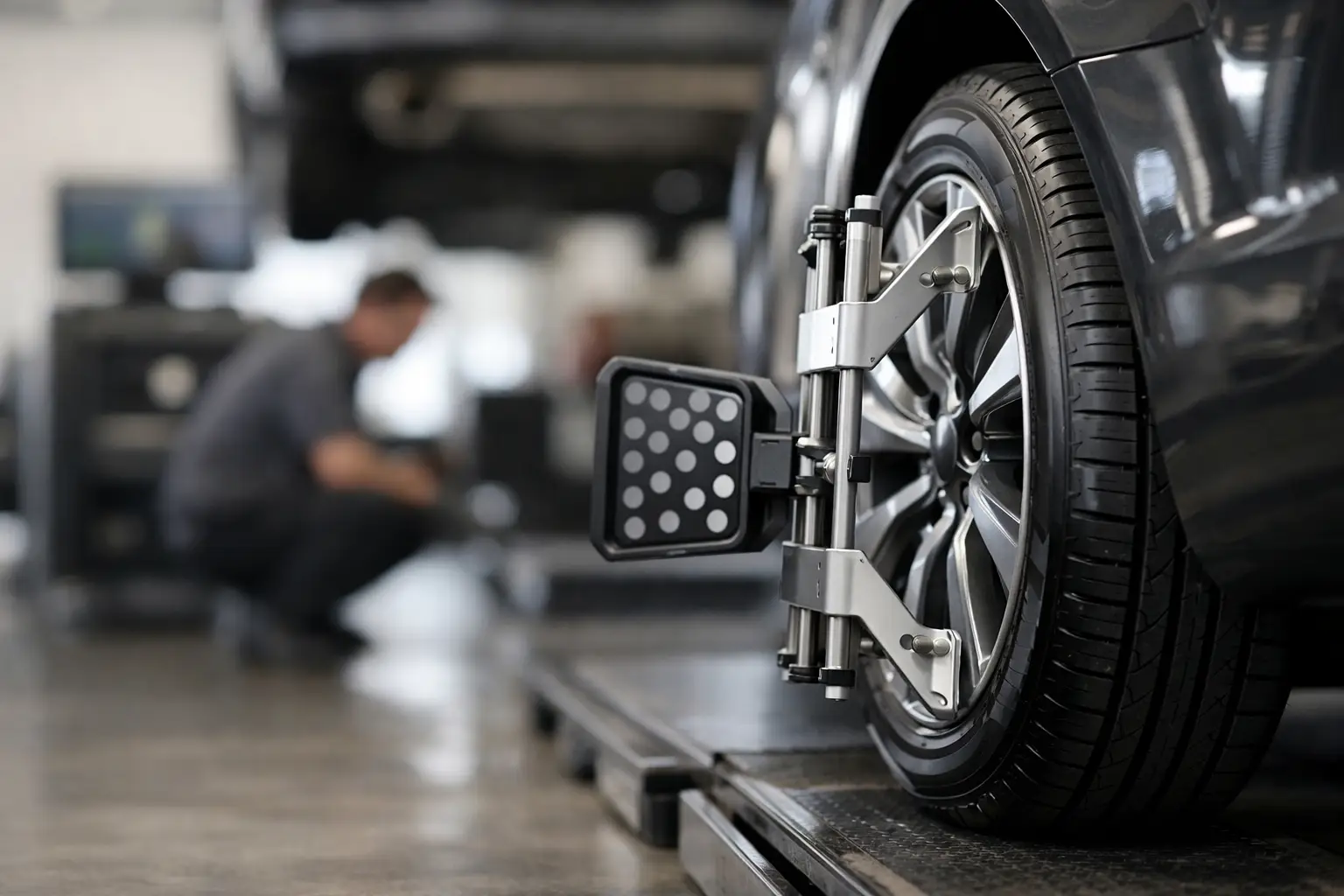
Next, precision alignment equipment measures the current angles and compares them with factory specifications. The technician adjusts the angles that are designed to be adjustable on your vehicle. Some vehicles have limited factory adjustment, and others may require additional repair or approved adjustment hardware if an angle cannot be brought into range.
After the adjustment, the technician verifies the final readings and centers the steering wheel. You should receive a straightforward explanation of the results, including any conditions that could affect tire wear later. This is how alignment becomes a preventive service rather than a vague add-on.
New tires, balancing, rotation, and alignment work together
Tire care works best as a routine, not a one-time appointment. New tires should be installed with correct pressure, balanced properly, and checked for the right size, load rating, and speed rating for the vehicle. If the vehicle needs alignment, doing it at installation helps the tire start its service life on the right track.
Afterward, rotate tires at the interval recommended by your vehicle manufacturer or tire maker. Many drivers rotate around every 5,000 to 8,000 miles, but the best schedule depends on the vehicle, tire type, drivetrain, and usage. Front-wheel-drive vehicles often wear front tires faster, while staggered tire setups may require different rotation practices or may not be rotatable at all.
Check tire pressure regularly when the tires are cold, and inspect the tread for unusual patterns. If a new tire begins wearing noticeably faster on one edge, do not wait until the next scheduled service. Early diagnosis can save the rest of the set.
When you can wait and when you should not
If your vehicle has no pull, no steering-wheel offset, no recent impact, and even wear on the previous tires, it is reasonable to ask for an inspection or measurement before approving an alignment. That gives you a decision based on your vehicle’s actual condition.
Do not delay if the vehicle pulls strongly, the steering feels loose, the old tires show clear irregular wear, or you have recently hit a pothole or curb hard. Those signs can involve alignment, tire damage, or suspension concerns that deserve prompt attention. Safety and predictable handling come first.
At JAK Tire Service, professional technicians can inspect the tires, steering, suspension, and alignment readings together, then explain the practical next step. A precise check now can help your new tires deliver the smooth ride, reliable traction, and long service life you paid for.