


A steering wheel that suddenly vibrates can turn an ordinary commute into a stressful drive. If you are asking, why does steering wheel shake, the answer usually comes down to a problem with the tires and wheels, brakes, steering, or suspension. The speed and situation in which the shake appears provide useful clues, but a proper inspection is the safest way to identify the cause before a small issue becomes a costly repair.
Why Does Steering Wheel Shake at Certain Speeds?
A steering wheel shake that begins around a particular speed – often between 50 and 70 mph – is commonly related to tire or wheel balance. Each wheel and tire assembly must be balanced so its weight is distributed evenly as it rotates. If a wheel weight falls off, a tire is installed incorrectly, or the tire wears unevenly, the assembly can wobble at higher speeds.
The vibration may feel mild at first, then become more noticeable as speed increases. In some cases, it can fade at a different speed range. That pattern does not mean the issue has fixed itself. It simply means the vibration is less noticeable at that speed.
A professional wheel balance is usually a straightforward service, but it should include a close look at the tire condition and wheel. A bent wheel, damaged tire, or poor previous repair can create a similar feeling and may need more than balancing alone.
Tire Problems That Cause Shaking
Tires are the most frequent source of steering wheel vibration because they are the vehicle’s only contact with the road. A tire can look acceptable from a quick glance and still have an issue that affects how it rolls.
Uneven tread wear is one example. Tires can wear more heavily along the inside edge, outside edge, or in irregular high-and-low patches called cupping. Cupped tires often produce a humming road noise along with vibration. This can be caused by an alignment problem, worn shocks or struts, loose suspension components, or consistently incorrect tire pressure.
A separated tire belt is more serious. Internal tire damage can make the tread or sidewall bulge and cause a strong shake, sometimes even at lower speeds. Hitting potholes, curbs, and road debris can also damage a tire internally. Do not assume a tire is safe because it is holding air. A tire with a visible bulge, deep cut, exposed cords, or major impact damage should be inspected immediately and generally replaced.
Low tire pressure can contribute to unstable handling, while overinflation can reduce the tire’s ability to absorb road imperfections. Check pressures when the tires are cold and use the pressure listed on the vehicle’s driver-side door placard, not the maximum pressure molded into the tire sidewall.
Steering Wheel Shakes When Braking
If the steering wheel is smooth while cruising but shakes when you apply the brakes, the front brake system is a likely place to start. Many drivers call this “warped rotors,” but the underlying issue is not always a rotor that has physically bent.
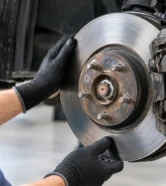
Brake rotors can develop uneven thickness or uneven friction material deposits. When the brake pads clamp onto an uneven surface, the force changes slightly as the wheel turns. That pulsation can travel through the steering system and make the wheel shake, especially during moderate or firm braking.
The brake pedal may also pulse under your foot. You might notice the problem most clearly when slowing down from highway speeds or descending a long hill. Ignoring it can lead to faster pad wear, less predictable braking, and more expensive repairs if related components are damaged.
A brake inspection should check rotor condition, pad thickness, caliper operation, brake hardware, and the condition of the wheel bearings and suspension parts. Depending on measurements and vehicle specifications, the correct repair may involve replacing rotors and pads, servicing calipers or hardware, or addressing another component causing the vibration. Replacing pads without correcting a damaged rotor surface often provides only a temporary improvement.
Shaking at Low Speed, While Turning, or Over Bumps
A shake that happens below highway speed may point away from basic wheel balance and toward steering or suspension wear. Your vehicle uses connected components to keep the tires pointed correctly and stable over uneven pavement. When a part develops play, the steering wheel can feel loose, twitchy, or shaky.
Common concerns include worn tie-rod ends, ball joints, control arm bushings, sway bar links, wheel bearings, shocks, and struts. These parts do different jobs, but all affect the way your wheels track across the road. A worn tie rod, for example, can affect steering precision and alignment. A damaged wheel bearing may create a growling noise that changes when you turn.
Pay attention to what accompanies the vibration. Clunking over bumps, wandering on the highway, a vehicle that pulls to one side, uneven tire wear, or a steering wheel that does not return smoothly after a turn all deserve professional attention. These symptoms are not just comfort concerns. They can affect control, stopping distance, and tire life.
Alignment Can Cause Vibration Indirectly
Wheel alignment does not usually create an immediate steering wheel shake on its own. However, poor alignment can wear tires unevenly, and those worn tires can then cause vibration. That is why balancing tires without checking the wear pattern can miss part of the problem.
Alignment angles can shift after a hard pothole strike, curb contact, collision, or suspension repair. The vehicle may pull, the steering wheel may sit off-center, or one tire may wear faster than the others. Correcting the alignment helps protect new tires, but an alignment should not be performed until worn steering and suspension parts have been identified and repaired. Alignment settings cannot stay accurate when the parts holding them in place are loose.
For drivers who regularly travel rough city roads, carry heavy loads, drive an SUV or truck, or use a vehicle for delivery work, routine tire and suspension checks are practical preventive maintenance. Those vehicles often put extra stress on tires and front-end components.
Do Not Overlook Loose Wheels and Wheel Damage
A loose wheel is uncommon, but it is urgent. If lug nuts are not tightened correctly after tire service or wheel removal, the wheel can move against the hub and create vibration, noise, or a pulling sensation. Continuing to drive can damage the wheel studs and may allow the wheel to separate from the vehicle.
If the steering wheel suddenly shakes after recent tire work, stop driving when it is safe to do so and have the vehicle checked. Do not try to judge lug-nut tightness by hand. Correct torque requires the proper tool and manufacturer specification.
Bent wheels are another concern, particularly after hitting a pothole. Alloy wheels can bend at the inner rim where damage is hard to see without removing the wheel. A bent wheel may cause vibration, air loss, or both. Minor damage can sometimes be repaired, but cracks or severe bends may require replacement for safety.
What to Do When Your Steering Wheel Starts Shaking
Start by noticing the conditions: Does the shake happen at a certain speed, only during braking, while turning, or all the time? Also note any recent pothole impacts, curb strikes, tire replacement, brake work, or changes in handling. These details help a technician diagnose the issue efficiently.
Avoid delaying an inspection if the vibration is strong, increasing, or paired with a warning light, pulling, grinding, clunking, tire damage, or braking concerns. A minor balance issue may be simple to correct, but a damaged tire, loose wheel, or worn steering component should not wait.
At JAK Tire Service Corp, a thorough inspection focuses on clear answers rather than guesswork. Professional technicians can check tire condition and pressure, verify wheel balance and lug-nut torque, inspect brakes, and assess steering and suspension components to find the real source of the vibration. The right repair may be as simple as balancing a wheel, or it may involve tires, brakes, or front-end work. The difference matters for both cost and safety.
A smooth steering wheel is more than a comfort feature. It is a sign that your tires, wheels, brakes, and suspension are working together as they should. Address the shake early, and you can drive with more confidence while protecting your vehicle from unnecessary wear.