

A steering wheel that sits crooked on a straight road, tires wearing faster on one edge, or a vehicle that drifts toward the curb can all point to an alignment issue. But when you hear front end vs four wheel alignment, the difference is not simply a matter of paying for more work. The right service depends on your vehicle’s suspension design, which angles are out of specification, and what will restore safe, predictable handling.
Alignment is precision work. It affects how your tires meet the road, how the vehicle tracks at highway speeds, and how long expensive tires last. Understanding the two services helps you ask the right questions and approve repairs with confidence.
What Wheel Alignment Actually Corrects
Wheel alignment is the process of measuring and adjusting suspension angles so the wheels point and sit where the vehicle manufacturer intended. It does not mean balancing tires, and it does not automatically fix a vibration, worn tire, or loose suspension part.
Technicians focus on three primary angles: toe, camber, and caster. Toe describes whether tires point slightly inward or outward when viewed from above. Incorrect toe can scrub away tire tread surprisingly quickly. Camber is the inward or outward tilt of a tire when viewed from the front. Too much positive or negative camber often causes wear on one shoulder of the tire. Caster is the forward or rearward angle of the steering axis, which influences straight-line stability, steering return, and cornering feel.
A proper alignment begins with an inspection. If ball joints, tie rods, control arm bushings, wheel bearings, struts, springs, or other suspension components are worn or damaged, simply setting alignment angles may not hold. Reliable service means identifying those issues before making adjustments, then providing clear recommendations rather than treating alignment as a quick reset.
Front End Alignment vs Four Wheel Alignment
A front end alignment adjusts the angles available at the front wheels. In common use, it is sometimes called a two-wheel alignment. This service is often appropriate for vehicles with a solid rear axle that has no factory rear alignment adjustments. The rear wheels are checked as a reference, while the technician corrects the front steering and suspension angles.
A four wheel alignment measures all four wheels and adjusts the front and rear angles where the vehicle design allows. It is commonly recommended for cars, crossovers, SUVs, and trucks with independent rear suspension. On these vehicles, rear camber and toe can be adjustable, and their settings influence how the vehicle moves down the road.
The key difference is the rear of the vehicle. If rear wheel angles are incorrect, adjusting only the front may make the steering wheel appear centered without addressing the actual direction the vehicle is traveling. A four wheel alignment brings the rear thrust angle into line first, then aligns the front wheels to follow that path correctly.
What Is a Thrust Angle?
The thrust angle is the direction the rear wheels are effectively pushing the vehicle. Think of it as the vehicle’s true centerline on the road. If the rear wheels are aimed slightly to one side, the vehicle may travel diagonally even though the steering wheel is held straight.
This can create a condition often called dog tracking or crab walking. It may be subtle, but it can contribute to uneven tire wear, a crooked steering wheel, and a vehicle that feels unsettled on the highway. A four wheel alignment is designed to identify and correct this condition when rear adjustments are available.
Does Four Wheel Alignment Mean Every Wheel Gets Adjusted?
Not always. This is one of the most common misunderstandings. A four wheel alignment means all four wheel positions are measured and included in the alignment process. Some vehicles have rear suspension angles that are not adjustable from the factory.
In that case, a technician can still use the rear measurements to set the front wheels accurately and identify whether the rear axle, suspension, or frame may be bent or worn. If rear adjustment is needed but unavailable, aftermarket adjustment hardware or suspension repair may be required. A professional shop should explain the cause and options before proceeding.
Which Vehicles Need a Four Wheel Alignment?
Many late-model vehicles benefit from a four wheel alignment because they use independent rear suspension. This includes a wide range of sedans, minivans, crossovers, performance vehicles, and luxury SUVs. All-wheel-drive vehicles also commonly receive four wheel alignments, although drivetrain type alone does not determine the service.
A front end alignment may be sufficient for an older truck, van, or SUV with a solid rear axle and no rear adjustment points. Even then, measuring all four wheel positions is valuable. It confirms whether the rear axle is square to the chassis and helps prevent front adjustments from masking a larger issue.
The most accurate answer comes from the vehicle’s factory specifications and an inspection of its suspension. Honest alignment service is not about automatically selling the more extensive option. It is about performing the procedure your vehicle can use and needs.
Signs Your Vehicle May Need Alignment Service
Alignment problems often develop gradually, especially after normal wear, potholes, curb contact, or repeated rough-road driving. Toronto-area drivers know how quickly winter potholes and road construction can test tires and suspension components.
Watch for these four common signs:
- The vehicle pulls or drifts left or right on a level road.
- The steering wheel is off-center when driving straight.
- Tire tread wears unevenly, especially on the inner or outer shoulders.
- The vehicle feels loose, wanders, or requires frequent steering corrections.
A sudden pull can also come from a low tire, mismatched tire pressure, a tire defect, or a brake issue. That is why alignment should be diagnosed rather than assumed. Checking tire condition and inflation first can save time and prevent unnecessary work.
When Should You Schedule an Alignment?
There is no single mileage interval that suits every driver. A practical approach is to have alignment checked when installing new tires, after replacing suspension or steering parts, following a significant pothole strike, or whenever uneven tire wear appears.
Drivers who travel long highway distances, carry heavy loads, operate delivery vehicles, or regularly drive rough city streets may need checks more often. A curb impact that seemed minor can be enough to knock toe or camber out of range. The sooner a problem is found, the better the chance of protecting the remaining tire tread.
If you have just purchased a used vehicle, an alignment inspection can also provide useful information. Uneven tire wear or rear-angle readings outside specification may reveal deferred maintenance, collision damage, or worn suspension components that deserve attention.
Why Tire Wear Makes Alignment Worth Addressing Promptly
Tires are built to roll, not scrub sideways across pavement. When toe is incorrect, the tire is constantly dragged slightly in the wrong direction. The result can be feathered tread, rapid wear, road noise, and reduced wet-weather grip. Camber problems tend to wear one side of the tire first, sometimes before the rest of the tread looks worn.
Alignment cannot restore rubber that has already worn away, but it can stop the cause from ruining the next set. It also helps the vehicle handle more consistently during lane changes, braking, and emergency maneuvers. For families, commuters, and fleet vehicles, that is a safety benefit as much as a maintenance benefit.
There is a trade-off to consider. If tire wear is advanced or irregular, correcting alignment may expose existing noise or vibration from the damaged tire. The alignment is still necessary, but the tire may also need replacement. Clear measurements and a straightforward inspection make that decision easier.
What to Expect From a Professional Alignment Visit
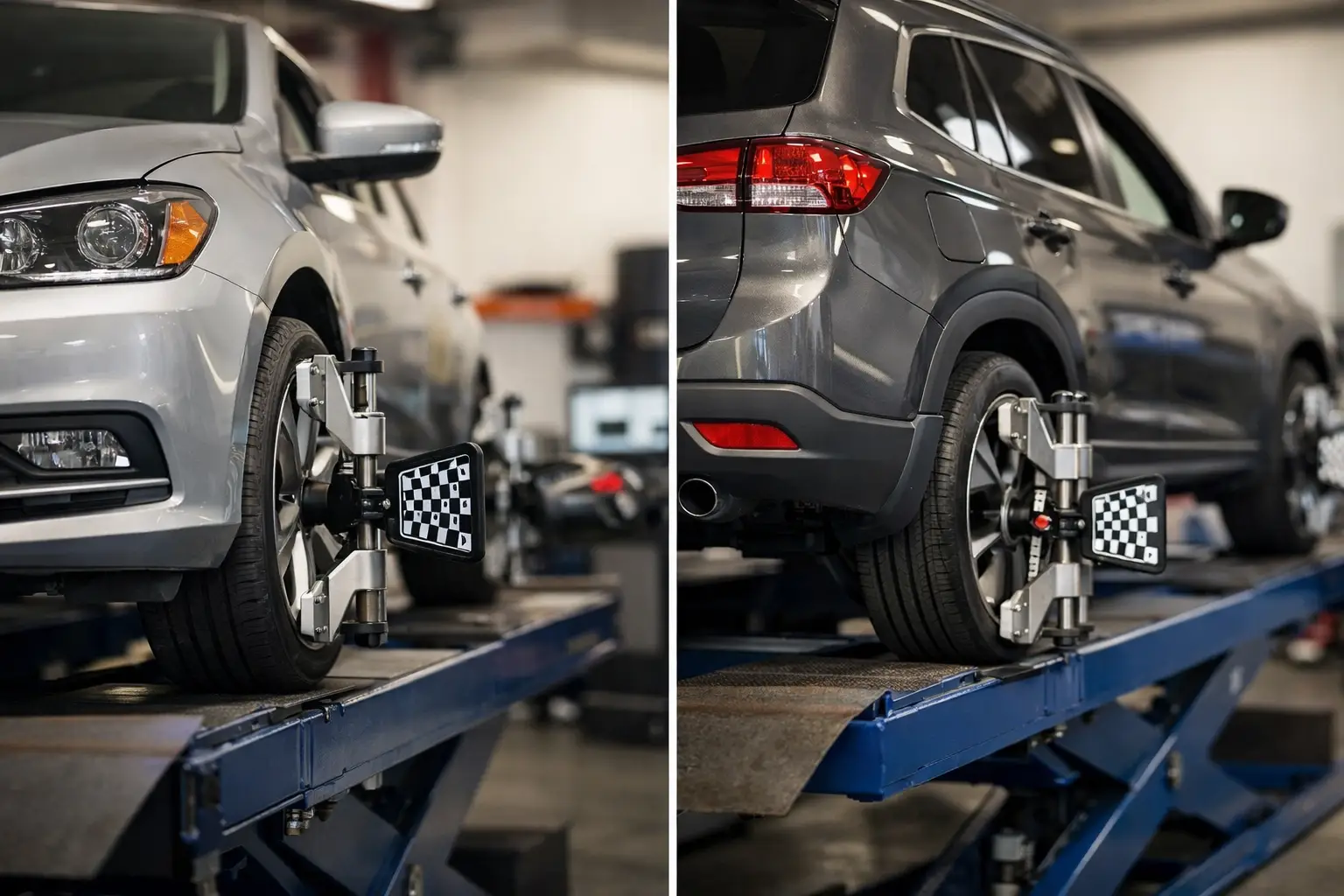
A quality alignment is more than placing sensors on the wheels and printing a report. The technician should first inspect tire pressures, tire condition, steering parts, and suspension components. The vehicle is then measured on calibrated alignment equipment against manufacturer specifications.
If adjustments are possible, the technician sets the appropriate rear angles first during a four wheel alignment, then adjusts the front. The steering wheel is centered, and final readings are verified. You should receive an explanation of the before-and-after measurements, especially if an angle cannot be corrected because of worn components, collision damage, or limited factory adjustment.
At JAK Tire Service, the goal is straightforward: precision diagnostics, clear answers, and work that supports safe driving. Whether your vehicle needs a front-end adjustment or a full four-wheel procedure, the right recommendation starts with accurate measurements, not guesswork.
If your vehicle is pulling, your steering wheel is off-center, or your tires are wearing unevenly, do not wait for the tread to disappear. A timely alignment inspection can protect your tires, improve control, and help every drive feel steady and confident.