

A light dusting of snow can make a familiar commute feel completely different. When temperatures drop, the question of all season versus winter tires is not just about getting through deep snow. It is about how confidently your vehicle starts, turns, and stops on cold pavement, slush, ice, and wet roads.
For drivers who rely on their vehicle every day, the right tire choice can reduce stress and improve safety all winter long. The best option depends on your driving habits, your vehicle, where you travel, and how much winter performance you need.
The Main Difference Is Cold-Weather Grip
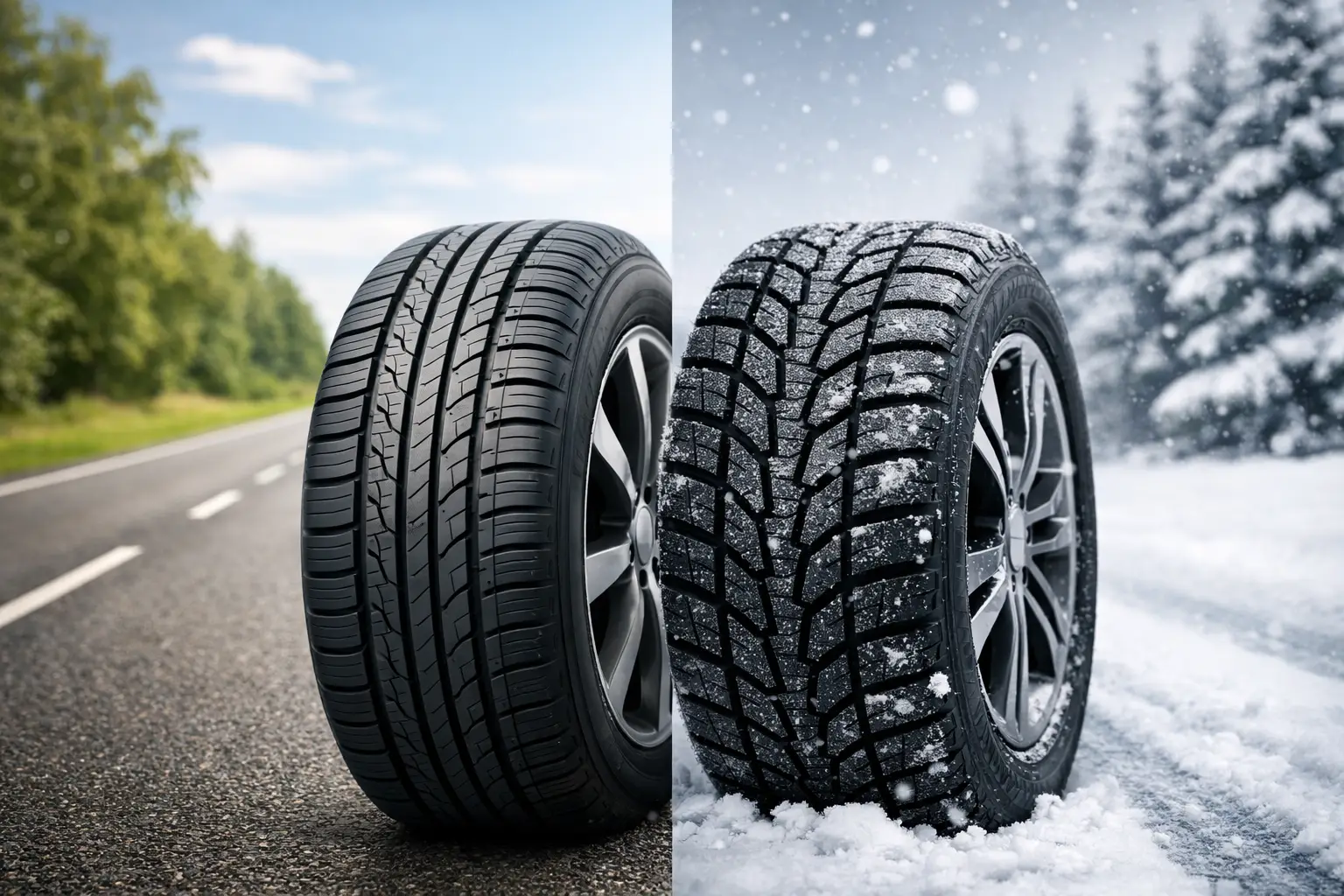
All-season tires are designed as a compromise. They are built to provide reasonable year-round performance in dry and wet conditions, with some light-snow capability. For many drivers in mild climates, that flexibility makes sense.
Winter tires are designed for a narrower but more demanding job: maintaining traction when temperatures are consistently cold. Their rubber compounds stay more flexible in low temperatures, helping the tire conform to the road surface instead of becoming hard and less responsive. A useful benchmark is about 45 F or 7 C. Below that point, a winter tire can begin to offer a meaningful grip advantage even when the road is dry and clear.
That difference matters because tires are the only part of your vehicle that touches the road. Four small contact patches handle acceleration, braking, steering, and stability. Good brakes, traction control, and all-wheel drive help, but none can create grip that your tires do not have.
All Season Versus Winter Tires in Real Driving
The clearest differences show up during everyday maneuvers, not only during a major storm. A winter tire generally gives a driver more control when pulling away from a snowy curb, braking at a red light, or making a turn on packed snow.
Braking on cold, wet, and snowy roads
Winter tires use deeper tread patterns and many small cuts called sipes. These features help the tire bite into snow and move water and slush away from the contact patch. The result is typically shorter stopping distances and more predictable braking on cold surfaces.
All-season tires can perform adequately in light snow when they have healthy tread depth, but their braking performance declines sooner as roads become colder, snowier, or icier. This is especially noticeable in stop-and-go traffic, on side streets that are not yet cleared, and at intersections where packed snow can become slick.
Starting and climbing
A vehicle can have plenty of engine power and still struggle to move if the tires cannot grip. Winter tires provide stronger traction when starting from a stop and climbing hills covered with snow or slush. This is useful for commuters, delivery drivers, families heading to school or activities, and SUV or truck owners who travel outside well-plowed routes.
All-wheel drive improves how a vehicle accelerates, but it does not improve braking or cornering by itself. An AWD vehicle on all-season tires can still slide through a turn or take longer to stop than a two-wheel-drive vehicle fitted with quality winter tires.
Cornering and stability
Cold pavement can feel dry but still offer less traction than drivers expect. Winter tires remain pliable and responsive, which helps the vehicle follow steering inputs more reliably. They can also provide a greater margin of control when a lane change, curve, or unexpected obstacle requires a quick response.
This does not mean winter tires make a vehicle invincible. Ice, speed, worn tread, and sudden steering inputs can overwhelm any tire. The benefit is more available traction and more predictable behavior when conditions are poor.
When All-Season Tires May Be Enough
All-season tires may be a practical choice if winter conditions are usually mild, your vehicle is driven mostly on promptly cleared roads, and you can avoid driving during severe weather. They also work well for drivers who put on lower annual mileage and prefer not to store a second set of tires.
Look closely at the specific tire, not just the category printed on the sidewall. Some all-season tires are better in rain than snow, while others are built with more winter capability. Tires carrying the three-peak mountain snowflake symbol meet a recognized standard for severe snow service. They are often called all-weather tires and sit between conventional all-season and dedicated winter tires.
All-weather tires can be a smart middle ground for drivers who want stronger snow performance without seasonal tire changes. Still, a dedicated winter tire is usually the better choice for regular exposure to snow, ice, steep roads, early-morning commutes, or long drives outside the city.
Who Should Choose Winter Tires?
Winter tires are worth serious consideration if you drive frequently through winter weather or need your vehicle to be dependable regardless of the forecast. That includes commuters with fixed schedules, rideshare and delivery drivers, families, fleet vehicles, and anyone who regularly drives before roads are fully treated.
They are also a strong choice if you travel between North York, Toronto, Vaughan, Markham, or other GTA communities where road conditions can change quickly from clear pavement to slush and packed snow. A route may be well maintained near major roads but much less predictable on residential streets, ramps, bridges, and parking lots.
Choose winter tires if any of these situations sound familiar:
- You drive early in the morning, late at night, or during active snowfall.
- Your commute includes highways, hills, bridges, or less frequently cleared roads.
- You have had traction, braking, or steering concerns during past winters.
- You drive a vehicle carrying children, passengers, tools, or delivery loads.
- You want the strongest available cold-weather control rather than a year-round compromise.
Cost, Wear, and the Two-Set Advantage
Buying winter tires is an added upfront expense, and storing a second set takes space. Those are real considerations. However, a dedicated winter set does not simply add wear to your vehicle. It shares the annual mileage with your all-season or summer tires, which can help both sets last longer over time.
Installing winter tires on a separate set of wheels can also make seasonal changes faster and may reduce repeated mounting and balancing. The right setup depends on wheel size, tire availability, budget, and vehicle requirements. A professional tire inspection can identify the correct load rating, speed rating, tire pressure requirements, and fitment for your vehicle.
Avoid mixing winter tires with all-season tires on the same vehicle. Different tread patterns and grip levels can make handling less predictable, especially during braking and cornering. For balanced control, install four matching winter tires.
Do Not Wait for the First Major Storm
The best time to install winter tires is before consistent cold arrives, not after the first snowstorm fills every service bay. Waiting can mean driving through the season’s first slippery days on tires that have already lost much of their cold-weather grip.
Tread depth matters as much as tire type. Worn winter tires cannot clear snow and slush effectively, while aging rubber can lose flexibility. Check your tires for uneven wear, cracking, bulges, punctures, and low tread. Uneven wear may point to an alignment or suspension issue that should be corrected before it shortens the life of a new set.
When spring temperatures stay consistently warmer, switch back to all-season tires. Winter tires wear faster in warm weather and may feel less precise on dry pavement. Seasonal tire service is also a good time to check tire pressure, rotate tires when appropriate, inspect brakes, and confirm that your wheels are properly balanced.
A Safer Choice Starts With How You Drive
The all-season versus winter tires decision comes down to the conditions you actually face, not the conditions you hope to avoid. If your schedule requires reliable travel through cold, snow, slush, and ice, winter tires provide a valuable safety margin. If your winter driving is limited and roads are generally clear, a quality all-season or all-weather tire may fit your needs.
A clear conversation with a tire professional can help you choose based on your vehicle, commute, budget, and expected mileage – without paying for more tire than you need. At JAK Tire Service, the goal is simple: tires done right, every time, so you can stop safely and drive with confidence when the weather changes.