A flashing check engine light on the way to work is not something to “see if it goes away.” Neither is a new knocking sound, a sweet smell from under the hood, or an engine that suddenly feels weak on the highway. Timely engine repair can turn a manageable problem into a straightforward fix before it causes breakdowns, unsafe driving conditions, or expensive damage to major components.
For commuters, family vehicles, delivery drivers, and fleets, the goal is simple: get clear answers quickly and make repairs that protect the vehicle without paying for work it does not need. That starts with knowing the warning signs, understanding what proper diagnostics involve, and acting before a small issue affects the entire engine.
When Engine Repair Should Not Wait
Modern vehicles are designed to alert drivers when something is wrong, but the warning light alone does not explain the cause. A check engine light can point to a loose gas cap, an ignition misfire, a sensor failure, a fuel-system issue, or a more serious mechanical concern. The difference matters, which is why reading a code is only the first step, not a complete diagnosis.
A flashing check engine light deserves immediate attention. It commonly indicates an active misfire, which can send unburned fuel into the exhaust system and damage the catalytic converter. If the light is flashing, reduce driving, avoid hard acceleration, and arrange a professional inspection as soon as possible.
Pay close attention to how the vehicle feels as well. A rough idle, hesitation when accelerating, repeated stalling, poor fuel economy, or a loss of power can all be signs that the engine is not burning fuel properly or receiving the air, spark, and timing it needs. These symptoms do not always mean a full engine rebuild is required. Often, the fix may involve spark plugs, ignition coils, a fuel injector, a sensor, a vacuum leak, or another serviceable part. Proper testing keeps the repair focused.
Some signs require you to stop driving rather than simply book an appointment:
- The oil pressure warning light comes on or oil pressure drops suddenly.
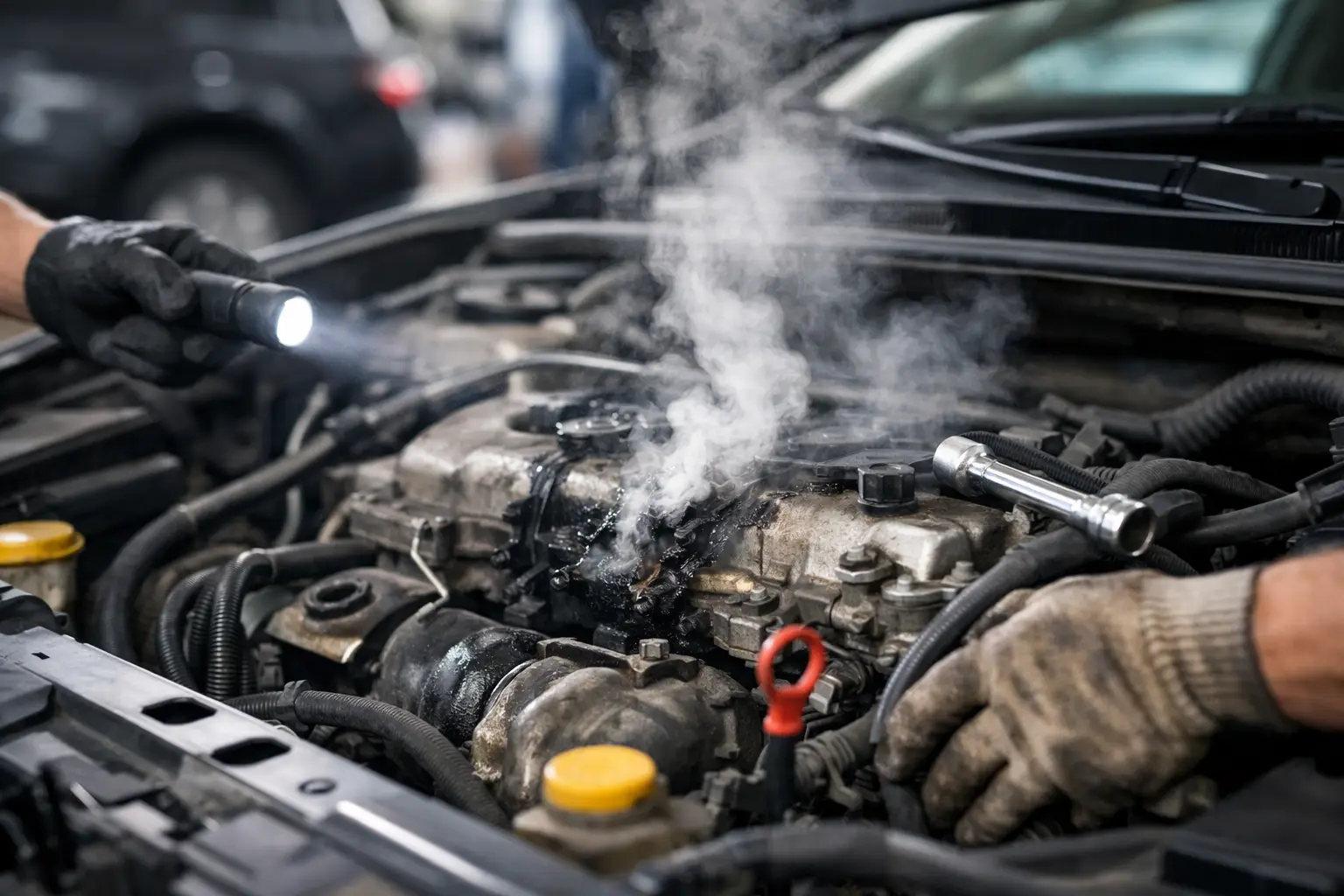
- The temperature gauge rises into the red or steam comes from under the hood.
- You hear loud knocking, grinding, or metal-on-metal sounds.
- Thick blue, white, or black exhaust smoke appears.
- There is a severe loss of power, especially alongside a flashing warning light.
Driving with low oil pressure or an overheating engine can cause permanent internal damage in a short distance. Pull over safely, shut the engine off, and have the vehicle assessed. Continuing to drive may turn a cooling-system repair or oil-related issue into a much larger engine replacement decision.
What a Proper Engine Repair Diagnosis Looks Like
Reliable repairs begin with precision diagnostics, not guesswork. A technician should first listen to your description of the issue: when it happens, whether it occurs cold or after warming up, changes in fuel use, recent service history, and any warning lights. Details such as “it only shakes at stoplights” or “it loses power going uphill” help narrow the testing process.
The next step often includes scanning the vehicle’s computer for diagnostic trouble codes and live data. Codes provide useful direction, but they do not automatically identify the failed part. For example, a code related to an oxygen sensor may result from a wiring problem, an exhaust leak, a fuel mixture issue, or the sensor itself. Replacing parts based only on a code can waste money and leave the original problem unresolved.
A thorough inspection may include checking fluid condition and levels, battery and charging voltage, ignition performance, fuel pressure, air intake components, vacuum lines, compression, cooling-system pressure, and timing-related operation. The tests used depend on the symptoms and vehicle. A no-start problem requires a different approach than overheating or rough acceleration.
For internal engine concerns, compression and leak-down tests can provide valuable answers. Compression testing measures an engine cylinder’s ability to build pressure. A leak-down test helps identify where pressure is escaping, such as through valves, piston rings, or a head gasket. These tests help separate an external repair, such as an ignition component, from a mechanical issue inside the engine.
At JAK Tire Service, clear explanations matter. Before work begins, you should understand what was found, why the recommended repair is needed, what could happen if it is delayed, and what the expected cost includes. Honest service means identifying the repair that solves the problem, not adding unnecessary work.
Common Engine Problems and the Right Response
Misfires are among the most common reasons drivers seek engine service. They can feel like shaking, stumbling, uneven acceleration, or a lack of power. Worn spark plugs and failing ignition coils are frequent causes, especially on higher-mileage vehicles. Fuel injectors, air leaks, low compression, and timing problems can create similar symptoms, so testing is essential before replacing components.
Oil leaks are another issue that should not be ignored. A small leak may leave spots on the driveway, while a larger leak can lower the oil level enough to affect engine lubrication. Leaks can come from valve cover gaskets, oil pans, seals, filters, or other areas. The right repair depends on finding the true source, since oil can travel across the engine and make the leak appear to be somewhere else.
Overheating is often linked to the cooling system rather than the engine itself. Low coolant, a leaking hose, a weak water pump, a sticking thermostat, radiator problems, or cooling fan issues can all raise operating temperature. However, repeated overheating can damage the head gasket or warp engine components. Early cooling-system service is far less costly than waiting until the engine has suffered internal damage.
Timing-chain or timing-belt concerns need careful attention. Some engines use belts with scheduled replacement intervals, while others use chains designed to last longer. Neither should be treated as maintenance-free. Rattling at startup, poor running, trouble codes, or oil contamination may signal a timing-related problem. If timing slips or a belt breaks on certain engines, valve and piston damage can follow.
Engine Repair Costs: Why the Range Is So Wide
There is no single price for engine repair because the work can range from replacing a sensor to repairing internal mechanical damage. The vehicle’s make, model, engine design, part availability, labor time, and cause of failure all affect the estimate.
A worn spark plug or damaged ignition coil is generally a smaller repair than a head gasket replacement, timing-chain repair, or engine replacement. Access also matters. On some vehicles, a component is easy to reach; on others, technicians must remove surrounding parts to perform the job correctly.
The lowest initial estimate is not always the best value. A repair that skips diagnosis, uses poor-quality parts, or addresses only one symptom can lead to repeat visits and added cost. Ask for a clear explanation of the issue, the recommended solution, and whether related maintenance is sensible while the vehicle is already being serviced. There is a balance here: bundled work can save labor in some cases, but only when the added work is genuinely needed.
For older vehicles with major engine damage, it may be worth comparing repair costs against the vehicle’s condition, mileage, safety needs, and remaining value. A trusted technician can help you understand the options, whether that means a targeted repair, a replacement engine, or deciding not to invest further.
Prevent Problems Before They Become Major Repairs
Many engine problems start quietly. Keeping up with oil changes using the correct oil grade helps protect moving parts, manage heat, and reduce sludge buildup. Waiting too long between oil changes can affect components that depend on clean oil, including variable valve timing systems and timing-chain tensioners.
Do not overlook the cooling system, air filter, spark plugs, and fluid inspections. These services may seem routine, but they support reliable combustion, proper operating temperature, and efficient performance. If you drive in frequent traffic, make short trips, tow, carry heavy loads, or rely on your vehicle for work, your maintenance needs may be more demanding than a basic schedule suggests.
It also helps to react early to changes. A new sound, smell, vibration, warning light, or drop in fuel economy is useful information. Recording when it occurs and bringing the vehicle in before the symptom worsens gives technicians a better chance of identifying the cause accurately.
Your engine does not need attention only when it fails. A prompt inspection when something feels different can protect your safety, preserve dependable performance, and keep a smaller repair from becoming a major interruption to your week.