
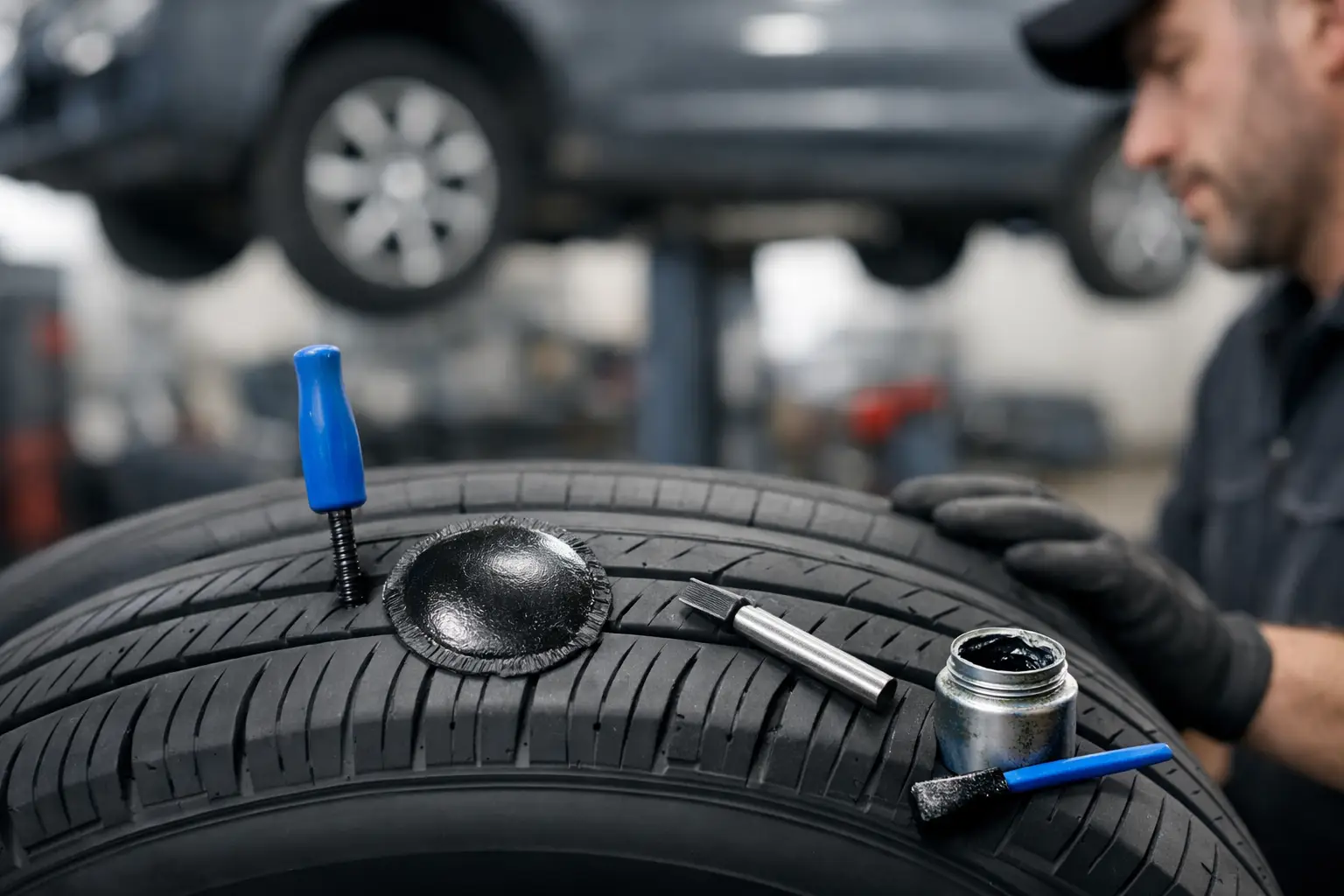
A screw in the tire can turn an ordinary commute into a stressful decision: repair it, replace it, or keep driving and hope for the best? Can tires be patched safely? Yes, but only when the puncture, tire condition, and repair method meet specific safety standards. A cheap-looking fix is not always a safe one, especially when your vehicle carries family, work equipment, passengers, or delivery loads.
For most drivers, the right answer starts with a professional inspection. The location of the damage matters as much as the size of the hole, and damage that cannot be seen from the outside can change the decision completely. A properly repaired tire can provide reliable service. A tire repaired outside its safe limits can fail without much warning.
When can tires be patched safely?
A tire is generally a candidate for repair when the puncture is in the center tread area, caused by a small object such as a nail or screw, and measures no more than 1/4 inch in diameter. The tire must also be in otherwise good condition, with adequate tread depth and no signs of internal damage.
That sounds straightforward, but a technician still needs to remove the tire from the wheel and inspect it inside and out. Driving even a short distance while a tire is significantly underinflated can damage the internal sidewall structure. From the outside, the tire may look fine. Inside, there may be rubbed rubber, broken cords, or heat damage that makes a repair unsafe.
For a safe repair, the tire should not have previous repairs that overlap or sit too close together. It should also be free from cracks, bulges, exposed cords, separation, or uneven wear that points to a wheel alignment or suspension issue. Repairing a puncture does not correct those underlying problems.
Where the puncture is matters most
The center portion of the tread is designed to contact the road and is the only area where most puncture repairs are acceptable. This repairable zone is often called the crown of the tire.
A puncture near the outer edge of the tread may be too close to the shoulder. The shoulder flexes much more than the center tread as the tire rolls, turns, and carries weight. A repair in that area may not hold reliably, even if the hole appears small.
Sidewall punctures cannot be safely repaired. The sidewall is constantly flexing and supports the vehicle’s load. Plugging or patching a sidewall can create a serious risk of a sudden loss of air. The same caution applies to damage caused by hitting a curb, pothole, or road debris. A bubble or bulge in the sidewall means the tire should be replaced, not repaired.
This is especially relevant for GTA drivers. Potholes, construction debris, curbs, and changing temperatures can cause more than a simple tread puncture. If the steering wheel shakes after an impact or the tire loses pressure repeatedly, have the wheel and tire inspected rather than assuming it only needs air.
A plug alone is not the best repair
A roadside plug can sometimes slow or stop a leak long enough to get you to a repair shop. It should not be treated as the preferred long-term solution. A plug is installed from the outside, which means the person doing the repair cannot inspect the inside of the tire for damage.
The professional standard is a combination repair that uses both a patch and a rubber plug stem. After the tire is removed from the wheel, the technician locates the injury, inspects the inner liner, cleans and prepares the damaged area, seals the puncture channel, and applies a patch from the inside. The stem fills the path of the puncture while the patch seals the inner liner.
This process takes more time than pushing in an exterior plug, but it provides a far more dependable repair. It also gives the technician a chance to identify concerns that would otherwise be missed, such as tire debris from low-pressure driving, corrosion around the wheel bead, or a bent rim causing a separate air leak.
When tire replacement is the safer choice
There are situations where replacement is the only responsible recommendation. A reputable shop should explain why, show you the issue when possible, and help you choose a replacement that fits your vehicle and budget.
Replacement is usually needed when:
- The puncture is in the sidewall or shoulder area.
- The hole is larger than 1/4 inch, irregularly shaped, or caused by a cut, tear, or impact.
- The tire was driven flat or severely underinflated and has internal sidewall damage.
- The tire has a bulge, separated tread, exposed cords, dry cracking, or dangerously low tread.
- Multiple punctures are too close together or an earlier repair has failed.
Run-flat tires deserve special attention. Some run-flat models may be repairable after a puncture, but only if the tire manufacturer permits it and the tire has not been driven beyond its limits while deflated. Many run-flat tires should be replaced after a loss of pressure because their internal structure may be compromised. Always follow the vehicle and tire manufacturer guidance.
Tire age, tread, and matching also affect the decision
Even a repairable puncture may not be worth repairing if the tire is already near the end of its service life. If tread is worn close to the wear bars, investing in a repair may only delay a replacement you will need soon. Worn tread reduces wet-road grip, which matters during heavy rain and slushy winter conditions.
For all-wheel-drive and four-wheel-drive vehicles, replacing one damaged tire can require extra planning. A significant difference in tire circumference between new and worn tires can place added stress on the drivetrain. Depending on the vehicle manufacturer’s specifications, a shop may recommend replacing more than one tire or shaving a new tire to match the remaining tread depth. This is not an upsell issue – it is about protecting the vehicle’s mechanical components.
Tire pressure monitoring system alerts should also be taken seriously after a repair. The warning light may need to be reset or the system may need to relearn the sensor position, depending on the vehicle. If the light returns, there could be another leak, a damaged valve stem, or a sensor concern.
What to do when you find a nail or screw
If the tire is holding air, leave the object in place until a technician can inspect it. Pulling it out may turn a slow leak into a rapid flat. Check the pressure with a reliable gauge, add air if necessary, and avoid high speeds or long highway trips until the tire has been assessed.
If the tire is flat, use your spare tire if you can do so safely, or arrange roadside assistance. Do not drive on a flat conventional tire. Even a few blocks can destroy the sidewall internally and turn a repairable puncture into a replacement.
After a repair, check tire pressure again over the next few days. A quality repair should hold air normally. If the tire continues to lose pressure, return to the shop promptly. The issue may be unrelated to the puncture, such as a leaking valve, wheel corrosion, or damage at the tire bead.
Get a clear answer before you get back on the road
The safest repair decisions are not based on guesswork or how small the nail looks. They are based on an internal inspection, the location and size of the injury, and the overall condition of the tire. At JAK Tire Service, the goal is simple: give drivers a clear explanation, make only the repair that is safe, and help keep every trip dependable.
If a tire loses pressure, treat it as a safety concern rather than a minor inconvenience. A quick professional inspection can protect your tires, your vehicle, and the people riding with you.