

That extra second before your engine starts can be easy to ignore, especially when you are rushing to work, school, or a delivery. But slow cranking is often the first warning that a battery is losing its ability to do its job. A professional car battery testing service gives you clear answers before a weak battery turns into a no-start situation in a parking lot, driveway, or on a cold morning.
A battery can appear fine one day and fail the next when its remaining capacity is already low. Testing takes the guesswork out of the decision. Instead of replacing a battery too early or waiting until you are stranded, you can make a practical choice based on its actual condition, charging performance, and the electrical demands of your vehicle.
What a Car Battery Testing Service Checks
Your vehicle battery does much more than start the engine. It supplies power to the starter, fuel and ignition systems, interior electronics, lights, and accessories before the alternator takes over. Modern vehicles place even greater demands on the battery through screens, sensors, heated seats, driver-assist features, and stop-start systems.
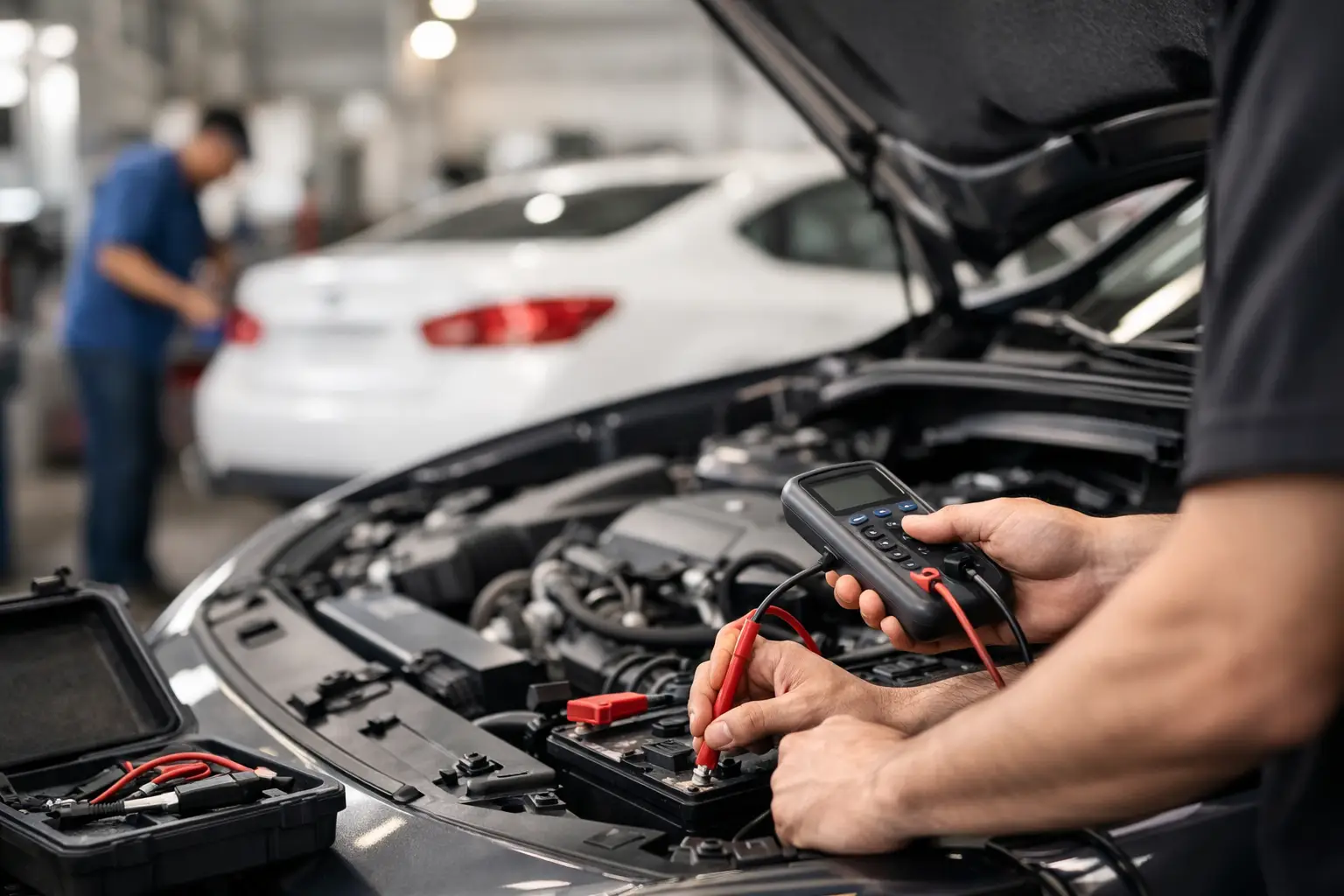
A proper test begins with a visual inspection. A technician checks for corrosion on the battery terminals, loose cable connections, a swollen case, leaks, damaged hold-down hardware, and signs that the battery has been exposed to excessive heat or vibration. Corrosion may look minor, but it can restrict electrical flow and create the same symptoms as a failing battery.
Next, the battery is tested for voltage and available starting capacity. Resting voltage offers a useful starting point, but voltage alone does not tell the full story. A battery may show normal voltage after a drive yet still be unable to provide enough current under load. That is why professional testing compares the battery’s measured performance with its cold-cranking rating and state of charge.
The technician should also check the charging system. A weak alternator, slipping belt, wiring issue, or poor ground connection can leave a healthy battery undercharged. On the other hand, an overcharging alternator can shorten battery life. Clear diagnostics matter because replacing the battery will not solve the problem if the charging system is the real cause.
Signs You Should Test Your Battery Soon
The most familiar warning sign is an engine that cranks slowly before starting. You may hear a dragging sound from the starter or notice that the engine takes longer than usual to turn over. This does not always mean the battery is at fault, but it is a strong reason to schedule a test.
Other signs can be less obvious. Headlights that dim at idle, interior lights that flicker, power windows that move slowly, or a dashboard warning light may point to low voltage. If your vehicle needs a jump-start, do not assume that a quick drive has fixed the issue. The battery may be weak, the alternator may not be charging correctly, or an electrical draw may be draining power while the vehicle is parked.
Battery age is another important factor. Many car batteries last roughly three to five years, but that range depends on driving habits, weather, vehicle type, and battery quality. Short trips can be especially hard on a battery because the alternator may not have enough time to restore the energy used during startup. Frequent stop-and-go driving, delivery routes, and long periods of sitting can also reduce battery life.
It makes sense to have the battery checked before winter, before a road trip, and anytime your vehicle has had starting trouble. For families, commuters, fleet vehicles, and rideshare drivers, preventive testing is a small step that can prevent a major disruption.
Why Cold Weather Exposes a Weak Battery
Cold weather does not usually create a battery problem from nothing. It reveals one that was already developing. Low temperatures reduce a battery’s available power while making engine oil thicker and the engine harder to turn over. The result is a higher demand for starting power at the exact time the battery can provide less of it.
A battery that starts reliably in mild weather may struggle once temperatures drop. That is why a test before winter is more useful than waiting for the first freezing morning. It gives you time to clean terminals, correct a charging problem, or replace a battery that is near the end of its service life.
This does not mean every older battery needs immediate replacement. If testing shows it is charging properly and delivering sufficient starting power, continued use may be reasonable. The right decision depends on the test result, the battery’s age, your driving needs, and how much risk you can accept from an unexpected failure.
Battery Test Results: What They Mean
A good shop should explain the results in plain language. In many cases, the outcome falls into one of three categories: the battery is healthy, the battery needs to be charged and retested, or replacement is recommended.
A healthy result means the battery has adequate charge and can supply the current required to start the vehicle. Even then, technicians may recommend cleaning corroded terminals or securing a loose connection to protect reliable performance.
A low-charge result is different from a failed battery. The battery may have been drained by short trips, an interior light left on, an accessory plugged in, or a vehicle that sat unused. Charging and retesting helps determine whether it can recover. If it repeatedly loses charge, further diagnosis is needed to find a possible alternator problem or parasitic electrical draw.
A failed result generally means the battery cannot meet its rated starting capacity or has internal damage. Replacement is usually the practical choice, particularly if the battery is older and the vehicle is relied on every day. A professional installation also includes checking terminal condition, cable connections, and proper battery fitment. Using the wrong battery size or rating can affect starting performance and may not support the vehicle’s electrical system correctly.
Do Not Confuse Battery Trouble With Starter or Alternator Trouble
Several electrical problems can produce similar symptoms. A clicking sound with no engine crank may be caused by a weak battery, poor terminal connection, or starter issue. A battery warning light while driving can indicate a charging-system fault rather than a battery that simply needs replacement.
This is where a complete car battery testing service saves time and unnecessary expense. The goal is not to sell a battery based on a symptom. The goal is to identify whether the battery, alternator, starter, cables, or another electrical component is responsible.
For example, installing a new battery when the alternator is not charging it may only provide a short-term fix. Likewise, replacing an alternator when corroded battery terminals are the problem costs more than necessary. Precision diagnostics lead to clearer answers and fairer repairs.
How to Help Your Battery Last Longer
No battery lasts forever, but a few habits can reduce avoidable strain. Drive the vehicle long enough to replenish the energy used at startup when possible. Keep the battery securely mounted, because vibration can damage internal components over time. Have corrosion removed from terminals before it interferes with the connection.
If you store a seasonal vehicle or leave one parked for weeks, consider how its battery will be maintained. Many newer vehicles continue using small amounts of power even when parked. A suitable battery maintainer may help in some cases, but the right approach depends on the vehicle and storage period.
Avoid adding electrical accessories without considering the battery and charging system capacity. Extra lighting, audio equipment, work accessories, and aftermarket electronics can increase demand. This is especially relevant for trucks, commercial vehicles, and drivers who spend long hours on the road.
When Replacement Is the Safer Choice
Replacement becomes the sensible option when a battery fails a load test, has a cracked or swollen case, leaks, repeatedly goes dead, or is near the end of its expected life and shows declining capacity. Reliability matters most when your vehicle supports your work, family schedule, or daily commute.
A new battery should be selected for your vehicle’s specifications, including group size, terminal layout, reserve capacity, and cranking power. More power is not automatically better if the battery does not fit properly or does not meet the vehicle manufacturer’s requirements. Professional mechanics can match the right battery and verify that the charging system supports it.
If your vehicle has been slow to start, needed a boost, or is approaching battery-replacement age, schedule a test before the problem decides your schedule for you. JAK Tire Service Corp can inspect the battery and charging system, explain the results clearly, and help you leave with dependable starting power and confidence for the next drive.