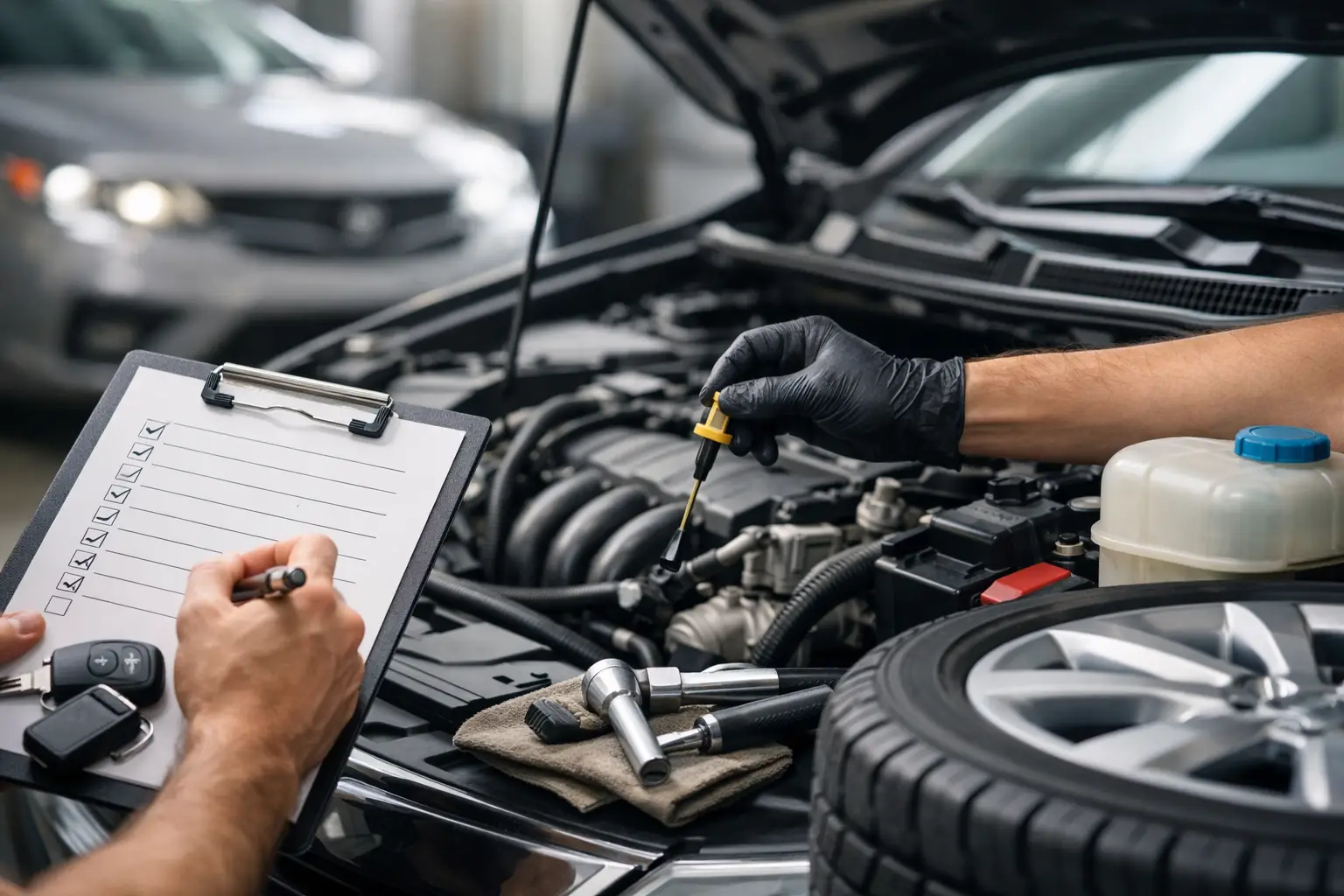
A missed oil change may not stop your commute today. A tire with low pressure, worn brake pads, or a weak battery can become a much bigger problem without much warning. This car maintenance checklist helps you stay ahead of the services that protect safe stopping, reliable starts, fuel efficiency, and the life of your vehicle.
Your owner’s manual is always the final authority for service intervals. Mileage, vehicle age, driving habits, weather, towing, and stop-and-go traffic all affect what your vehicle needs. A commuter who spends hours in traffic or a delivery driver making frequent short trips may need certain services sooner than a vehicle used mainly for highway driving.
Car Maintenance Checklist: Monthly Basics
Most of the items below take only a few minutes, but they can reveal a problem before it leaves you stranded or turns into an expensive repair.
Check tire pressure and tread
Tires affect braking, handling, ride comfort, and fuel use. Check pressure at least once a month and before a long trip, using the pressure listed on the driver’s door placard. That number, not the maximum pressure molded into the tire sidewall, is the correct target for your vehicle. Check when the tires are cold for the most accurate reading.
Look over each tire for nails, sidewall damage, bulges, uneven wear, and shallow tread. Uneven wear can point to an alignment issue, worn suspension components, or incorrect inflation. If the steering wheel pulls, the vehicle vibrates, or the steering wheel is off-center while driving straight, have the tires and alignment inspected promptly. Tire problems are not something to postpone, especially in rain, snow, or heavy traffic.
Look at fluids and leaks
Engine oil, coolant, windshield washer fluid, and brake fluid all support safe operation. Check oil according to your vehicle’s instructions, preferably on level ground after the engine has been off long enough for oil to drain back into the pan. A falling oil level, dark puddle under the vehicle, sweet-smelling coolant leak, or recurring low coolant deserves professional attention.
Do not assume every fluid simply needs topping up. Low brake fluid, for example, may be related to worn brake components or a leak. Mixing the wrong coolant or transmission fluid can also create avoidable damage. When in doubt, have a technician identify the fluid and find out why it is low.
Test lights, wipers, and warning indicators
Walk around the vehicle with the headlights, brake lights, turn signals, and hazard lights on. Replace burned-out bulbs quickly so other drivers can see your intentions. Streaking wipers should be replaced before a storm makes visibility worse, and washer fluid should be suitable for the temperatures you expect to drive in.
Pay attention to dashboard warning lights. A flashing check engine light usually calls for immediate service because it can indicate an active misfire that may damage the catalytic converter. A brake, oil pressure, or overheating warning should never be ignored. Pull over safely when necessary and arrange for an inspection instead of hoping the light disappears.
Every 5,000 to 8,000 Miles
For many drivers, this interval lines up with an oil service, though modern vehicles can have longer manufacturer-approved intervals. Follow the oil type and schedule specified for your engine. Vehicles used for short trips, rideshare work, towing, or frequent idling often fall under severe-service schedules.
A routine service visit is also a practical time to rotate tires. Rotation helps all four tires wear more evenly, which can extend tire life and preserve predictable handling. The correct rotation pattern depends on tire type, drivetrain, and whether the tires are directional or staggered.
Ask for a quick inspection of brakes, tire condition, suspension, steering parts, belts, hoses, and visible leaks while the vehicle is in the shop. This is not about adding unnecessary work. It is about catching a loose component, worn pad, or damaged tire while the repair is still straightforward.
Seasonal Car Maintenance Checklist
Seasonal changes place different demands on your vehicle. Before winter, make sure the battery tests well, the defroster works properly, washer fluid is freeze-resistant, and tires have sufficient tread for wet or icy roads. If your area sees regular snow and freezing temperatures, winter tires can provide a meaningful advantage in braking and traction over all-season tires.
Before hot weather, inspect the air conditioning system, coolant level, hoses, and radiator area. An air conditioner that blows warm air may need more than refrigerant. A leak, electrical issue, compressor concern, or blocked cabin filter can all affect performance, so accurate diagnostics matter.
Spring is a good time to remove road grime from the underbody and inspect for damage from potholes. Summer road trips call for a closer look at tire condition, spare tire pressure, battery health, and fluid levels. Keep an emergency kit with basics such as a flashlight, jumper cables or jump pack, tire pressure gauge, and weather-appropriate supplies.
Services to Plan by Time or Mileage
Some maintenance items do not need monthly attention, but skipping them can shorten component life. The right timing varies by make and model, so use these as planning points rather than universal deadlines.
- Engine and cabin air filters: Inspect them at regular service visits. A clogged engine air filter can restrict airflow, while a dirty cabin filter can reduce heating and air conditioning airflow.
- Brake inspection and fluid service: Brake pads, rotors, calipers, and fluid condition should be checked routinely. Squealing, grinding, vibration, a soft pedal, or longer stopping distances require immediate attention.
- Battery testing: Most batteries last roughly three to five years, but extreme temperatures and short-trip driving can reduce that lifespan. Test the battery before it fails, particularly if starts are slow or electronics act erratically.
- Coolant, transmission, and differential fluids: These fluids have very different service intervals and specifications. Some transmissions require specific procedures, so a generic fluid change is not always appropriate.
- Spark plugs and timing components: These can last a long time on newer vehicles, but they should be replaced at the manufacturer’s recommended interval. Waiting too long can lead to misfires, poor performance, or serious engine damage in vehicles with timing belts.
Listen to What Your Vehicle Is Telling You
A maintenance schedule works best when paired with attention to changes in how the vehicle feels. New sounds, smells, vibrations, or handling changes are useful information. A clicking sound during turns may point to a drivetrain issue. A clunk over bumps can involve suspension or steering components. A burning smell, grinding brakes, or shaking at highway speed needs a prompt inspection.
Avoid self-diagnosing based on one symptom alone. For example, a vibration could come from tire balance, bent wheels, uneven tire wear, brake components, suspension wear, or other causes. Precision diagnostics save time because they identify the actual fault before parts are replaced.
Keep Records and Build a Realistic Schedule
Save service invoices and note the date, mileage, and work completed. These records make it easier to track upcoming maintenance, support resale value, and spot repeated issues. They are especially useful for families sharing a vehicle, fleet managers, and drivers who put on high mileage each month.
If you recently bought a used vehicle with incomplete records, start with a thorough inspection rather than guessing. Establish a baseline for tire age and condition, brakes, fluids, battery health, filters, belts, and any warning lights. From there, you can create a service plan based on facts instead of assumptions.
Reliable maintenance is less about doing every possible service at once and more about handling the right work at the right time. When something feels different, or when you are unsure what your vehicle is due for, a professional inspection from JAK Tire Service can provide clear answers, fair recommendations, and confidence for the road ahead.