

A brake-pad choice can show up every morning on your wheels, every time you stop in traffic, and on the invoice when it is time for service. Ceramic versus metallic brake pads is not simply a question of which material is better. The right answer depends on your vehicle, driving routine, budget, and the braking performance you expect when the road is busy, wet, or heavily salted.
For many daily drivers, the best brake pad is the one that stops confidently, stays reasonably quiet, and works well with the vehicle’s rotors. For a truck that tows, a delivery vehicle that sees constant stop-and-go driving, or a performance-focused car, the priorities can be different. Knowing the trade-offs helps you approve brake work with confidence instead of choosing based on price alone.
Ceramic Versus Metallic Brake Pads: The Main Difference
Brake pads create friction against the brake rotor when you press the pedal. That friction turns the vehicle’s motion into heat and slows the wheels. The pad material affects how it manages heat, how much brake dust it produces, the sound it can make, and how it feels at the pedal.
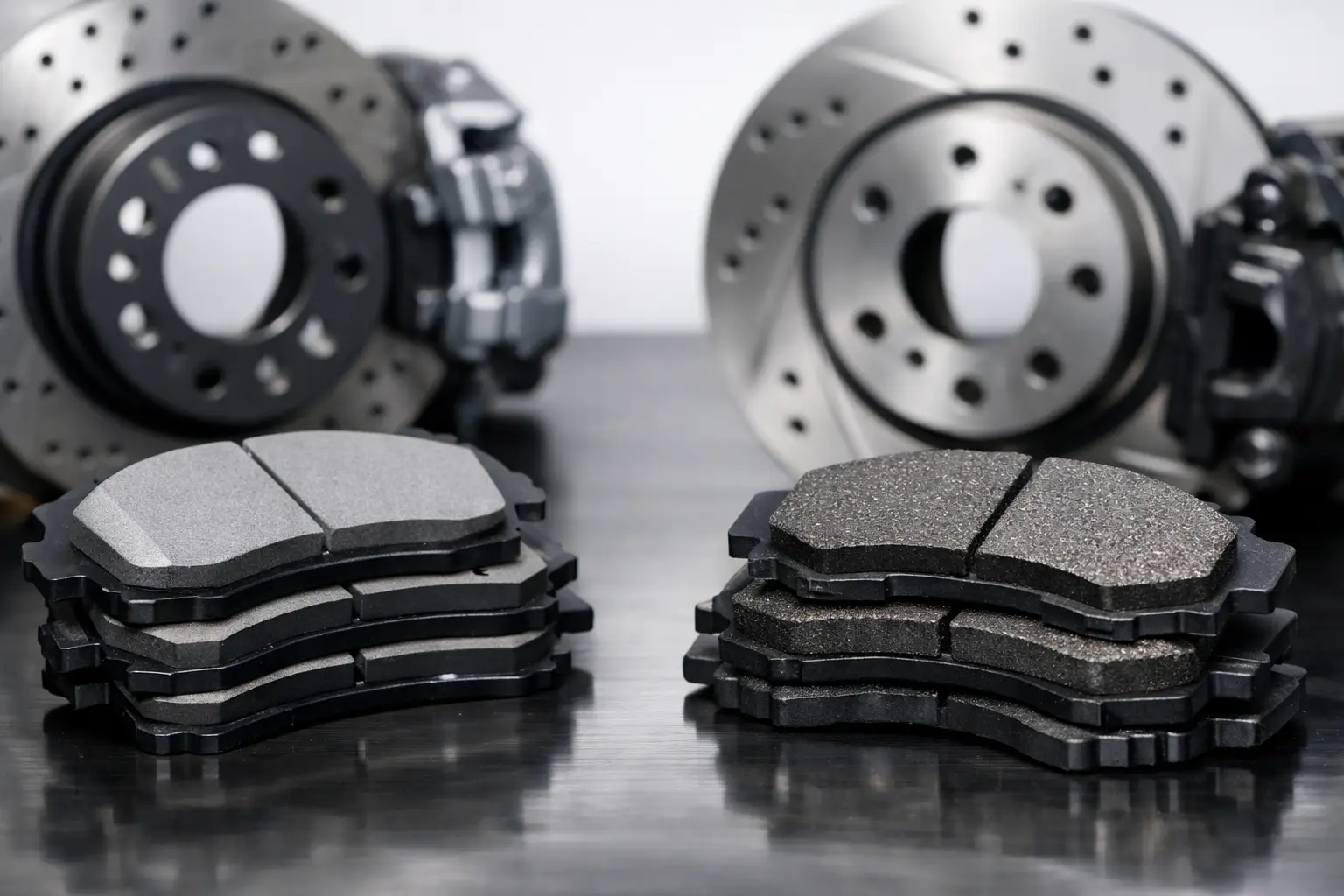
Ceramic brake pads use dense ceramic fibers, bonding agents, and small amounts of metal. They are designed for refined, consistent everyday braking. Semi-metallic pads use a larger percentage of metal fibers or particles, commonly steel, iron, copper, or similar materials, blended with friction compounds. They are built to transfer heat effectively and provide strong braking under demanding conditions.
Neither type is automatically right for every vehicle. A quality pad installed correctly is far more important than a cheap pad selected only because its label sounds premium.
Why Many Daily Drivers Choose Ceramic Pads
Ceramic pads are popular on sedans, crossovers, minivans, and many SUVs because they generally offer a quieter, cleaner driving experience. They tend to make less visible dark dust than semi-metallic pads, which is welcome for drivers who want their alloy wheels to stay cleaner between washes.
They also typically produce less noise during normal city and highway use. No brake pad can promise complete silence, especially in damp weather or after a vehicle sits overnight, but ceramic pads are often the better choice when low noise is a priority.
For commuters and family vehicles, ceramic pads usually provide smooth, dependable stopping with good rotor life in ordinary driving. They can cost more upfront, but the lower dust and more refined operation can make the added cost worthwhile.
Ceramic pads do have limits. They may not be the best match for severe towing, repeated heavy downhill braking, track use, or commercial use that keeps a loaded vehicle in constant stop-and-go operation. Their performance when very cold can also vary by pad design, so using a vehicle-appropriate, quality part matters in colder climates.
When Semi-Metallic Pads Make More Sense
Semi-metallic pads are often chosen for vehicles that work harder. Their metal content helps them move heat away from the braking surface, which can be useful during repeated hard stops, steep descents, hauling, and high-load driving.
That heat-handling ability is a major reason many trucks, larger SUVs, commercial vehicles, and performance applications use semi-metallic formulations. If your vehicle regularly carries tools, passengers, cargo, or a trailer, a technician may recommend them because brake temperatures can rise quickly under load.
The trade-off is that semi-metallic pads can be noisier and often leave more brake dust. They may also be more abrasive on rotors than a ceramic option, although pad quality, rotor quality, driving habits, and installation all influence real-world rotor wear. A well-matched semi-metallic pad is not a problem for your rotors. A poorly matched or low-quality pad can be.
Semi-metallic pads may also offer a firmer, more immediate braking feel. Some drivers prefer that response, while others notice little difference in normal driving. The vehicle’s brake system design has a large effect on pedal feel, so material alone does not tell the whole story.
Compare the Factors That Matter on Your Vehicle
Noise, dust, cost, and heat resistance are useful comparison points, but they should be weighed against how you actually drive.
Noise and brake dust
Ceramic pads usually have the advantage for quieter operation and less noticeable wheel dust. This makes them a common fit for daily commuting, rideshare driving, and vehicles with wheels that are difficult to keep clean.
Semi-metallic pads can create more noise, particularly when cold or damp, and their dust may be more visible. Squealing does not always mean the pads are unsafe or worn out. It can come from moisture, surface rust on the rotors, worn hardware, glazed pad material, or missing anti-noise shims. Persistent noise deserves an inspection rather than a guess.
Stopping power and heat
Both materials can stop a vehicle safely when they are designed for that vehicle and installed as part of a complete brake service. A pad cannot compensate for worn rotors, sticking calipers, contaminated brake fluid, or tires with poor grip.
Semi-metallic pads generally have an edge where repeated heat is the concern. Ceramic pads are very capable for normal daily use, but a vehicle that works under high load may benefit from the stronger heat management of a suitable semi-metallic compound.
Cost and long-term value
Ceramic pads are commonly more expensive than semi-metallic pads. However, the lowest initial price is not always the fair price over the life of the repair. Choosing pads that match the vehicle can reduce noise complaints, premature wear, and the need to redo a job.
Brake service should also consider the rotors, pad hardware, caliper movement, and brake fluid condition. Replacing pads without correcting seized slide pins or severely rusted rotors can lead to uneven wear and reduced braking performance, regardless of whether the new pads are ceramic or metallic.
Do Not Choose Pads Without Looking at the Rotors
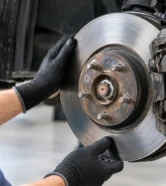
The pads and rotors are a working pair. Rotors must have enough thickness and a sound braking surface to be reused safely. If rotors are deeply grooved, rusted around the braking surface, heat-spotted, warped, or below specification, installing new pads alone can create vibration, noise, and poor contact.
In areas with winter road salt, rotor corrosion can become a real issue. Rust can build along the outer edge or inner face of a rotor where it is hard to see through the wheel. That can reduce the effective braking surface and cause uneven pad wear. A proper brake inspection checks more than the pad thickness visible from the outside.
Technicians should also clean and lubricate contact points with the correct brake lubricant, inspect caliper slide pins, and replace worn clips or hardware when needed. These details help the pads move freely and wear evenly. They are part of a reliable repair, not unnecessary extras.
Match the Pad to Your Driving Pattern
A ceramic pad is often a practical choice if you drive a passenger car, crossover, or light SUV mostly for commuting, errands, school runs, and highway travel. It is especially appealing if clean wheels and quiet braking matter to you.
A semi-metallic pad may be the better fit if you tow, carry heavy loads, drive a work truck, make frequent deliveries, travel through steep terrain, or regularly face aggressive stop-and-go use. Some vehicles also have manufacturer specifications that favor a particular pad type. Following those specifications protects braking balance and expected performance.
There are also premium hybrid formulations and manufacturer-specific pads that do not fit neatly into a simple ceramic-versus-metallic label. This is why the vehicle’s year, make, model, engine, brake package, and use should guide the recommendation. The pad that works well on one SUV may not be the right choice for another trim of the same model.
Signs It Is Time for a Brake Inspection
Do not wait for a warning light if the vehicle gives you a clear braking concern. Grinding, a soft pedal, pulling to one side, steering-wheel vibration during braking, a burning smell, or a brake warning light should be checked promptly. A high-pitched wear indicator is also a reason to schedule service before the pads wear into the rotors.
Brake noise after rain or an overnight freeze may disappear after a few stops, especially when light surface rust has formed. But recurring noise, shaking, or reduced stopping confidence is different. Those symptoms need a professional inspection to identify the cause.
At JAK Tire Service, the goal is straightforward: inspect the complete brake system, explain what is worn and why, and recommend pads that suit how you use your vehicle. Whether ceramic or semi-metallic is the better choice, safe stopping starts with the right parts, precise installation, and service you can trust every time you press the brake pedal.