A forklift with a damaged tire can turn a normal warehouse shift into a safety issue within minutes. A loader with uneven tire wear can lose traction, burn more fuel, and put additional strain on suspension and steering components. Reliable industrial equipment tire service is not just about replacing worn rubber. It is about keeping people safe, protecting equipment, and preventing avoidable downtime.
For businesses that rely on forklifts, skid steers, telehandlers, loaders, utility vehicles, and commercial work trucks, tire condition deserves the same attention as brakes, fluids, and scheduled maintenance. The right tire setup depends on the machine, the surface, the load, and the work being done.
Why Industrial Tires Need Different Attention
Industrial equipment works under conditions that passenger vehicles rarely face. Heavy loads, repeated tight turns, debris, uneven ground, long operating hours, and frequent stops can wear tires quickly. Even equipment that travels slowly can place enormous stress on its tires.
A forklift operating inside a smooth warehouse may need solid tires built to resist wear and punctures. A skid steer used outdoors may need pneumatic tires with a tread pattern that grips loose gravel, dirt, snow, or mud. A loader working on a construction site may require deeper tread and stronger sidewalls to manage rough surfaces and heavy materials.
Using the wrong tire may seem like a small decision at first, but it can lead to poor stability, rougher operation, faster wear, and higher operating costs. Tire selection should match the job, not simply the lowest purchase price.
What Industrial Equipment Tire Service Includes
A proper tire service starts with an inspection of the tire, wheel, and equipment application. A technician should look beyond obvious tread wear and check for cuts, cracks, chunking, punctures, sidewall damage, leaks, wheel damage, and signs that the tire is wearing unevenly.
For pneumatic tires, correct inflation is a major safety and performance factor. Underinflated tires flex too much, build heat, wear along the edges, and can make equipment feel unstable under load. Overinflated tires can reduce traction, create a harsher ride, and wear more quickly through the center of the tread.
Solid tires do not require air, but they still need regular inspection. As solid tires wear down, they lose cushioning and can affect operator comfort, traction, and machine stability. Deep cuts, separation, or excessive wear can mean it is time to plan replacement before the tire becomes a work stoppage.
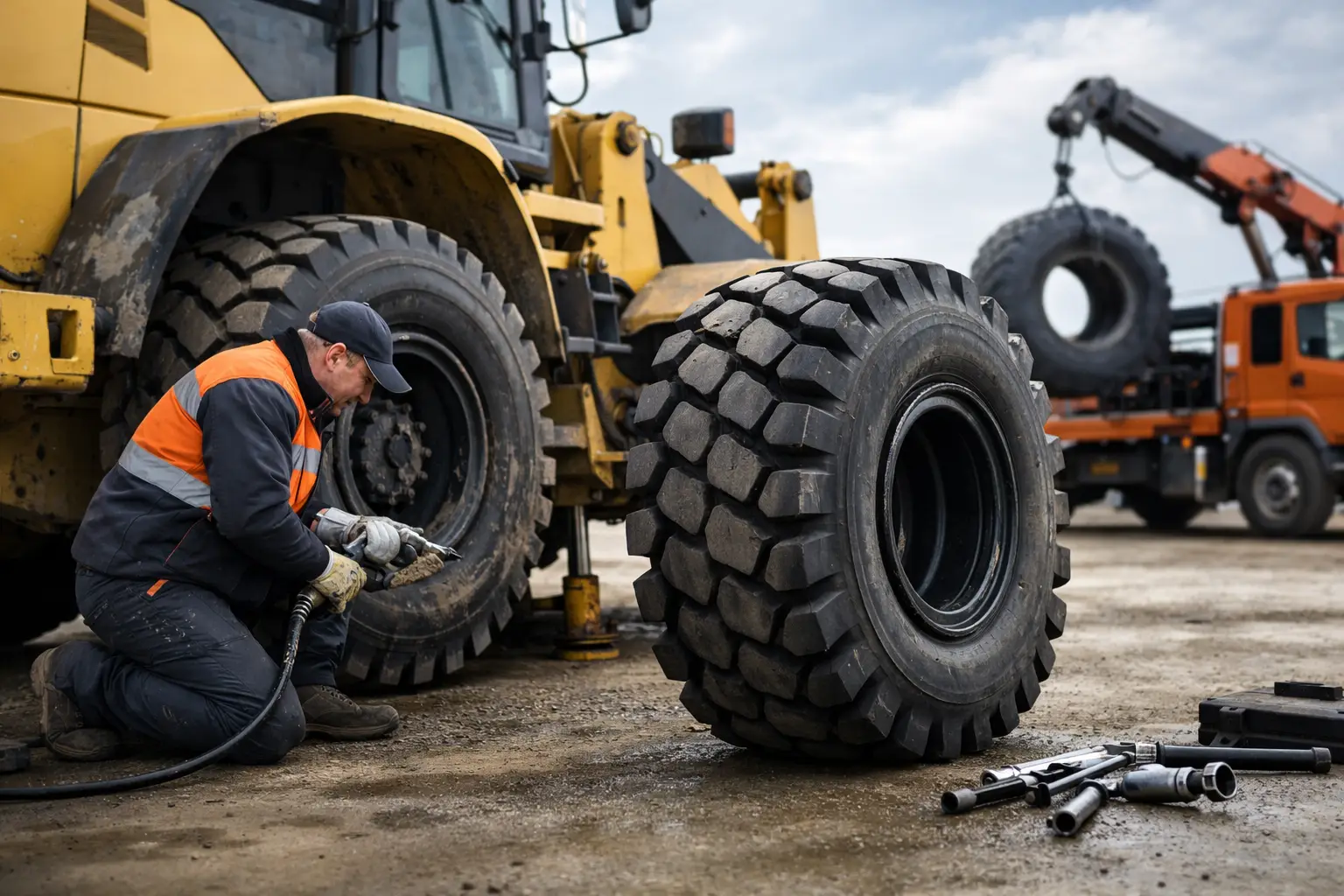
Professional industrial equipment tire service may also include tire mounting and dismounting, wheel inspection, replacement recommendations, flat repair where appropriate, and help choosing a tire type that fits your working environment. Some equipment also needs wheel hardware checked carefully after tire work, since improper installation can create dangerous vibration or wheel-related failures.
Know the Warning Signs Before a Tire Fails
Industrial tires rarely fail without giving some warning. The key is catching the warning early, while there is still time to schedule service instead of responding to an emergency.
Pay attention when operators report vibration, pulling, reduced traction, bouncing, rough steering, or a machine that feels less stable than usual. These concerns can point to tire damage, uneven wear, low air pressure, wheel problems, or an issue in the steering or suspension system.
Visible damage matters too. A puncture, bulge, exposed cords, deep sidewall cut, missing chunks of rubber, or severely worn tread should be evaluated promptly. Continuing to operate equipment with damaged tires may put the operator and nearby workers at risk, especially when the machine handles elevated loads or works near pedestrians.
Uneven wear is another issue that should not be ignored. On industrial vehicles and commercial work trucks, uneven wear may be caused by incorrect inflation, worn steering components, improper alignment, bent wheels, overloaded operation, or driving conditions. Replacing the tire without addressing the cause can mean the new tire wears out just as quickly.
Choosing Between Pneumatic and Solid Tires
There is no single best industrial tire for every application. The right choice depends on how and where the equipment operates.
Pneumatic tires are filled with air and are often used where traction and ride comfort matter. They can perform well outdoors on uneven surfaces, including gravel and loose ground. Their trade-off is puncture risk. In yards, recycling facilities, construction sites, or areas with nails, metal, and sharp debris, flats can cause repeated interruptions.
Solid tires are common for forklifts and other equipment working on hard, smooth surfaces. They are highly resistant to punctures and can provide dependable service in warehouses, manufacturing plants, and distribution centers. The trade-off is a firmer ride and, in some applications, less traction on loose or wet terrain.
Foam-filled tires may be considered for equipment that needs pneumatic-style traction but cannot afford frequent flats. They reduce puncture-related downtime, though they add weight and can change ride characteristics. The equipment manufacturer’s specifications, load capacity, and work surface should guide the decision.
Tire Care That Reduces Downtime
The most cost-effective tire replacement is often the one you can schedule before it becomes urgent. A simple inspection routine can help fleet managers, equipment owners, and operators spot problems early.
At the start of a shift, operators should visually check tires for obvious damage, lodged debris, low pressure, and severe wear. For pneumatic tires, pressure should be checked with a reliable gauge according to the manufacturer’s recommendation. Never guess based on appearance alone, especially on heavy-duty equipment where the tire can look normal while still being underinflated.
Equipment should also be operated within its rated capacity. Overloading increases tire stress, affects stability, and speeds up wear. Sharp turns, spinning tires, sudden braking, and travel over debris can also shorten tire life. These habits may be difficult to avoid entirely in a busy operation, but regular operator training makes a measurable difference.
Keeping work areas clear helps as well. Removing scrap metal, broken pallets, fasteners, sharp stone, and other debris lowers the risk of punctures and tire cuts. It is a small housekeeping step that can prevent an expensive interruption later in the day.
Do Not Treat a Tire Problem as Only a Tire Problem
When an industrial tire wears abnormally, the tire may be revealing another mechanical concern. Misalignment can cause rapid shoulder wear. Loose steering parts can make tires scrub across the ground. Worn suspension components on commercial vehicles can lead to cupping and irregular tread patterns. Brake drag can create heat and shorten tire life.
That is why a careful service process matters. A good technician looks for the reason behind the damage rather than simply fitting a new tire and sending the machine back to work. This approach helps protect your investment and reduces the chance of repeat downtime.
For road-going commercial vehicles that support industrial operations, regular tire inspections should be paired with wheel alignment, brake checks, suspension service, and preventive maintenance. A delivery truck or service vehicle that is off the road can delay an entire work crew, even if the jobsite equipment is ready.
When Replacement Is the Safer Choice
Some tire damage can be repaired, but repair is not always the safe or practical option. A repair decision depends on the tire type, damage location, depth of the injury, operating pressure, load requirements, and manufacturer guidance.
A small tread-area puncture on an appropriate pneumatic tire may be repairable. Sidewall damage, major cuts, exposed cords, bulges, bead damage, and extensive tread separation generally call for replacement. On equipment that carries heavy loads or works at height, taking chances with compromised tires is not worth the risk.
Plan replacement in pairs or complete sets when recommended for the equipment. Mismatched tire sizes, tread patterns, or rolling diameters can affect handling, traction, stability, and drivetrain performance. The best approach depends on the machine and the condition of the remaining tires, so a professional inspection is worthwhile.
Your equipment earns its keep by staying productive, predictable, and safe. Make tire inspections part of the work routine, address damage early, and choose service based on how the machine actually works. A few minutes of attention before a shift can save hours of downtime when the work cannot wait.