

A car that starts a little slower on a cold morning is easy to ignore – until it will not start at all in a parking lot, driveway, or delivery stop. Knowing when to replace car battery can help you avoid that disruption, protect your vehicle’s electrical system, and keep your daily schedule moving.
A battery rarely fails without some warning. The challenge is that the signs can look small at first: a sluggish crank, dim headlights at idle, or a dashboard message that disappears after a few seconds. Paying attention early gives you time to test the battery and make a clear decision instead of waiting for a roadside surprise.
When to Replace Car Battery Based on Age
Most car batteries last about three to five years. That is a useful starting point, not a guarantee. A battery installed three years ago may still test strong, while another may struggle after two years because of extreme temperatures, frequent short trips, loose connections, or heavy electrical demand.
For drivers in the GTA, winter is often the deciding factor. Cold weather reduces a battery’s available power just when the engine needs more energy to start. If your battery is approaching its fourth year, testing it before winter is a practical step. It is usually far less stressful and less expensive than arranging a tow after a no-start condition.
Check the date code on the battery case if you are unsure of its age. It may be shown as a month and year, or as a letter-and-number code. If the battery came with a used vehicle and there is no clear record of replacement, a professional battery test is the most reliable way to understand its condition.
7 Signs Your Car Battery May Need Replacement
Battery problems are not always caused by the battery itself. A failing alternator, corroded terminal, damaged cable, or parasitic electrical draw can create similar symptoms. Still, these warning signs mean your vehicle deserves attention soon.
1. The engine cranks slowly
A slow, labored crank is one of the clearest battery warnings. You may hear the starter turn over more slowly than usual before the engine fires. If it happens repeatedly, especially after the vehicle sits overnight, the battery may no longer have enough reserve capacity.
One slow start on an exceptionally cold morning does not automatically mean replacement. Repeated slow starts in normal conditions are different. Have the charging and starting systems tested rather than relying on a jump-start alone.
2. You need frequent jump-starts
A jump-start is meant to get you moving temporarily, not solve the underlying problem. If your car needs a boost more than once, the battery may be weak, undercharged, or unable to hold a charge. It could also indicate that something is draining power while the vehicle is parked.
After a jump-start, a short drive around the block may not fully recharge a low battery. But if a properly charged battery loses power again soon afterward, it needs professional diagnosis.
3. Headlights and accessories seem weak
Dim headlights, slow power windows, a fading infotainment screen, or a blower motor that changes speed can point to low system voltage. These symptoms are often more noticeable at idle, when the vehicle is relying heavily on the battery and alternator together.
Do not assume every electrical issue means you need a new battery. If the alternator is not charging correctly, replacing the battery alone will not fix the problem. Proper testing separates a battery issue from a charging-system issue and helps prevent unnecessary repairs.
4. The battery warning light comes on
The battery-shaped dashboard light usually refers to the charging system, not simply the battery. It can appear when the alternator, drive belt, wiring, or battery connections are not doing their job. If that light stays on while driving, avoid treating it as a minor reminder.
Your vehicle may continue running for a short time on stored battery power, but it can eventually stall once that power is depleted. Have the vehicle inspected promptly, particularly if the light appears with dim lights, steering changes, or other electrical concerns.
5. There is corrosion, swelling, or a sulfur smell
Open the hood occasionally and look at the battery. White, blue, or green buildup around the terminals can interfere with the connection and make starting difficult. Light corrosion may be cleaned and the terminals secured, but severe buildup can signal a larger problem.
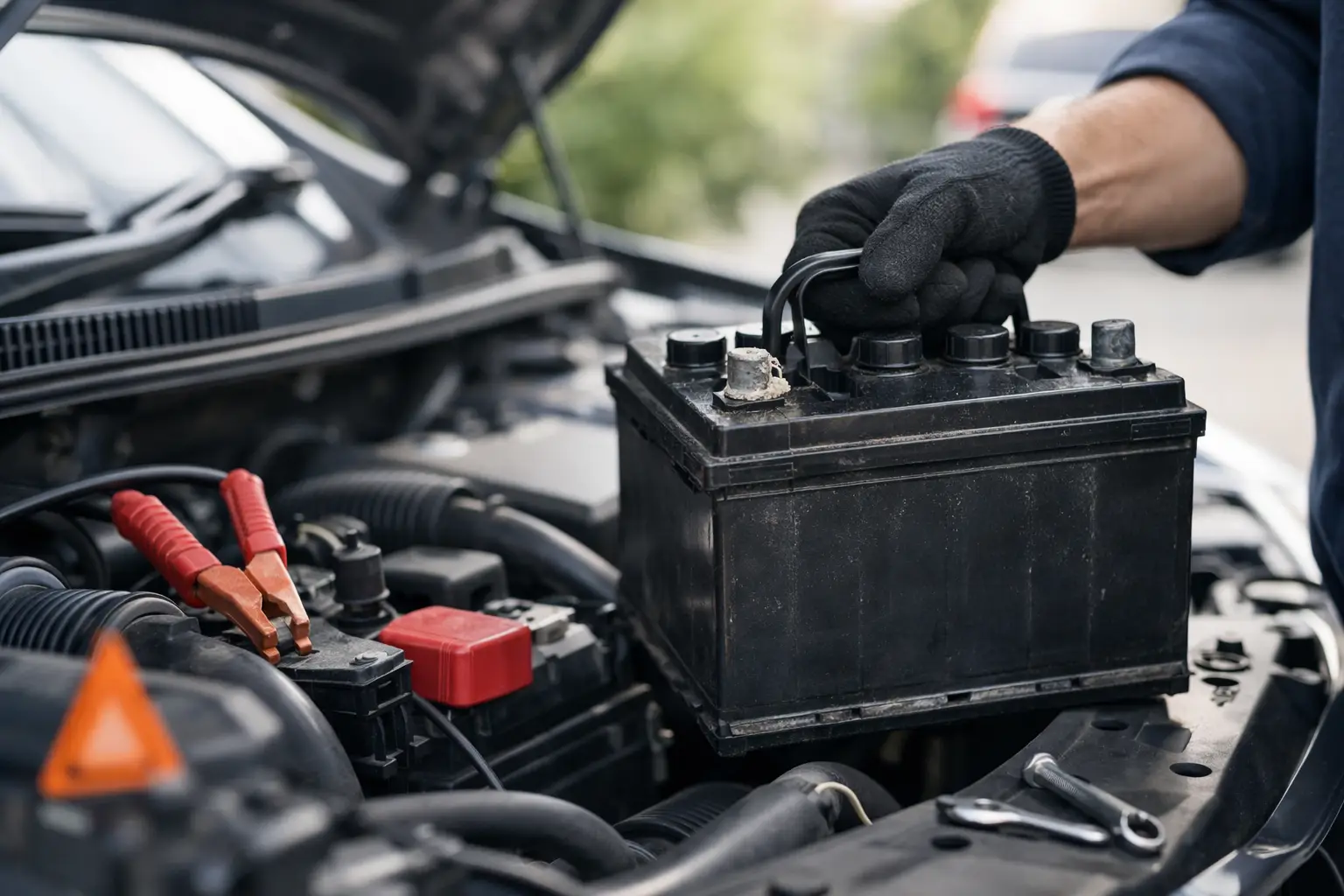
A swollen or bulging battery case is more serious. Heat, overcharging, or an internal battery failure can cause the case to deform. A rotten-egg or sulfur-like smell may indicate a leaking or overcharging battery. Do not touch or attempt to charge a damaged battery. It should be inspected and replaced safely.
6. The battery is old and performance is inconsistent
A battery close to or beyond its expected service life can seem fine one day and fail the next. This is common when the internal plates have deteriorated but the battery still has enough strength for mild weather. A cold snap can expose the weakness quickly.
If your battery is four or five years old, replacement may be the sensible choice even if it has not completely failed. The trade-off is straightforward: testing may show it still has usable life, but replacing a marginal battery before severe weather can offer greater confidence for commuters, families, and vehicles used for work.
7. Your vehicle sits often or only takes short trips
Batteries recharge while you drive, but very short trips may not replace the power used to start the engine. Vehicles that sit for days, make frequent stop-and-go trips, or run accessories while parked can slowly lose charge. Ride-share, delivery, and fleet vehicles may also put extra demand on batteries through constant starts and accessory use.
If this matches your driving habits, routine testing matters more than simply watching the battery’s age. In some cases, a battery maintainer or a longer regular drive can help preserve charge. If the battery repeatedly falls low despite normal use, it should be tested for capacity and for unwanted electrical drain.
Battery Test Results Matter More Than Guesswork
Voltage alone does not tell the whole story. A battery can show normal voltage at rest yet fail under the heavy load required to start an engine. A proper battery test measures its ability to deliver current and compares its actual condition with its rated cold-cranking amps.
A complete check should also include the alternator output, terminal condition, cables, and starter draw when needed. This matters because installing a new battery into a vehicle with a charging problem can shorten the new battery’s life. Precision diagnostics provide clear answers and help you spend money on the repair your vehicle actually needs.
At JAK Tire Service Corp, technicians can test the battery and charging system, explain the results in plain language, and recommend replacement only when it makes sense. The right replacement battery must fit the vehicle, meet its power requirements, and be installed with clean, secure connections.
Choosing the Right Replacement Battery
Modern vehicles do not all use the same battery. Many cars use conventional flooded lead-acid batteries, while vehicles with start-stop systems often require AGM batteries. Installing a lower-spec battery in a vehicle designed for AGM technology can cause poor performance and reduced service life.
The correct battery depends on group size, terminal layout, cold-cranking amp rating, reserve capacity, and your vehicle manufacturer’s requirements. A larger rating is not always better if the battery does not physically fit or match the electrical system. Professional installation also helps ensure battery hold-downs, terminals, and memory settings are handled correctly.
After replacement, some vehicles may need a battery registration or reset procedure so the charging system recognizes the new battery. This is especially common in late-model European vehicles and certain vehicles with battery-management systems. Skipping that step can affect charging behavior and battery life.
Do Not Wait for a Complete No-Start
Replacing a battery before it fails completely is preventive maintenance, not unnecessary maintenance. If the battery is aging, starts are becoming slower, or testing shows reduced capacity, schedule service while the vehicle is still dependable enough to get there.
A strong battery supports more than starting. It helps keep lights bright, electronics stable, safety systems ready, and your vehicle prepared for the next early commute or cold-weather errand. A quick test now can save you from a much bigger interruption later.