

The first truly cold morning often reveals problems that went unnoticed all fall: a slow-starting battery, weak wipers, low tire pressure, or brakes that do not feel quite right. To prepare car for winter conditions, do more than toss an ice scraper in the trunk. A few timely maintenance checks can make a major difference when roads are wet, temperatures drop, and your commute cannot wait.
For drivers in North York and across the GTA, winter preparation is about dependable daily driving. Whether you drive a family SUV, a work truck, a delivery vehicle, or a commuter sedan, the goal is the same: better traction, safe stopping, clear visibility, and fewer surprises on the road.
Prepare Your Car for Winter Before the First Storm
The best time to schedule winter maintenance is before you need it. Cold weather puts added strain on tires, batteries, fluids, brakes, and rubber components. Small issues that are manageable in mild weather can become inconvenient or unsafe when snow, slush, and freezing rain arrive.
Start with a professional inspection if your vehicle is due for service or you have noticed warning signs such as slow cranking, vibration, pulling while braking, squealing brakes, dim lights, or uneven tire wear. A good inspection gives you clear answers about what needs attention now and what can reasonably wait. That is the difference between preventive maintenance and unnecessary repairs.
Install winter tires at the right time
Winter tires are one of the most meaningful upgrades you can make for cold-weather driving. Their rubber stays more flexible as temperatures fall, and their tread pattern is designed to grip snow, slush, and cold pavement. All-season tires can work well in moderate conditions, but they do not provide the same traction or braking confidence once temperatures regularly approach 45°F.
Install four matching winter tires, not just two. Putting winter tires only on the drive wheels can create an imbalance in traction that makes the vehicle harder to control during turns or sudden stops. Tire size, load rating, and speed rating should match your vehicle requirements.
Check tread depth before deciding whether last season’s tires are ready to return. A tire may still be technically legal yet have reduced ability to clear snow and water. Also have tire pressure checked regularly. Pressure drops as the temperature falls, and underinflated tires can wear faster, handle poorly, and reduce fuel economy.
Check wheel alignment and suspension
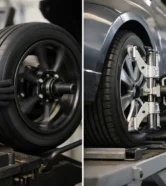
If your steering wheel is off-center, your vehicle drifts to one side, or your tires show uneven wear, schedule a wheel alignment check. Potholes, curbs, and rough roads can knock alignment angles out of specification. Winter tires cannot perform at their best if they are not meeting the road evenly.
Suspension parts deserve attention too. Worn shocks, struts, ball joints, or bushings may make the vehicle feel unstable over bumps and increase stopping distance on uneven roads. This matters even more when roads are slippery. A precise alignment and healthy suspension help protect your tire investment while giving you more predictable control.
Make Sure Your Battery Can Handle the Cold
Your battery has a tougher job in winter. Cold temperatures reduce available battery power, while the engine needs more effort to start. A battery that seemed fine in September can fail on the first subfreezing morning.
Have the battery tested, especially if it is more than three years old or the engine cranks slowly. A technician can test the battery, charging system, and starter circuit to identify whether the battery is weak or whether another issue is causing the problem. Look for corrosion around battery terminals as well. Clean, secure connections help current flow properly.
Do not assume a short drive will recharge a weak battery. Frequent short trips, heated seats, rear defrosters, headlights, and blower motors all add demand. If you rely on your car for school drop-offs, work, or deliveries, a battery test is inexpensive peace of mind.
Inspect Brakes for Confident Winter Stops
Traction affects stopping distance, but so does brake condition. Snow and ice already limit grip, so worn brake pads, damaged rotors, or a brake fluid issue leave less margin for error.
Pay attention to warning signs: grinding or squealing sounds, a soft brake pedal, vibration when braking, a vehicle that pulls to one side, or a brake warning light. These are not symptoms to ignore until spring. A brake inspection can confirm pad thickness, rotor condition, caliper operation, brake lines, and fluid condition.
Winter braking should feel controlled and consistent. If it does not, get the issue checked promptly. Stop Safe, Drive Confident is more than a slogan when road conditions change by the hour.
Top Up the Fluids That Protect Your Vehicle
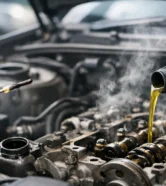
Your vehicle’s fluids do different jobs, but each one supports reliable cold-weather operation. Engine oil lubricates moving parts, coolant regulates engine temperature, brake fluid transfers braking force, and windshield washer fluid keeps your view clear.
Check your oil level and follow the oil viscosity recommended by your vehicle manufacturer. If an oil change is due soon, doing it before winter is usually the practical choice. Old or low oil can make an engine work harder, particularly during cold starts.
Coolant should have the correct antifreeze concentration and should be clean enough to protect against freezing and corrosion. Never open a hot cooling system. If you notice a sweet smell, puddles under the vehicle, an overheating gauge, or low coolant, arrange an inspection rather than simply adding more fluid.
Use winter-rated windshield washer fluid, not plain water. Water can freeze in the reservoir, hoses, or nozzles. Keep the reservoir topped up because slush and road salt can cover a windshield quickly, especially on highway drives.
Do Not Overlook Wipers, Lights, and Defrosters
Visibility is a safety system. Wiper blades that streak or skip can turn a wet nighttime drive into a stressful one. Replace blades that leave lines, chatter across the glass, or have cracked rubber. It is also wise to check the rear wiper on SUVs, hatchbacks, and wagons.
Test headlights, brake lights, taillights, turn signals, reverse lights, and license plate lights. Clean the lenses regularly during winter, since salt and road grime reduce how well other drivers can see you. If a headlight looks dim or flickers, have the charging system and bulb connection checked.
Make sure the front and rear defrosters work properly before temperatures fall. A weak heater, poor airflow, or a fogging windshield may point to a cabin air filter issue, blower motor concern, or cooling system problem. Clear glass is not optional when you are merging, changing lanes, or watching for pedestrians in poor weather.
Keep a Practical Winter Kit in the Vehicle
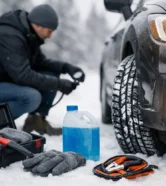
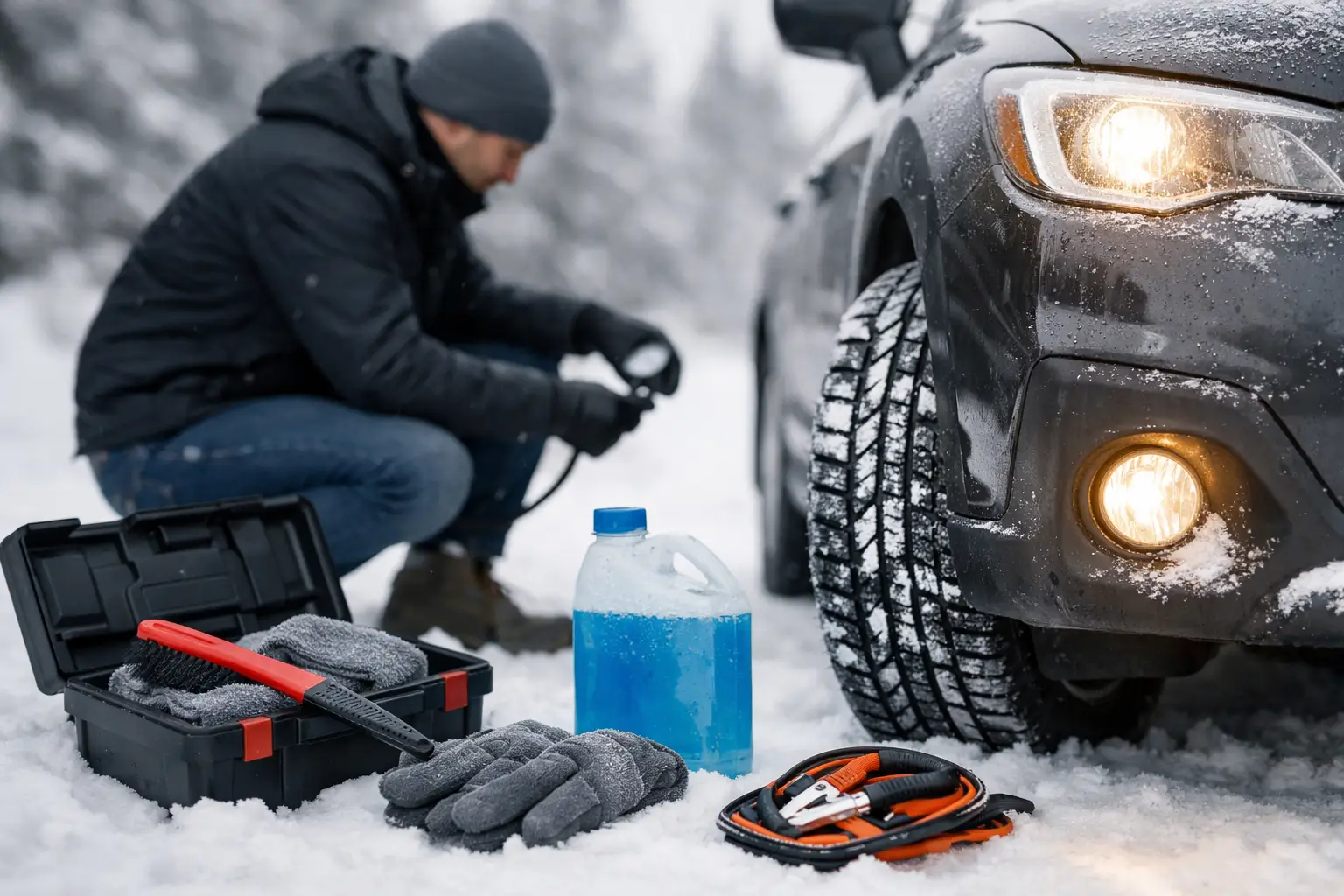
A winter kit is not a replacement for maintenance, but it helps when delays happen. Keep it compact and suited to the way you drive. A basic kit should include an ice scraper and brush, warm gloves, a flashlight, a phone charging cable, booster cables or a jump pack, a small shovel, and a blanket. For longer trips, add water and nonperishable snacks.
If you drive for work or travel outside the city often, consider keeping traction aids and extra washer fluid in the vehicle. Check your spare tire or tire mobility kit, too. A spare with no air is not much help on the shoulder of a cold road.
Adjust Your Driving Habits, Too
Even a well-maintained car cannot eliminate winter risk. Leave more following distance, brake earlier and more gently, and avoid sudden steering inputs. Clear all snow and ice from the roof, hood, lights, mirrors, windows, and camera sensors before driving. Snow left on the roof can slide onto the windshield during braking or blow onto the vehicle behind you.
Give yourself a few extra minutes on stormy days. Rushing is often what turns a manageable commute into a close call. If the vehicle feels different after hitting a pothole or driving through deep slush, do not wait for the next scheduled service to ask about it.
A winter inspection at JAK Tire Service can help you address the items that affect your vehicle most, from tire condition and alignment to brakes, batteries, and fluids. Book before the weather turns, then head into the season knowing your vehicle is ready for the road ahead.