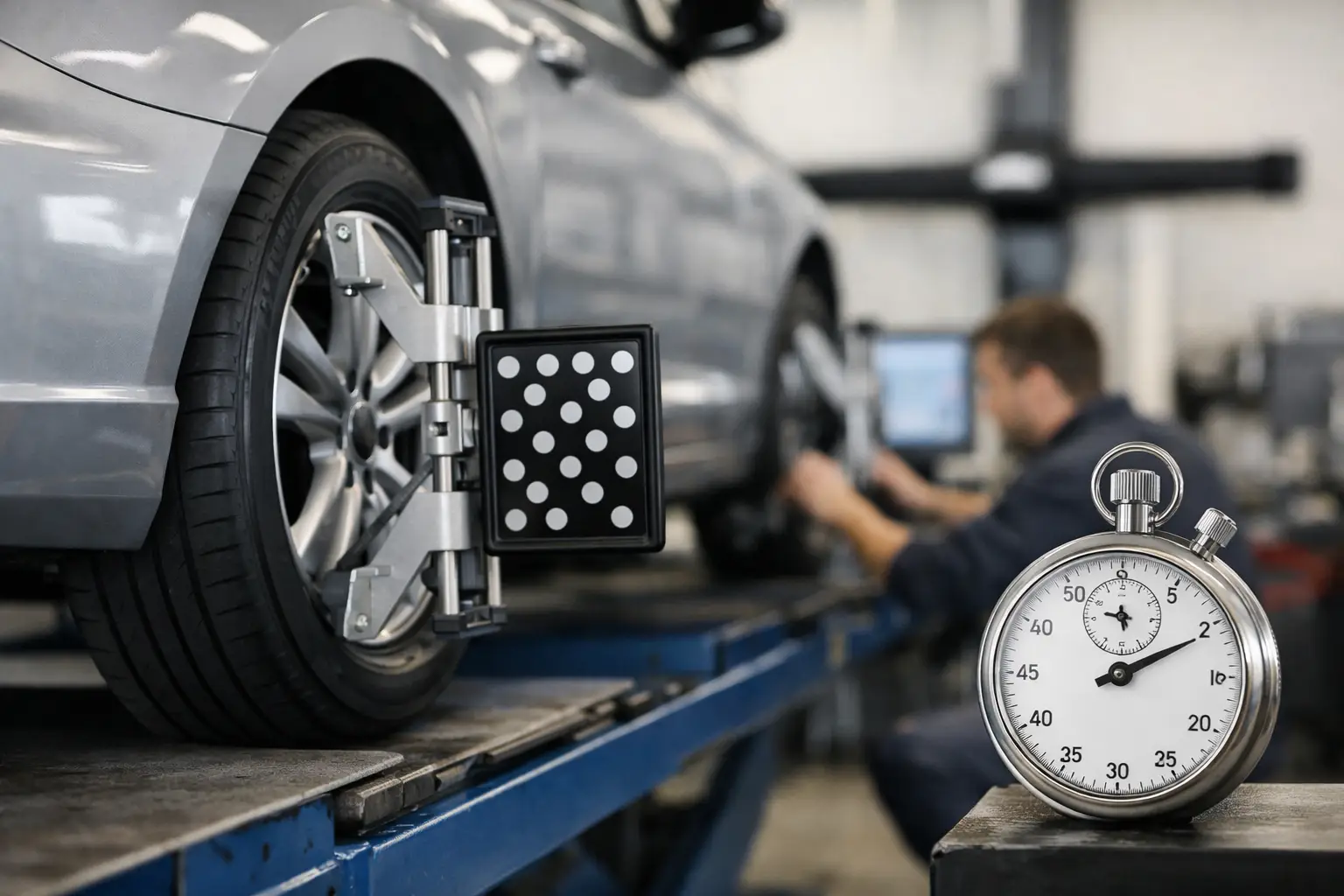
A steering wheel that pulls toward one lane on the 401, uneven tire wear, or a vehicle that feels unsettled after hitting a pothole are all good reasons to ask: how long does a wheel alignment take? For most vehicles, plan on about 45 minutes to one hour for a standard wheel alignment. If the technician finds worn suspension parts, bent components, seized adjustment bolts, or tire issues, the visit can take longer.
An alignment is not just a quick adjustment made by eye. A professional technician measures the angles of your wheels against the vehicle manufacturer’s specifications, checks whether related parts are safe to adjust, and makes precise corrections. That process helps your vehicle track straight, protects your tires, and makes everyday driving more comfortable and predictable.
How Long Does a Wheel Alignment Take in Real Conditions?
A straightforward alignment on a well-maintained car, SUV, or light truck often takes 45 to 60 minutes. The vehicle is placed on an alignment rack, sensors or targets are installed, tire pressure and basic suspension conditions are checked, and the technician adjusts the alignment angles as needed.
Some appointments take closer to 60 to 90 minutes. This is common when a vehicle has adjustable rear suspension, when the steering wheel needs careful centering, or when the alignment is significantly out of specification. A four-wheel alignment also involves measuring and correcting the rear wheels where the vehicle design allows it.
If repairs are required before the alignment can be completed, the total time depends on the problem. Replacing a worn tie rod end, ball joint, control arm, strut, or wheel bearing adds repair time, and the alignment should be completed only after those parts are secure. Adjusting a vehicle with loose or damaged steering and suspension components would not provide a reliable result.
Typical Alignment Timing by Situation
For a standard passenger vehicle with no underlying problems, allow about an hour. A vehicle with a recent suspension repair may need a similar amount of time, plus the time required for the repair itself. A truck, performance vehicle, lowered vehicle, or vehicle with modified suspension may require additional setup and adjustment time.
Older vehicles can also take longer. In areas that experience winter road salt, adjustment hardware may rust or seize. Technicians may need extra time to free components safely or discuss repair options if an adjustment cannot be made properly. Fast service matters, but accurate work matters more when your tires, steering, and vehicle safety are involved.
What Happens During a Professional Wheel Alignment?
A proper alignment begins with inspection, not adjustment. The technician checks tire condition and inflation, since low pressure or badly worn tires can affect handling and alignment readings. They also inspect visible steering and suspension components for looseness, damage, or excessive wear.
Next, the vehicle is positioned on a calibrated alignment rack. Modern alignment equipment measures the angles of all four wheels and compares them with factory specifications. The main angles technicians evaluate are camber, caster, and toe.
Camber is the inward or outward tilt of a wheel when viewed from the front. Too much positive or negative camber can wear the inside or outside edge of a tire. Caster affects steering stability and how well the steering wheel returns after a turn. Toe describes whether tires point slightly inward or outward relative to each other. Incorrect toe can wear tires quickly, even when the vehicle seems to drive reasonably well.
The technician then adjusts the angles that are adjustable on your vehicle. Once the measurements are within specification, they center the steering wheel and recheck the readings. A final alignment report may show the measurements before and after the service, giving you a clear record of what was corrected.
Why an Alignment May Take Longer Than Expected
A longer appointment does not automatically mean something is wrong or that a shop is moving slowly. It can mean the technician is taking the right steps to find and address the actual cause of the issue.
Worn suspension and steering parts are one of the biggest reasons for delays. If a tie rod, ball joint, bushing, control arm, or strut mount has play, the wheels can shift while driving. Alignment settings may look correct on the rack but change as soon as the vehicle is back on the road. Repairing the worn part first prevents wasted alignment work and helps restore safe handling.
Damaged wheels or tires can also complicate the diagnosis. A bent wheel, separated tire belt, irregular tire wear, or badly mismatched tires can cause vibration and pulling that an alignment alone will not fix. The technician may recommend tire service, wheel repair, or further inspection instead of promising that alignment will solve every handling concern.
Collision damage and severe pothole impacts are another consideration. If a suspension arm, subframe, or other structural component is bent, the vehicle may not adjust fully back to factory specifications. A professional shop should explain the readings clearly and advise you on practical next steps rather than forcing adjustments beyond safe limits.
Can You Wait While Your Vehicle Is Being Aligned?
In many cases, yes. If you have a scheduled appointment and your vehicle needs only a standard alignment, waiting about an hour is usually reasonable. It is still smart to leave some flexibility in your schedule, especially if you have noticed strong pulling, steering vibration, unusual noises, or severe tire wear.
For busy commuters, rideshare drivers, delivery drivers, and fleet vehicles, an alignment appointment can often be planned around a workday with minimal interruption. Booking ahead gives the service team time to prepare and helps avoid unnecessary waiting. If inspection reveals a repair need, you can decide whether to authorize the work that day or schedule it for another time.
When Should You Schedule a Wheel Alignment?
There is no single mileage interval that applies to every driver. Many drivers have their alignment checked once a year, when installing new tires, or after a significant pothole or curb impact. In the GTA, winter roads and potholes can make these checks especially worthwhile.
Schedule an inspection sooner if your vehicle pulls or drifts on a level road, the steering wheel sits off-center while driving straight, or your tires show uneven wear. Feathering across the tread, rapid wear on one edge, and a vehicle that feels twitchy or unstable can all point to an alignment or suspension concern.
New tires are a particularly good time to check alignment. Tires are a major investment, and driving on poor alignment can shorten their usable life. Correcting the wheel angles early helps new tires wear more evenly and supports better fuel efficiency, steering response, and road grip.
Alignment Is Different From Tire Balancing
Wheel alignment and tire balancing are often mentioned together, but they correct different issues. Alignment adjusts the direction and angle of the wheels so the vehicle drives straight and tires wear properly. Tire balancing distributes weight evenly around the wheel and tire assembly to reduce vibration, particularly at highway speeds.
If your steering wheel shakes at a specific speed, balancing may be the likely starting point. If the vehicle pulls, the steering wheel is crooked, or tire wear is uneven, alignment is more likely to be involved. Sometimes both services are needed, especially after installing tires or repairing suspension components.
How to Get the Best Result From Your Appointment
Tell the service advisor what you have noticed and when it happens. Mention whether the pull started after a pothole hit, curb contact, tire replacement, suspension repair, or collision. Explain whether the vehicle pulls only while braking, at highway speeds, or all the time. Those details help the technician inspect the right areas efficiently.
Avoid assuming that a steering pull is always alignment-related. Road crown, tire pressure differences, tire wear, brake drag, and suspension damage can all affect how a vehicle tracks. Honest diagnostics save time because they focus on the source of the problem rather than applying a one-size-fits-all service.
At JAK Tire Service Corp, the goal is simple: inspect carefully, explain clearly, and complete the alignment only when the vehicle is ready for precise adjustment. If your steering feels off or your tires are wearing unevenly, setting aside an hour for a professional check can help protect your tires and keep every drive more confident.