A pothole that makes the whole vehicle shudder, a steering wheel that suddenly feels vague, or a ride that has become noticeably rough can be more than an annoyance. These are among the top signs of suspension failure, and they deserve attention before a minor wear issue affects tire life, braking control, or your ability to handle an emergency safely.
Your suspension is not one single part. It is a working system of shocks or struts, springs, control arms, ball joints, bushings, sway-bar links, and related hardware. Together, these parts keep your tires in firm contact with the road while helping your vehicle absorb bumps and remain stable through turns. When one component wears out, the symptoms can be subtle at first. The longer it is ignored, the more likely it is to create uneven tire wear or put added stress on other parts.
Top Signs of Suspension Failure While Driving
Your vehicle bounces after bumps
A healthy suspension absorbs a bump and settles quickly. If your car, SUV, or truck continues to bounce several times after hitting a pothole, speed bump, or driveway entrance, worn shocks or struts are a likely cause.
This is often easiest to notice on familiar roads. The vehicle may feel floaty at highway speed, dip more sharply over uneven pavement, or sway after crossing a rough patch. Heavy vehicles and vehicles that frequently carry passengers, tools, or cargo can show this symptom sooner because their suspension components work harder.
The front end dives when you brake
Some forward movement during braking is normal. Excessive nose-diving is not. Weak shocks or struts may allow too much weight to shift toward the front of the vehicle when you apply the brakes.
That extra movement can make stopping feel less controlled, especially in rain, snow, or busy traffic. It can also make the rear of the vehicle feel light during a hard stop. Since brake performance and suspension condition work together, do not assume this is only a brake problem.
The vehicle pulls, drifts, or wanders
A vehicle that pulls consistently to one side may need an alignment, but alignment is not always the full answer. Worn control-arm bushings, ball joints, tie-rod ends, or other suspension and steering parts can allow the wheel angles to shift while driving.
You may notice that you are making frequent small steering corrections on the highway or that the vehicle changes direction when it hits a bump. Wind and road grooves can affect any vehicle to a degree, but a strong wandering sensation should be checked promptly. It reduces driver confidence and can make a sudden avoidance maneuver harder to control.
Steering feels loose, stiff, or inconsistent
Steering concerns can come from several systems, including tires, power steering, wheel alignment, and suspension. Still, a loose steering wheel, delayed response in turns, clunking when you turn, or a feeling that the vehicle is not following the wheel precisely may point to worn suspension or steering joints.
Pay close attention if the steering feels different from one day to the next. A loose ball joint or damaged bushing can worsen quickly. This is not a repair to postpone until your next oil change.
You hear clunks, knocks, or squeaks
Noises are among the most common top signs of suspension failure, particularly on rough roads or while turning into a driveway. A dull clunk may come from a worn sway-bar link, control-arm bushing, ball joint, or strut mount. Squeaking can be caused by dry or deteriorated rubber bushings.
The sound alone cannot identify the failed part. A loose exhaust component, brake hardware, or cargo in the trunk can also make noise. The useful detail is when it happens: over bumps, during braking, while turning, or only at low speeds. Sharing that information with a technician can speed up an accurate inspection.
Your tires are wearing unevenly
Tires tell a clear story about how a vehicle is riding and tracking. Cupping, scalloped dips, bald patches, or one-sided wear can signal that shocks, struts, or suspension joints are no longer keeping the tire planted evenly on the pavement.
Uneven wear can also be caused by improper tire pressure or a wheel alignment issue. That is why replacing tires without finding the reason for the wear can be an expensive mistake. A professional inspection can determine whether the tires, alignment, and suspension all need attention before new tires are installed.
One corner sits lower than the others
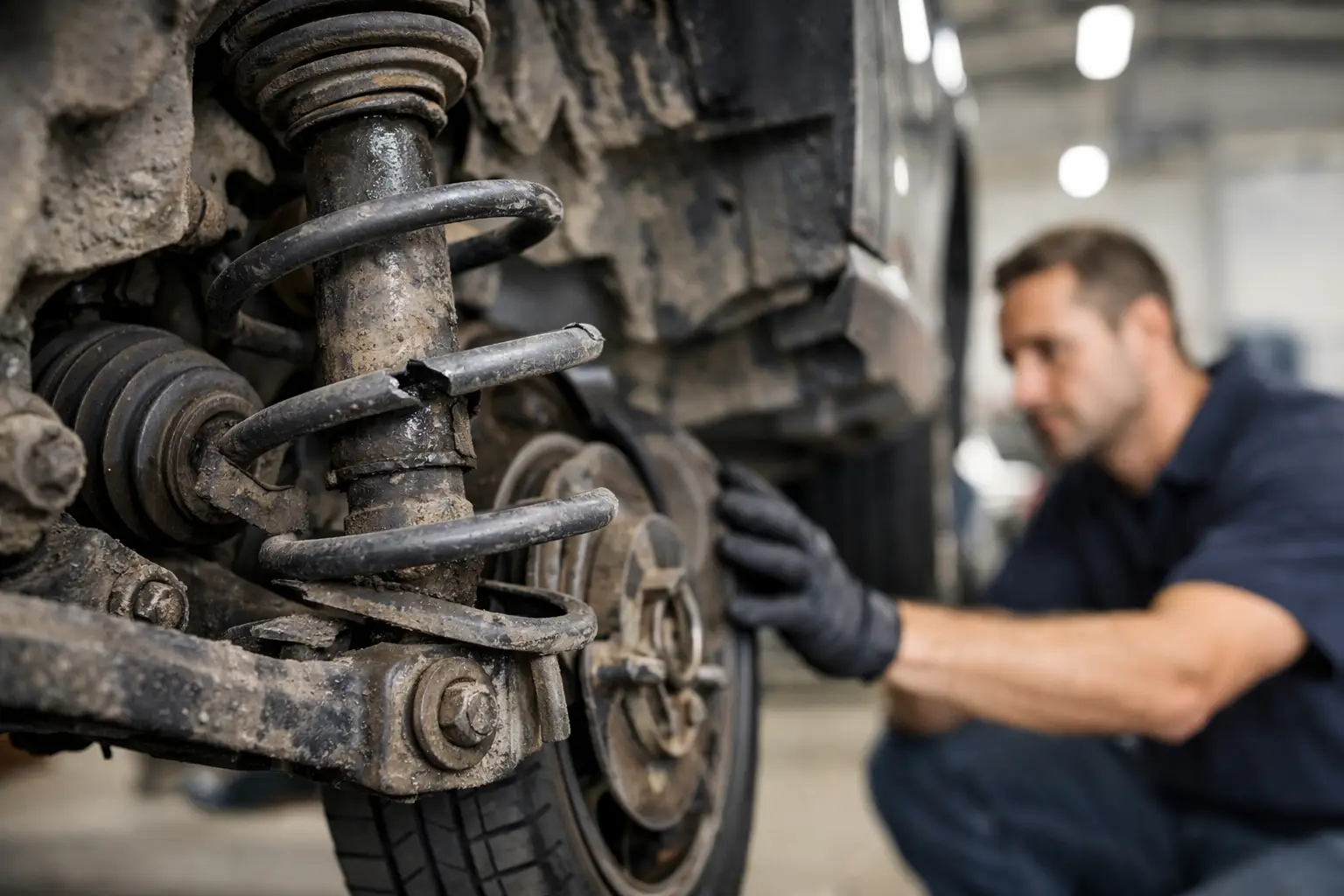
Step back and look at your vehicle on level ground. If one corner appears lower, a broken or sagging spring may be the cause. You may also hear a metallic noise when driving over bumps or notice that the vehicle leans more than usual when loaded.
A broken coil spring can have a sharp edge and may damage a tire in some cases. If the vehicle is visibly leaning, avoid heavy loads and have it inspected as soon as possible.
The vehicle leans excessively in turns
A certain amount of body roll is expected, particularly in taller SUVs and trucks. Excessive leaning, however, can mean worn shocks or struts, weak springs, or a problem with the sway bar and its links.
This symptom matters because the suspension helps distribute weight across the tires. When the body rolls too much, the tires may not maintain the grip needed for predictable cornering. The risk is higher during quick lane changes, wet-weather driving, or when towing.
Why Suspension Problems Should Not Wait
Suspension repairs are sometimes delayed because the vehicle still starts, stops, and gets from point A to point B. The trade-off is that worn components can turn a manageable repair into a larger service visit. Bad shocks can shorten tire life. A loose ball joint can affect alignment and handling. A damaged bushing can place extra strain on connected parts.
More importantly, the suspension affects how your vehicle behaves when conditions are not ideal. A family vehicle loaded for a weekend trip, a delivery vehicle making repeated stops, and a commuter driving through heavy traffic all need stable braking, predictable steering, and reliable traction.
Not every rough ride means suspension failure. Cold weather can make some rubber components noisier, low tire pressure can make the ride feel harsh, and road conditions can expose issues that were already developing. A proper inspection separates a normal characteristic from a safety concern.
What a Professional Suspension Inspection Includes
A thorough inspection starts with the symptoms you notice, then confirms the cause rather than guessing. A technician may check for leaking shocks or struts, broken springs, loose ball joints, worn bushings, damaged sway-bar links, and play in steering components. They should also inspect tire wear, wheel alignment angles, and related brake or wheel-bearing concerns when needed.
There is no fixed replacement interval for every suspension part. Driving habits, road conditions, vehicle load, and the type of vehicle all matter. A sedan used mainly on smooth roads may wear differently than a work truck, rideshare vehicle, or SUV that handles rough pavement and frequent cargo. The right time for service is based on condition and symptoms, not a one-size-fits-all mileage number.
At JAK Tire Service, the goal is clear answers: identify what is worn, explain how it affects safety and tire wear, and recommend only the work your vehicle needs. If replacement parts are required, related alignment and tire-condition checks help protect the repair and restore a smoother, more confident drive.
If your vehicle is bouncing, pulling, clunking, or wearing tires unevenly, schedule an inspection before the problem changes how it handles in a hard stop or sudden turn. A timely suspension check is a practical way to protect your tires, your budget, and everyone riding with you.