

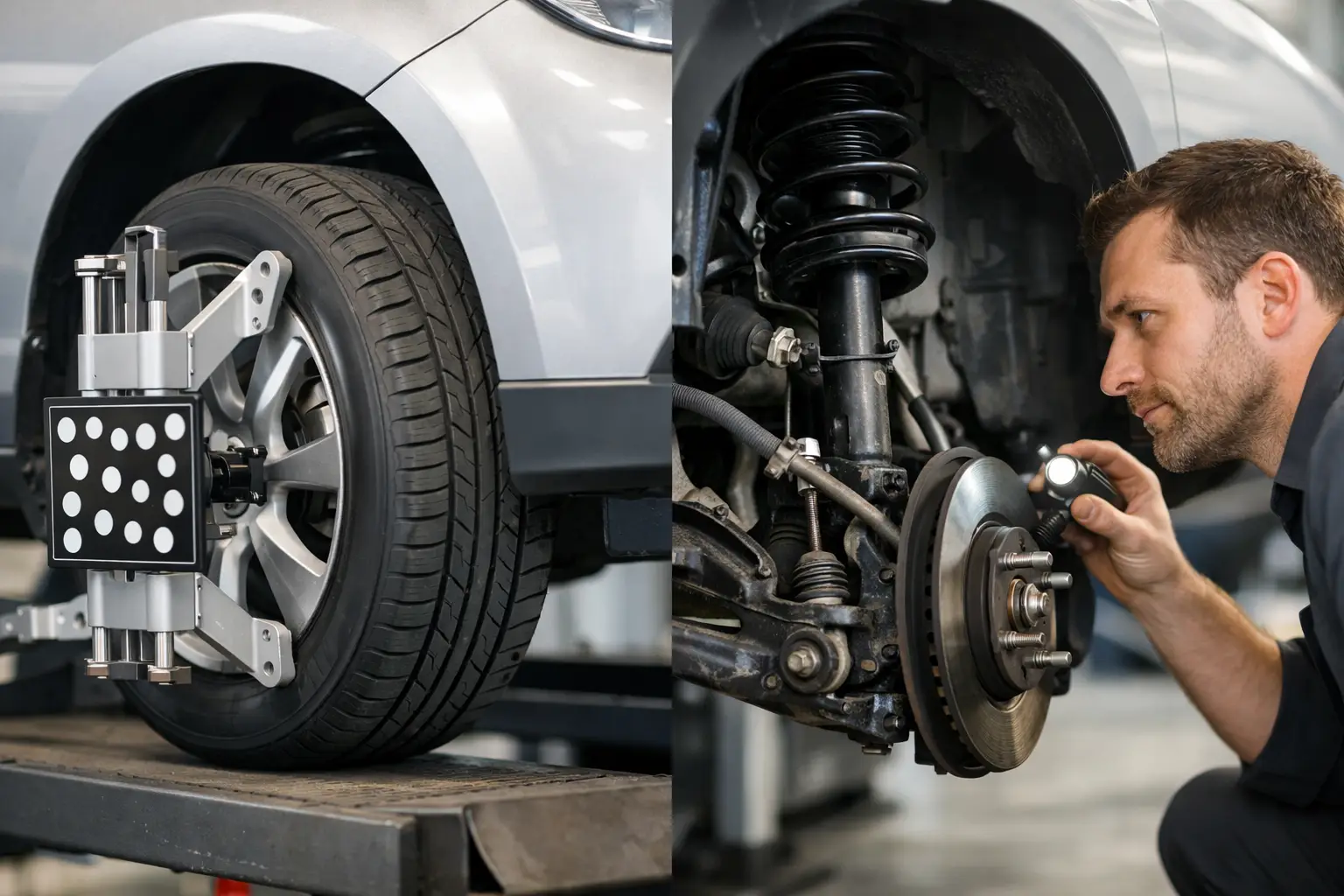
Your vehicle starts drifting toward the curb on a familiar road, the steering wheel sits crooked, or every pothole now feels like a hard hit through the seat. An alignment vs suspension problem can create similar symptoms, but the repair is not the same. Knowing the difference helps you address the real cause, protect your tires, and avoid paying for work that will not solve the issue.
Wheel alignment concerns are usually about the angles at which your tires meet the road. Suspension concerns involve the parts that support the vehicle, absorb impacts, and keep the tires planted. These systems work together, so one problem can sometimes lead to another. A professional inspection is the most reliable way to separate a quick adjustment from a worn or damaged component.
What Wheel Alignment Actually Does
A wheel alignment adjusts suspension angles to the manufacturer’s specifications. Despite the name, technicians do not simply point the wheels straight ahead. They measure camber, caster, and toe – angles that affect how the vehicle tracks, turns, and wears its tires.
When those angles are correct, your vehicle should travel straight on a level road, respond predictably in turns, and wear tires evenly. Alignment can be knocked out by a pothole, curb strike, road debris, or normal wear in steering and suspension components. In areas with rough winter roads, it is common for drivers to notice changes after a hard impact.
The most familiar alignment sign is a steering wheel that is off-center while driving straight. You may also feel the vehicle pull to one side or see uneven tire wear, especially on the inner or outer shoulder of a tire. These symptoms deserve attention, but they do not automatically mean an alignment adjustment is the only repair needed.
Common Signs of an Alignment Issue
A vehicle with a straightforward alignment issue may pull or drift gradually, have an off-center steering wheel, or show uneven tire wear without major noises or roughness. The ride itself will often feel normal. You may notice the concern most clearly on a flat, lightly traveled road after confirming that all four tires are inflated to the correct pressure.
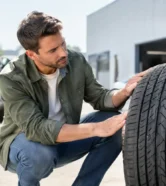
Tire wear tells a useful story. Excessive wear on one edge can point to incorrect camber, while a feathered or sawtooth feel across the tread can be related to incorrect toe. However, tire wear alone is not a final diagnosis. Worn shocks, loose steering parts, tire problems, and driving conditions can leave similar evidence.
What a Suspension Problem Feels Like
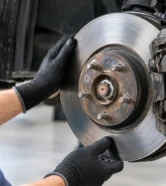
Your suspension includes springs, shocks or struts, control arms, ball joints, bushings, sway bar links, and other components that control wheel movement. These parts carry vehicle weight, soften bumps, maintain stability, and help the tires stay in contact with the pavement.
A suspension problem often changes the way the vehicle feels, not just the direction it travels. You may hear clunking over bumps, notice a bouncy ride, feel excessive body roll in turns, or experience a dip at the front end when braking. The steering may feel loose, vague, or unstable. On an SUV, truck, or loaded work vehicle, these warning signs can become especially noticeable because of the added weight and higher center of gravity.
A leaking strut, worn ball joint, broken spring, or damaged control arm should not be ignored. Some suspension wear develops slowly, so drivers adapt to the change without realizing how much stability and braking control they have lost. Other damage, especially after a severe pothole impact, can require prompt service.
Symptoms That Point More Toward Suspension
No single symptom proves a suspension fault, but a combination of ride and handling changes is a strong clue. Repeated bouncing after a bump, knocking noises, uneven vehicle height, nose-diving during braking, and a loose steering feel usually call for a suspension inspection rather than an alignment alone.
Cupped tire wear is another warning sign. It appears as uneven dips around the tire tread and can happen when shocks or struts no longer control wheel movement effectively. A tire may lose consistent contact with the road, creating an irregular pattern. An alignment may still be needed afterward, but replacing the failed part comes first.
Alignment vs Suspension Problem: Why the Difference Matters
An alignment is an adjustment. Suspension repair involves replacing or repairing the parts that make accurate alignment possible. If a control arm bushing is badly worn or a ball joint has play, the wheel angle can shift while you drive. Aligning the vehicle before addressing that fault may provide little benefit because the setting cannot remain stable.
This is why a trustworthy shop checks the steering and suspension system before performing an alignment. If the components are solid and within specification, an alignment can correct the angles and protect the tires. If there is wear or damage, the technician should explain what was found, why it affects safety or tire wear, and what needs attention first.
There is also a practical cost difference. A basic alignment is generally less involved than replacing suspension components. But postponing a needed suspension repair can turn into faster tire wear, poor handling, and additional damage. The right approach is not to assume the most expensive repair. It is to diagnose the cause accurately and repair only what the vehicle needs.
Simple Checks You Can Make Before Booking Service
You do not need to diagnose your own vehicle, but a few observations can give your technician useful information. Check tire pressures when the tires are cold, because a low tire can cause pulling that feels like an alignment issue. Look for visible tread wear differences from side to side and note whether the steering wheel is centered on a level road.
Pay attention to when the symptom occurs. Does the vehicle pull constantly, only while braking, or only on grooved pavement? Does it clunk over speed bumps? Did the concern begin immediately after hitting a pothole or curb? Does the ride feel different with passengers, tools, or cargo onboard? These details help narrow the inspection.
Avoid trying to judge alignment on roads with a strong crown, where the roadway slopes toward the curb for drainage. Most vehicles will drift slightly in that situation. Also remember that tire design can influence tracking. Some wide, performance-oriented, or worn tires follow grooves in the pavement more noticeably than others.
When You Should Schedule an Inspection
Schedule a professional check soon if your vehicle pulls sharply, the steering wheel is suddenly crooked, you hear metal-on-metal noises, or a tire has visible uneven wear. Have it inspected immediately if the vehicle feels unstable, sits noticeably lower at one corner, or the steering response changes dramatically after an impact.
Drivers who commute daily, carry family members, make deliveries, or operate fleet vehicles should be especially proactive. Tire wear and handling problems rarely improve on their own. Catching them early can preserve expensive tires and reduce the chance of a more disruptive repair later.
At JAK Tire Service, the goal is clear answers, not unnecessary complexity. A proper inspection can determine whether your vehicle needs an alignment adjustment, suspension repair, tire service, or a combination of these services. You should leave knowing what was found, what is urgent, and what can be planned for later.
Protecting Tires After the Repair
Once the underlying issue is corrected, regular tire care helps keep the vehicle tracking properly. Check tire pressure monthly, rotate tires at the recommended interval, and request an alignment check after a significant pothole or curb impact. If new tires are installed, protecting that investment with a sound suspension and accurate alignment is money well spent.
The best next step is simple: do not wait for a small pull, unusual noise, or uneven tread pattern to become your normal driving experience. A timely inspection can restore a smoother ride, steadier handling, and the confidence that your vehicle is ready for the road ahead.