A brake pedal that shakes, squeals, or takes longer to bring your vehicle to a stop should not be ignored. Brake resurfacing versus rotor replacement is a common decision during brake service, but the right answer depends on the actual condition of your rotors, pads, calipers, and brake system – not simply on which option appears cheaper upfront.
For daily commuters, family vehicles, work trucks, and delivery fleets, dependable braking is non-negotiable. A professional inspection helps prevent unnecessary parts replacement while making sure no worn component is left in service beyond its safe limit.
What Brake Rotors Do
Your brake rotors are the flat metal discs visible behind most wheels. When you press the brake pedal, hydraulic pressure pushes the brake pads against those spinning discs. Friction slows the wheels and brings the vehicle to a controlled stop.
Every stop creates heat and gradually removes a small amount of material from both the pads and rotors. Toronto-area stop-and-go traffic, highway commuting, steep parking ramps, heavy cargo, towing, and winter road conditions can all add stress to brake components. Over time, rotors can develop grooves, uneven surfaces, rust buildup, hot spots, or excessive wear.
A rotor does not have to look perfect to work safely. What matters is whether it remains flat, smooth enough for the new pads to bed in properly, and thick enough to manage heat without becoming unsafe.
Brake Resurfacing Versus Rotor Replacement: The Core Difference
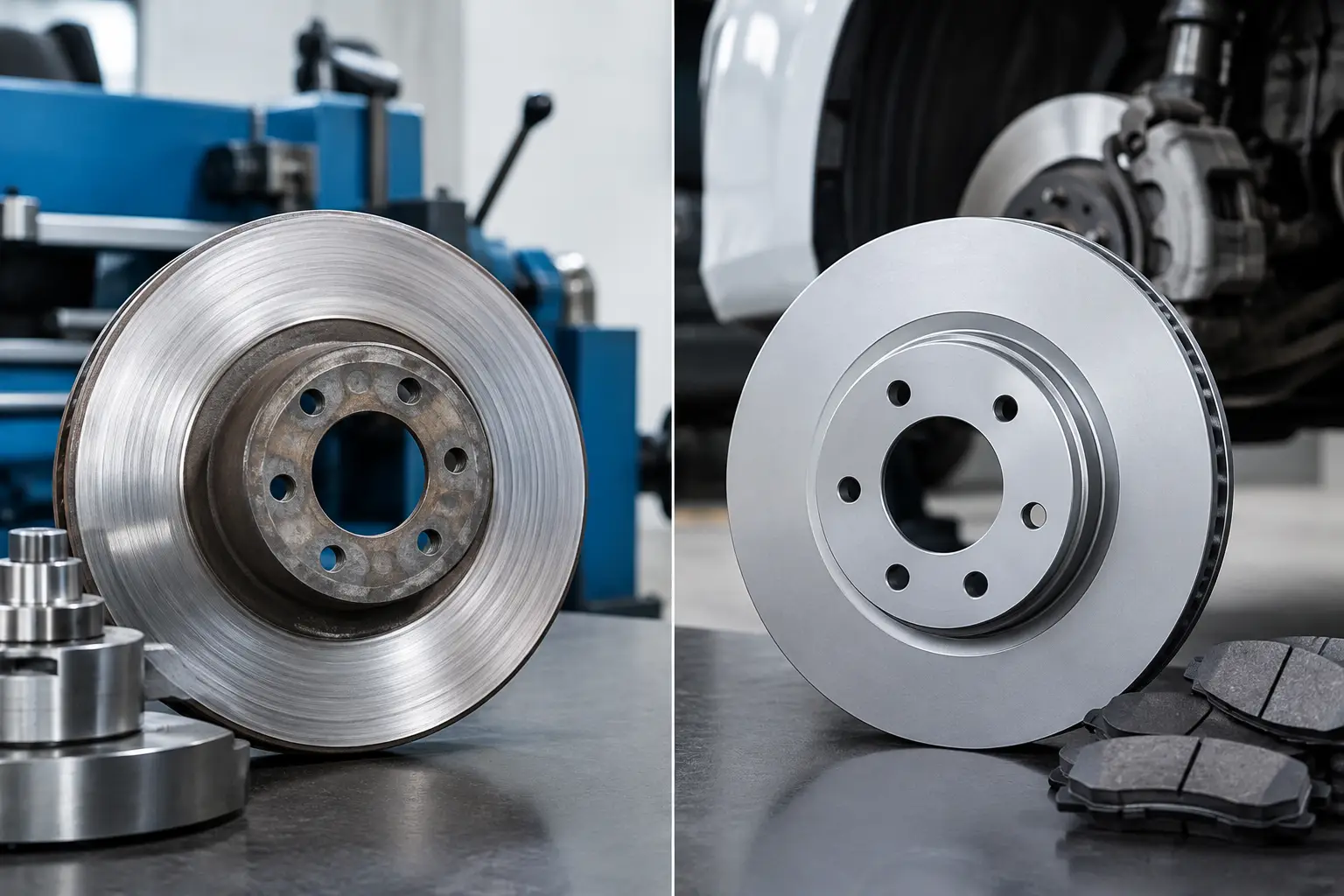
Brake resurfacing, also called machining or turning rotors, removes a thin layer of metal from the rotor surface. A brake lathe cuts the disc evenly to correct minor grooves, light scoring, surface rust, and small variations that may contribute to pedal pulsation. The goal is to create a clean, even surface for new brake pads.
Rotor replacement means installing new rotors rather than machining the existing ones. This is necessary when a rotor is too thin, severely damaged, warped beyond correction, cracked, deeply grooved, or affected by serious rust. It may also be the more practical choice when machining would leave very little material above the manufacturer’s minimum thickness specification.
Neither service is automatically better in every situation. Resurfacing can be a sensible, cost-conscious option when the rotors are in good structural condition. Replacement is the safer choice when the rotor has reached its limit or cannot be restored precisely.
When Resurfacing May Be a Good Option
A technician may recommend resurfacing if the rotor is still well above its discard thickness and has only moderate surface wear. Light grooves from normal pad wear, minor rust after a vehicle has been parked, and a slightly uneven braking surface can often be corrected through precision machining.
Resurfacing can help new brake pads make even contact with the rotor. That contact matters because uneven surfaces can cause noise, vibration, reduced braking consistency, and premature pad wear. Done correctly, machining creates a smooth surface while retaining enough rotor thickness for safe operation.
However, resurfacing is not simply a matter of placing every old rotor on a lathe. The technician must measure the rotor first, calculate how much material must be removed, and confirm that the finished rotor will remain above the specified minimum thickness. If it will not, replacement is the responsible recommendation.
When Rotor Replacement Is the Better Call
Replacement is typically required when the rotor measures at or below its minimum thickness, sometimes stamped directly on the rotor hat. As rotors become thinner, they hold and dissipate heat less effectively. That can increase the chance of brake fade, pedal pulsation, or distortion during demanding driving.
Deep scoring is another reason to replace a rotor. If worn brake pads have gone down to the metal backing plate, they can cut substantial grooves into the disc. Machining enough metal away to remove that damage may make the rotor too thin to use safely.
Visible cracks, major corrosion, broken cooling vanes, and hard heat spots are also replacement issues. In northern climates, rust can form around the rotor edges, vents, and mounting surface. Surface rust may clean up through normal driving or machining, but heavy corrosion that weakens the rotor or prevents it from sitting flush is not something to overlook.
A rotor may also be replaced when it has runout that cannot be corrected. Runout means the disc does not rotate perfectly true. Drivers often feel it as a pulsing brake pedal or steering-wheel shake during braking. The rotor may be part of the problem, but the wheel hub, wheel bearing, mounting surface, or lug nut torque can contribute too. A careful inspection identifies the source before new parts are installed.
Why New Pads and Rotor Condition Must Match
Installing new brake pads on badly worn or uneven rotors is rarely a good value. The pads may wear unevenly, make noise, or fail to deliver the smooth stopping performance you expect. New pads need a proper surface so they can transfer an even friction layer to the rotor during the break-in period.
On the other hand, replacing rotors when they are safely machinable is not always necessary. The best brake repair protects safety and reliability without adding parts that your vehicle does not need. Accurate measurements, not guesswork, should drive the recommendation.
Brake pads should also be checked for uneven wear. One pad that is much thinner than the other can point to a sticking caliper, seized slide pins, damaged hardware, or restricted brake hose. Replacing pads and rotors without correcting the underlying issue can lead to the same problem returning early.
Cost Is Important, but So Is Brake Service Value
Resurfacing often costs less than replacing rotors because it retains usable parts. But the lowest immediate price is not always the best long-term value. If machining leaves a rotor close to its minimum thickness, it may need replacement sooner and may not be the right fit for a vehicle that carries heavy loads, sees frequent highway driving, or handles demanding fleet use.
Rotor replacement can cost more upfront, especially on vehicles with larger, coated, performance, or specialty brake components. Yet new rotors may provide better value when the existing discs are heavily worn, corroded, or close to the end of their service life.
The quality of the parts and installation also matters. A correctly installed rotor requires a clean hub mounting surface, proper hardware inspection, correct caliper operation, and lug nuts tightened to the manufacturer’s specification. Skipping these details can create vibration complaints even with new brake parts.
Warning Signs That Call for a Brake Inspection
Some brake concerns point directly to rotor problems, while others can come from tires, suspension, wheel balance, or hydraulic components. An inspection is the quickest way to separate a minor issue from a safety concern.
Schedule brake service promptly if you notice four or more of these symptoms:
- A steering-wheel shake or brake pedal pulsation during braking
- Grinding, scraping, or persistent squealing noises
- Longer stopping distances or a soft, spongy pedal
- Your vehicle pulling left or right when you apply the brakes
- A burning smell, smoke, or a wheel that feels unusually hot
- A brake warning light or visible brake fluid leak
Grinding, smoke, major pulling, or a sudden change in pedal feel deserves immediate attention. Continuing to drive can damage more components and reduce your ability to stop safely.
What a Professional Brake Inspection Should Include
A proper brake inspection goes beyond a quick glance through the wheel spokes. The technician should measure brake pad material and rotor thickness, check the rotor surfaces, inspect calipers and slide pins, examine brake hoses, and look for fluid leaks. Wheel bearings, mounting surfaces, and hardware should be evaluated when vibration or uneven wear is present.
At JAK Tire Service Corp, clear recommendations start with the condition of the parts in front of us. If resurfacing is safe and practical, it should be explained. If replacement is needed, you should understand why, what was measured, and what the repair is intended to prevent.
Make the Choice Before Small Brake Issues Grow
There is no single mileage interval that tells every driver when rotors need service. Driving habits, vehicle weight, road conditions, pad material, and prior brake work all affect rotor life. The most reliable approach is to have your brakes inspected when pads are due, when a new noise appears, or whenever braking no longer feels smooth and confident.
Safe braking comes from measured decisions, quality parts, and precise installation. Addressing rotor wear early can keep a routine brake job from becoming a larger repair and help you get back on the road with confidence.