
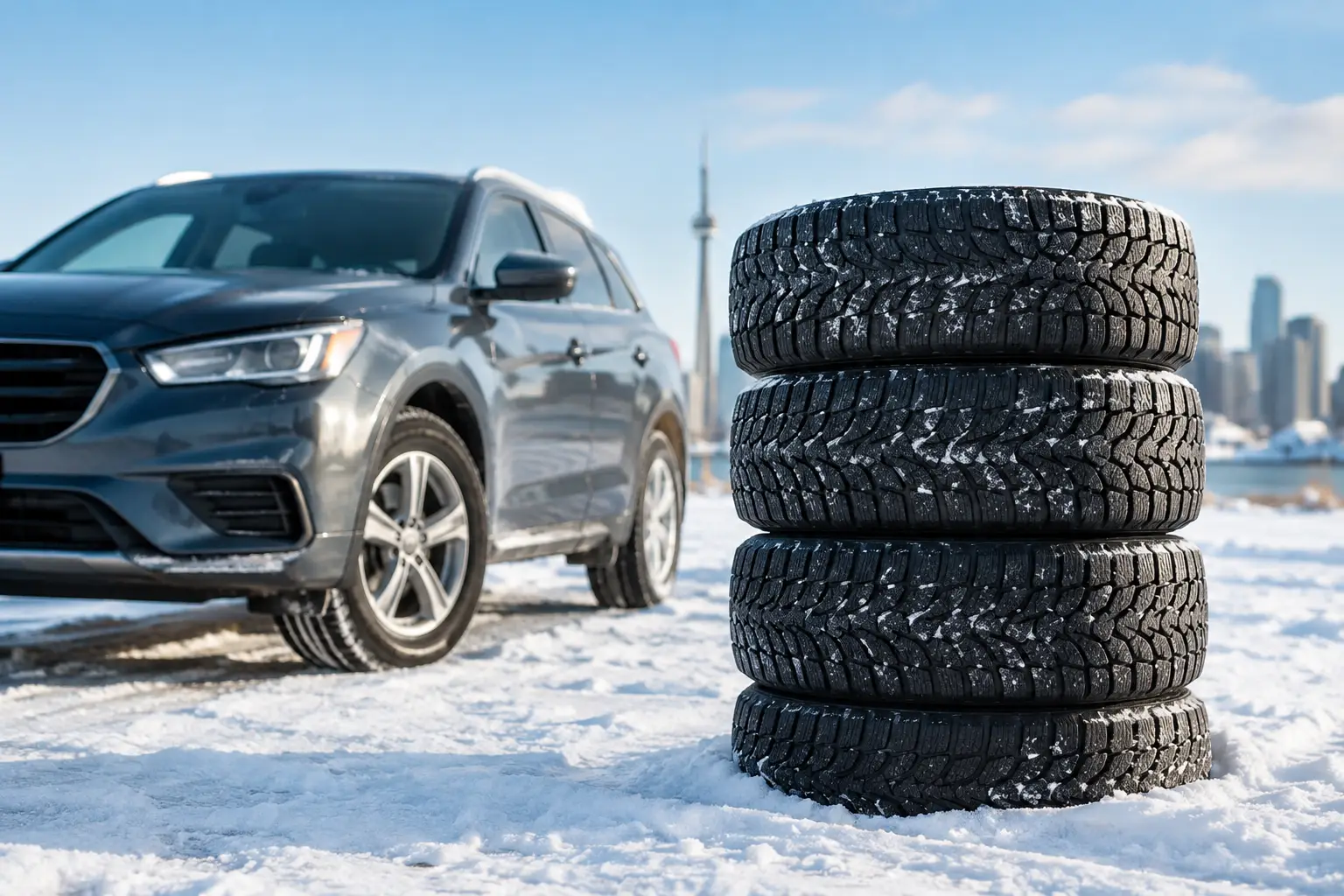
The first slick morning in Toronto rarely arrives with much warning. One day, roads are wet and clear. The next, an overnight temperature drop turns bridge decks, side streets, and parking lots into slippery surfaces. Winter tires Toronto drivers choose before that first freeze provide the traction needed to brake, turn, and pull away with greater control.
For commuters, families, delivery drivers, and fleet vehicles, winter tire service is not just a seasonal chore. It is a practical safety decision that can make daily driving more predictable when the weather changes quickly.
Why winter tires make a real difference
Winter tires are designed for cold conditions, not only deep snow. Their rubber compound stays more flexible as temperatures fall, helping the tire maintain contact with cold pavement. All-season tires can become firmer in low temperatures, which reduces their ability to grip the road when it matters most.
The tread design matters just as much. Winter tires use deeper grooves and thousands of small cuts called sipes to move slush and water away from the contact patch. That extra bite helps when accelerating from a stop, braking at a light, or making a controlled turn on packed snow.
Four-wheel drive and all-wheel drive can help a vehicle get moving, but neither replaces winter tires. Those systems send power to more wheels. Tires are still responsible for braking and steering. An SUV with all-wheel drive on worn all-season tires can still slide through a stop sign on an icy North York side street.
When to install winter tires in Toronto
A dependable rule is to book installation when daytime temperatures begin staying around 45 degrees Fahrenheit, or 7 degrees Celsius, and before the first major snowfall. In the Toronto area, that often means late October through November, but the calendar is less important than the temperature.
Waiting for a snowstorm creates two problems. Tire appointments become harder to find, and drivers are often caught on cold, slippery roads before their vehicle is ready. Planning ahead gives a technician time to inspect the tires, wheels, valve stems, and braking components without rushing the job.
There is also a practical reason to avoid installing too early. Winter tire compounds wear faster in consistently warm weather. If fall remains mild, holding off for a short time may protect your investment. The right timing depends on the forecast, your driving schedule, and whether you regularly travel early in the morning or late at night when roads cool fastest.
Choosing the right winter tires for your vehicle
The best winter tire is not always the most expensive option or the most aggressive-looking one. The right choice should match your vehicle, driving habits, and the conditions you face most often.
A compact car used for city commuting may benefit from a quiet, fuel-conscious winter tire with strong wet and slush performance. A family SUV that sees highway driving, weekend ski trips, or unplowed roads may need a more capable tread pattern. Pickup trucks and commercial vehicles need tires with the proper load rating as well as dependable winter traction.
Start with the tire size listed on your vehicle’s door placard or in the owner’s manual. A professional tire shop can confirm the correct size, load index, and speed rating for your vehicle. Changing to a smaller wheel size for winter is sometimes possible and can reduce replacement costs, but fitment must be checked carefully. The tire needs adequate clearance and must meet the vehicle’s specifications.
Look for the Three-Peak Mountain Snowflake symbol on the sidewall. This marking indicates that the tire meets a recognized winter traction standard. It is different from the M+S marking found on many all-season tires, which does not guarantee the same level of cold-weather performance.
Why four winter tires are the safer choice
Installing only two winter tires may seem like a way to save money, but it can create an imbalance in traction. If winter tires are installed only on the front, the rear of the vehicle may lose grip first and slide during a turn. If they are installed only on the rear, the front tires may struggle to steer or stop effectively.
A matched set of four winter tires gives the vehicle more balanced traction at every corner. That balance matters when braking on wet pavement, maneuvering around traffic, or changing lanes through slush. It also helps the traction control and anti-lock braking systems work as intended.
If your current winter tires still have usable tread, they should be inspected before another season. Tread depth, uneven wear, cracking, puncture repairs, and tire age all affect whether a set is still safe to use. A tire can look acceptable at a glance but have hardened rubber or wear patterns that reduce its grip.
Installation is more than mounting tires
A proper winter tire appointment should involve more than putting tires on wheels. The wheels should be mounted and balanced precisely to help prevent vibration at highway speeds. Tire pressure should be adjusted to the vehicle’s recommended specification, then rechecked as temperatures drop because cold air lowers pressure.
Technicians should also inspect the condition of the wheels, lug hardware, and valve stems. Corrosion around the wheel hub can prevent a wheel from sitting perfectly flush, while damaged valve stems can lead to a slow leak. Small issues found during seasonal tire service are often easier and less expensive to correct before they create a roadside problem.
Wheel alignment is another consideration, especially if your previous tires wore unevenly or the vehicle pulls to one side. Winter tires cannot perform at their best when the wheels are out of alignment. Misalignment can shorten tire life and make the vehicle less stable on wet or snowy roads.
At JAK Tire Service, professional installation includes the careful checks that help drivers leave with confidence, not just a new set of tires.
Get more life and traction from your winter tires
Winter tires need regular attention after installation. Check tire pressure at least once a month and before longer trips. Use a reliable gauge when the tires are cold, and follow the pressure listed on the driver’s door placard rather than the maximum pressure printed on the tire sidewall.
Pay attention to how the vehicle feels. A new vibration, pulling sensation, steering wheel shake, or repeated pressure loss deserves a prompt inspection. These signs can point to an imbalance, alignment issue, puncture, or wheel damage.
Rotating winter tires during the season may help them wear more evenly, particularly on front-wheel-drive vehicles where the front tires handle both steering and power delivery. The correct rotation pattern depends on whether the tires are directional, staggered, or the same size at all four corners.
When spring arrives and temperatures remain consistently above 45 degrees Fahrenheit, switch back to all-season or summer tires. Store winter tires clean, dry, and away from direct sunlight. If they are stored on separate wheels, stack them horizontally; tires without wheels are generally best stored upright and rotated occasionally. Proper storage helps preserve the rubber for the next season.
A safer winter drive starts before the snow
Winter tires improve control, but they do not make winter roads risk-free. Leave more space behind other vehicles, brake earlier, slow down before turns, and clear all snow and ice from the vehicle before driving. Keep a close eye on tire pressure after sharp temperature drops, particularly if your tire pressure warning light comes on.
The best time to prepare is while the roads are still manageable and appointments are available. A correctly selected, professionally installed set of winter tires gives your vehicle a stronger foundation for safer stops, steadier turns, and more confident trips through a Toronto winter.