
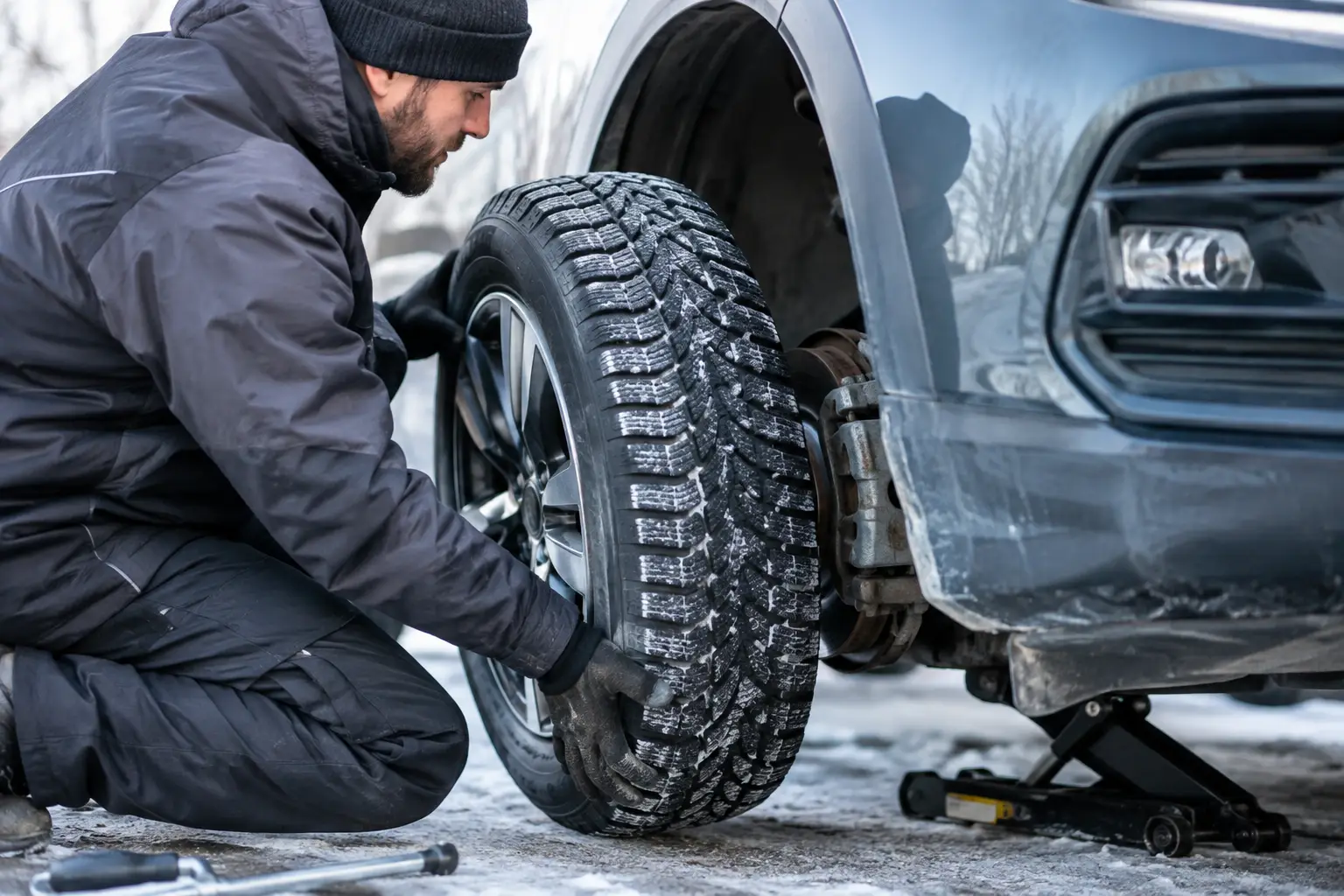
The first cold morning is not the time to find out your all-season tires have lost their grip. For winter tire installation, North York and Toronto drivers need more than a quick tire swap. Proper fitment, balancing, pressure adjustment, and a careful inspection all help your vehicle stop, turn, and accelerate with more confidence when roads become cold, wet, slushy, or snow-covered.
At JAK Tire Service Corp, the goal is simple: Tires Done Right, Every Time. A professional installation helps protect your investment in tires while giving you a safer, more dependable drive through the GTA winter.
Why winter tires make a real difference
Winter tires are designed for cold-weather driving, not only deep snow. Their rubber compounds stay more flexible when temperatures consistently fall below about 45°F (7°C). That flexibility helps the tread maintain contact with the road, improving traction during braking and cornering.
All-season tires can be a practical choice for mild conditions, but they harden as temperatures drop. That can mean longer stopping distances on cold pavement, less control in slush, and more wheel spin when pulling away from a stop. For commuters, families, delivery drivers, and SUV or truck owners traveling across North York and Toronto, the difference can be noticeable long before the first major snowfall.
Winter tires do not make a vehicle invincible. Safe following distance, slower speeds, clear visibility, and working brakes still matter. They do, however, give your vehicle a better foundation for handling difficult conditions.
What professional winter tire installation includes
A proper tire change is more detailed than removing one set of wheels and installing another. Our technicians first confirm the tires are the correct size, load rating, and fitment for your vehicle. Using the wrong tire size or an improperly matched set can affect handling, fuel economy, clearance, and speedometer accuracy.
Each wheel is mounted carefully and balanced to reduce vibration at highway speeds. A vibration through the steering wheel after installation may point to an imbalance, a damaged wheel, or another issue that deserves attention. Balancing is especially valuable for drivers who spend long hours on Highway 401, the DVP, or busy GTA routes.
Tire pressure is also checked and adjusted. Cold weather lowers tire pressure, and underinflated tires can wear faster, reduce fuel efficiency, and make handling feel less precise. If your vehicle uses a tire pressure monitoring system, the technician can verify that the system is functioning properly after the swap.
Finally, wheel fasteners must be tightened to the manufacturer’s specifications. Over-tightening can damage studs or make roadside service difficult. Under-tightening is a serious safety concern. Precision matters at every step.
When to book winter tire installation in North York and Toronto
Waiting for the first snowstorm often means longer appointment wait times and a rushed decision. It is usually smarter to book when daytime and overnight temperatures begin staying near or below 45°F (7°C), even if the roads are still clear.
Early installation also gives you time to inspect your winter tires before you need them. Look for uneven wear, sidewall cracks, embedded objects, or tread that is getting too low for reliable winter traction. While the legal minimum tread depth may be lower, many drivers replace winter tires before they reach that limit because snow and slush performance declines as tread wears down.
If you drive less frequently, check the age of the tires as well. Rubber deteriorates over time, even when tread remains. A professional inspection provides clear answers before you rely on those tires for another season.
Do you need an alignment at the same time?
Not every winter tire installation requires a wheel alignment. However, an alignment check is worth considering if your vehicle pulls to one side, the steering wheel sits off-center, or your previous tires show uneven wear. Potholes, curb contact, and rough road conditions can all shift alignment angles.
Installing a fresh set of winter tires on an out-of-alignment vehicle can shorten their life quickly. Addressing the issue early may help you avoid replacing tires sooner than necessary. The same visit is also a good opportunity to ask about brake condition, suspension wear, and battery health, since those systems all affect winter reliability.
Get more life from your winter tires
Once the tires are installed, check pressure at least once a month and before longer drives. Keep your seasonal tire set stored in a cool, dry place away from direct sunlight and chemicals. If tires are mounted on separate wheels, label their previous positions so a technician can recommend the right rotation pattern next season.
When spring arrives, do not leave winter tires on through hot weather unless necessary. Softer winter rubber wears faster on warm pavement and may not deliver the handling you want during summer driving.
A winter tire change is a small appointment that can make a meaningful difference when conditions turn unpredictable. Book before the weather forces the issue, and head into the season with tires that are ready to work when you need them most.