
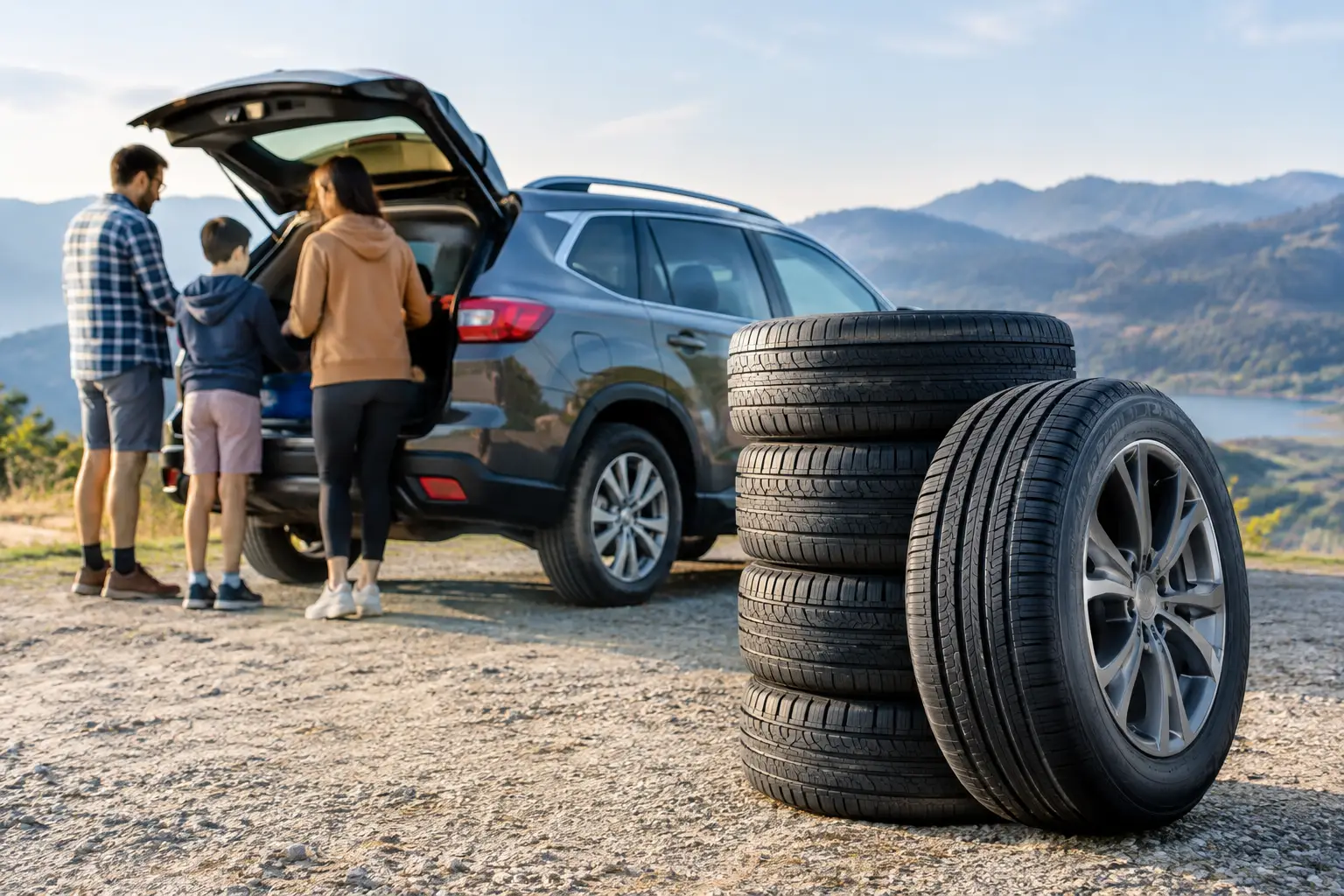
A family SUV can carry school bags, groceries, sports gear, and the people you care about most. The tires underneath it have one job that affects all the others: keep the vehicle controlled when the road is wet, cold, uneven, or suddenly congested. The best tires for family SUVs are not always the most expensive set or the tires with the longest tread-life warranty. They are the ones that fit your SUV, your local weather, and the way your family actually drives.
For many drivers, the right answer starts with all-season tires that provide quiet, comfortable everyday performance. But if your routes include harsh winter conditions, regular highway trips, towing, or frequent travel on wet roads, a different tire category may be the safer choice.
What Family SUV Tires Need to Do Well
Family-focused tires need to balance several priorities. Strong wet traction matters because rain reduces braking grip quickly, especially on busy highways and city streets. A stable tire also helps your SUV feel predictable during lane changes, cornering, and emergency stops.
Comfort is another major factor. SUVs are often chosen for relaxed daily driving, so excessive road noise or a harsh ride can make every commute less pleasant. Tread life matters too, but it should never be the only deciding factor. A tire that lasts longer but gives up meaningful wet or winter grip may not be the best value for your family.
Before selecting a model, confirm the tire size, load index, speed rating, and any manufacturer specifications listed on the driver-side door placard or in the owner’s manual. Larger SUVs, three-row models, and vehicles that tow may require tires with higher load capacity. Installing the wrong specification can affect handling, braking, fuel economy, and warranty coverage.
Best Tires for Family SUVs by Driving Need
There is no single tire that is perfect for every SUV and every season. These dependable choices are worth considering based on how and where you drive.
Michelin Defender LTX M/S2 for Long-Term Daily Driving
The Michelin Defender LTX M/S2 is a strong option for family SUVs, crossovers, and light trucks that spend most of their time on pavement. It is known for a composed ride, reliable everyday traction, and long tread life. For drivers putting on plenty of commuter and highway miles, that combination can make a real difference over several years of ownership.
This tire is especially practical for families who want a quiet ride and do not regularly face deep snow. It can handle light winter conditions, but it is still an all-season tire, not a replacement for a dedicated winter tire in severe weather.
Continental CrossContact LX25 for Comfort and Wet Roads
The Continental CrossContact LX25 is a good match for crossover and SUV drivers who place a high value on comfort and confidence in rain. It delivers a refined highway feel and dependable wet-road performance, which is useful for daily errands, long weekend trips, and unpredictable storms.
For a family vehicle, wet braking performance deserves serious attention. Roads can become slick long before heavy rain starts, particularly when water mixes with oil and road debris. A tire designed to move water effectively can help preserve control when you need it most.
Bridgestone Alenza AS Ultra for a Quiet Highway Ride
The Bridgestone Alenza AS Ultra is built for drivers who want premium all-season capability with a smooth, quiet ride. It is well suited to larger crossovers and SUVs that regularly travel on highways or carry passengers on longer trips.
Its main appeal is balance. You get comfortable manners, stable handling, and strong all-season usability without moving into a more aggressive tire design that may create extra road noise. It is a sensible choice for families whose SUV serves as both a weekday commuter and a road-trip vehicle.
Pirelli Scorpion WeatherActive for Changing Conditions
The Pirelli Scorpion WeatherActive is an all-weather tire designed for drivers dealing with more demanding year-round conditions. Unlike a conventional all-season tire, an all-weather model carries the three-peak mountain snowflake symbol, indicating it meets a recognized standard for snow traction.
This category can work well for drivers who need more winter confidence but do not want to schedule seasonal tire changes. The trade-off is that an all-weather tire may not match the dry-road refinement or maximum tread life of the best touring all-season tires, and it will not equal a dedicated winter tire on ice or in deep snow.
Michelin CrossClimate2 SUV for All-Weather Versatility
The Michelin CrossClimate2 SUV is another well-regarded all-weather option for family drivers. Its tread design is intended to provide confident grip through rain, slush, and light-to-moderate snow while remaining comfortable for daily use.
For many families, this tire makes sense when weather can change quickly and storage for a second set of wheels is limited. It is particularly useful for drivers who want stronger cold-weather traction than a traditional all-season tire can provide. Still, if your SUV regularly handles steep, snow-covered roads or long stretches of icy winter driving, a dedicated winter tire remains the safer choice.
Bridgestone Blizzak DM-V2 or Michelin X-Ice Snow SUV for Winter
When winter conditions are serious, seasonal winter tires are worth the investment. The Bridgestone Blizzak DM-V2 and Michelin X-Ice Snow SUV are popular choices for SUV owners looking for better cold-weather braking, snow traction, and ice control.
Winter tires use rubber compounds that stay more flexible in low temperatures. That flexibility helps the tread grip cold pavement, where all-season compounds can become harder and less effective. For families driving through North York and GTA winters, especially before roads are fully cleared, four matching winter tires provide a meaningful safety advantage.
All-Season, All-Weather, or Winter Tires?
The best choice depends less on marketing terms and more on your real driving conditions. All-season tires are ideal for mild climates and drivers who mainly need comfortable, reliable performance in rain and occasional light snow. They are a practical default for many family SUVs.
All-weather tires offer a middle ground. They give you stronger snow performance than typical all-seasons while avoiding the need to change tires twice a year. They make sense for drivers facing cold temperatures, slush, and regular snowfall but who still need one tire set for every season.
Dedicated winter tires are the clear choice for consistently snowy or icy conditions. They require a separate summer or all-season set, but they offer the most dependable cold-weather braking and traction. For a vehicle carrying children or older family members, that added margin can be reassuring.
Do Not Ignore Tire Age, Alignment, and Inflation
Even the best tire cannot perform properly if it is poorly maintained. Check tire pressure at least once a month and before longer trips. Use the pressure listed on the vehicle placard, not the maximum pressure printed on the tire sidewall.
Uneven wear is another warning sign. If the inside or outside edges are wearing faster, your SUV may need a wheel alignment or suspension inspection. A steering wheel that pulls, vibration at highway speed, or a vehicle that feels unstable over bumps should be checked promptly.
Rotate tires according to your vehicle manufacturer’s recommended interval, often around every 5,000 to 8,000 miles. Rotation helps tires wear more evenly and can extend their useful life. It also gives a technician the opportunity to spot nails, sidewall damage, brake concerns, or suspension issues before they become larger repairs.
Choose the Tire That Supports Your Real Life
A quiet touring tire may be ideal for a family that spends weekends on the highway. An all-weather tire may be better for a busy driver who cannot risk being caught in slush on the way to school or work. A dedicated winter set may be the right call for an SUV that sees frequent snow-covered roads.
At JAK Tire Service, our technicians can help match tire options to your vehicle’s specifications, driving habits, and budget without pushing unnecessary extras. The right set of tires should give you a calmer ride, shorter stopping distances, and more confidence every time your family heads out.