
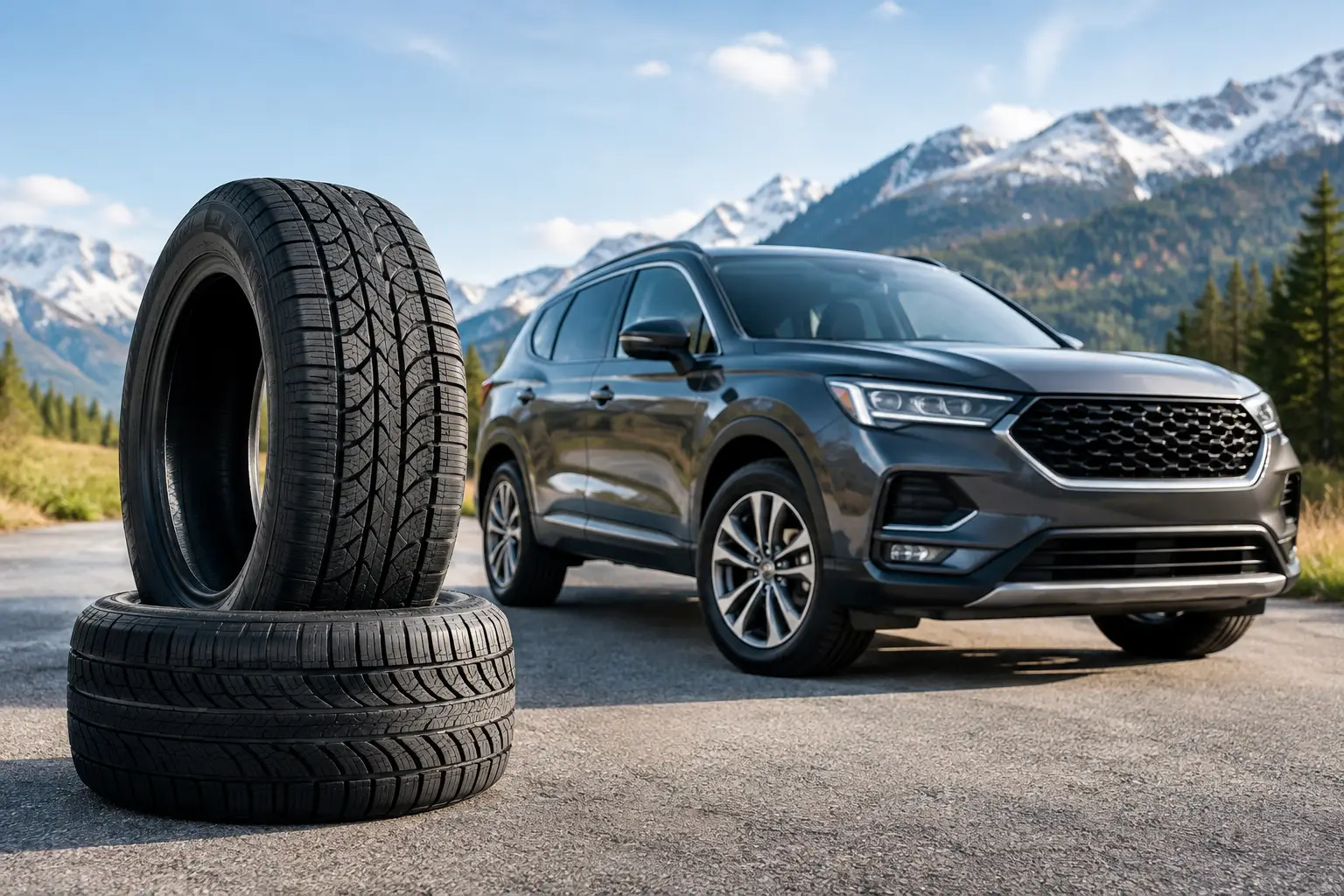
An SUV can feel secure because it sits higher and often has available all-wheel drive, but neither feature can create traction when the tires cannot grip. The best tires for SUVs are the ones that match your vehicle’s size, load requirements, local weather, and the way you actually drive – not simply the most aggressive-looking set on the rack.
For family trips, commutes, school runs, and weekend errands, tire choice affects braking distance, steering response, cabin noise, fuel use, and confidence in heavy rain or snow. Choosing well means looking beyond a brand name and focusing on the tire category that solves your real driving needs.
What makes SUV tires different?
SUVs are heavier than most sedans, especially when loaded with passengers, cargo, or towing equipment. That added weight puts more demand on the tire’s construction and can increase stopping distance if the tread is worn or the tire is not rated for the vehicle.
Many SUVs also have higher centers of gravity. A tire with predictable handling and solid wet traction helps the vehicle respond more calmly during lane changes, sharp turns, and sudden braking. Larger wheels may look great, but low-profile tires can deliver a firmer ride and may be more vulnerable to pothole damage.
Before buying, check the tire placard on the driver’s door frame and your owner’s manual. They list the recommended tire size, inflation pressure, and, in many cases, the proper load rating. Staying within those specifications protects handling, braking, and the accuracy of your speedometer and driver-assistance systems.
Best tires for SUVs depend on how you drive
There is no single tire that is best at everything. A quiet highway tire will not provide the same loose-surface traction as an all-terrain tire, and a dedicated winter tire will wear quickly in hot weather. The right answer depends on where and when your SUV travels.
All-season tires for everyday driving
All-season tires are a practical choice for many SUV owners who mainly drive paved roads in moderate weather. They are designed to balance tread life, ride comfort, dry handling, and wet-road traction. For commuters and families, this is usually the category that delivers the fewest compromises.
A quality all-season tire should offer strong wet braking, a comfortable ride, and an appropriate mileage warranty. Look for wide circumferential grooves that move water away from the contact patch and sipes, which are small cuts in the tread blocks that add grip on wet pavement.
The trade-off is cold-weather performance. Traditional all-season rubber becomes firmer as temperatures drop, and it cannot match a winter tire on packed snow, ice, or slush.
All-weather tires for changing seasons
All-weather tires are a useful middle ground for drivers who face colder temperatures and occasional snow but do not want a separate winter wheel package. Unlike standard all-season tires, many all-weather options carry the three-peak mountain snowflake symbol. This marking shows that the tire meets a recognized snow-traction standard.
They generally provide better winter grip than all-season tires while remaining suitable for year-round use. The compromise is that tread life, dry-road sharpness, or summer efficiency may be slightly lower than with a dedicated all-season tire. Still, for an SUV that stays on paved streets and sees mixed weather, all-weather tires can be an excellent value.
Winter tires for snow, ice, and freezing temperatures
If your SUV regularly travels through snowy areas, winter tires are the safest choice once temperatures consistently approach 45 degrees Fahrenheit. Their rubber compound stays flexible in the cold, while their tread patterns use more biting edges to hold snow and improve control on slippery roads.
All-wheel drive helps an SUV accelerate, but it does not improve braking or cornering by itself. Four matching winter tires provide balanced traction at every corner of the vehicle, helping it stop straighter and handle more predictably. Installing only two winter tires can create an unsafe traction imbalance.
Winter tires should be removed when sustained warm weather returns. Soft winter rubber wears faster on hot pavement and will not give the crisp handling of a summer or all-season tire.
Touring tires for quiet, comfortable highway miles
Touring tires are made for drivers who spend significant time on highways or want a smoother, quieter ride. They are often a strong fit for crossovers and three-row SUVs used for long family trips, rideshare work, or daily commuting.
These tires typically emphasize even tread wear, road-noise control, and wet-weather stability. They are not built for deep mud or rocky trails, but on pavement, they can make an SUV feel more refined and reduce fatigue on longer drives.
All-terrain tires for work, trails, and rough roads
All-terrain tires are designed for SUV and truck owners who split time between pavement and unpaved surfaces. Their stronger sidewalls and open tread patterns improve traction on gravel, dirt, loose ground, and light off-road routes. They can also offer a more durable feel for drivers who frequently carry tools, equipment, or heavy cargo.
The trade-off is usually more road noise, reduced fuel economy, and less polished wet-road behavior than a touring tire. An aggressive tread pattern may look ready for any trail, but it is not always the best choice for an SUV that rarely leaves city streets.
For serious off-road use, mud-terrain tires provide even more traction in mud and rocks. They are highly specialized, though, and can be loud, heavy, and less comfortable for daily driving.
Check load rating, speed rating, and tire size
Tire size is more than the width printed on the sidewall. A code such as 235/65R17 identifies the width, sidewall height, construction type, and wheel diameter. It does not tell the whole story. You also need a tire with the correct load index and speed rating for your SUV.
The load index confirms how much weight each tire can safely support. This matters even more for larger SUVs, vehicles used for towing, and vehicles that regularly carry a full cabin or cargo area. Never install a tire with a lower load capacity than the manufacturer requires.
Speed ratings relate to the tire’s ability to handle heat and maintain performance at sustained speeds. They should meet or exceed the original equipment specification. A professional tire inspection can confirm that your chosen tire is compatible with the vehicle rather than simply the same physical size.
Do not ignore wet braking and tread wear
For most drivers, wet traction deserves as much attention as snow traction. Rain creates slick roads, hides potholes, and can cause hydroplaning when water cannot escape from beneath the tire. Tires with healthy tread depth, effective water channels, and good inflation are your first defense.
Check your tires at least once a month and before a long trip. Watch for uneven wear, cracks, bulges, punctures, vibration, or a pull to one side. The built-in tread wear bars become visible when tread gets low, but waiting until that point leaves little safety margin in rain. Many drivers choose replacement around 4/32 inch of remaining tread for better wet-road performance, while winter tires lose much of their snow capability well before they are legally worn out.
Uneven tire wear is often a warning that another service is needed. Incorrect wheel alignment, worn suspension components, unbalanced wheels, or improper inflation can shorten tire life and affect vehicle control. Replacing tires without correcting the underlying issue can mean the new set wears out too soon.
Get the most from your new SUV tires
Even the right tires need regular care. Keep pressures set to the vehicle manufacturer’s recommendation, not the maximum pressure molded onto the tire sidewall. Rotate tires at the interval recommended for your vehicle, often around every 5,000 to 8,000 miles, so they wear more evenly.
Have the wheels balanced when new tires are installed, and arrange an alignment check if you notice steering vibration, uneven wear, or the SUV drifting on a straight road. For all-wheel-drive vehicles, maintaining closely matched tread depth across all four tires is especially important. A large difference in circumference can place extra strain on the drivetrain.
Before your next tire purchase, think about the road conditions that challenge you most often: standing water, long highway miles, freezing mornings, loaded family trips, or unpaved work sites. Choosing for those real conditions, then having the tires installed and maintained with precision, is what keeps an SUV safe, comfortable, and ready to go when you need it.