A delivery shift can put more brake wear on a vehicle than days of ordinary commuting. Stop-and-go routes, loaded cargo, apartment entrances, traffic lights, and repeated curbside parking all add heat and friction. That is why delivery brake repair should be planned around how the vehicle is actually used, not just the number on the odometer.
For Uber Eats, DoorDash, courier, grocery, and small-business delivery drivers, dependable brakes protect more than the vehicle. They protect passengers, pedestrians, packages, your ability to work, and your confidence during every shift. A brake concern may start as a small sound or a slightly softer pedal, but delaying service can turn a routine repair into a larger and more expensive job.
Why Delivery Driving Is Hard on Brakes
Brakes wear whenever they convert movement into heat. On an open highway, a vehicle can travel for miles with limited braking. On a delivery route, the pattern is completely different: accelerate, brake, turn, park, unload, and repeat. That repeated use builds heat in brake pads and rotors, especially in heavier SUVs, vans, trucks, or vehicles carrying food, tools, parcels, and equipment.
Frequent short trips can also leave less time for brakes to cool. Rain, slush, road salt, and winter grit can speed up corrosion around rotors, calipers, brake hardware, and lines. In North York and across the GTA, winter driving can make a brake inspection particularly valuable before and after the harsh-weather season.
Vehicle weight matters, too. A compact car with a few small orders will not stress its brakes the same way a cargo van loaded for a full route does. The same is true for route conditions. Downtown traffic, hilly streets, frequent construction zones, and tight parking areas all create more brake demand than a mostly suburban route.
Signs You Should Schedule Delivery Brake Repair
Some brake issues are obvious, while others develop gradually. If your vehicle pulls to one side, takes longer to stop, or the brake pedal feels unusually soft, have it checked promptly. These symptoms can point to worn pads, uneven rotor wear, a sticking caliper, brake fluid concerns, or another issue that should not be guessed at.
A sharp squeal when braking may be a wear indicator letting you know the pads are low. Grinding is more urgent. It can mean the pad material is gone and metal is contacting the rotor, which can quickly damage parts that may otherwise have been reusable. A vibration or pulsation through the steering wheel or pedal during braking can be associated with uneven rotor surfaces, although a professional inspection is needed to identify the actual cause.
Watch for less obvious changes as well. A burning smell after normal driving, a brake warning light, reduced responsiveness from the parking brake, or a noticeable drop in fuel economy caused by a dragging brake all deserve attention. If a wheel feels far hotter than the others after a short drive, do not keep working through the shift. Safely park the vehicle and arrange an inspection.
What a Professional Brake Inspection Should Cover
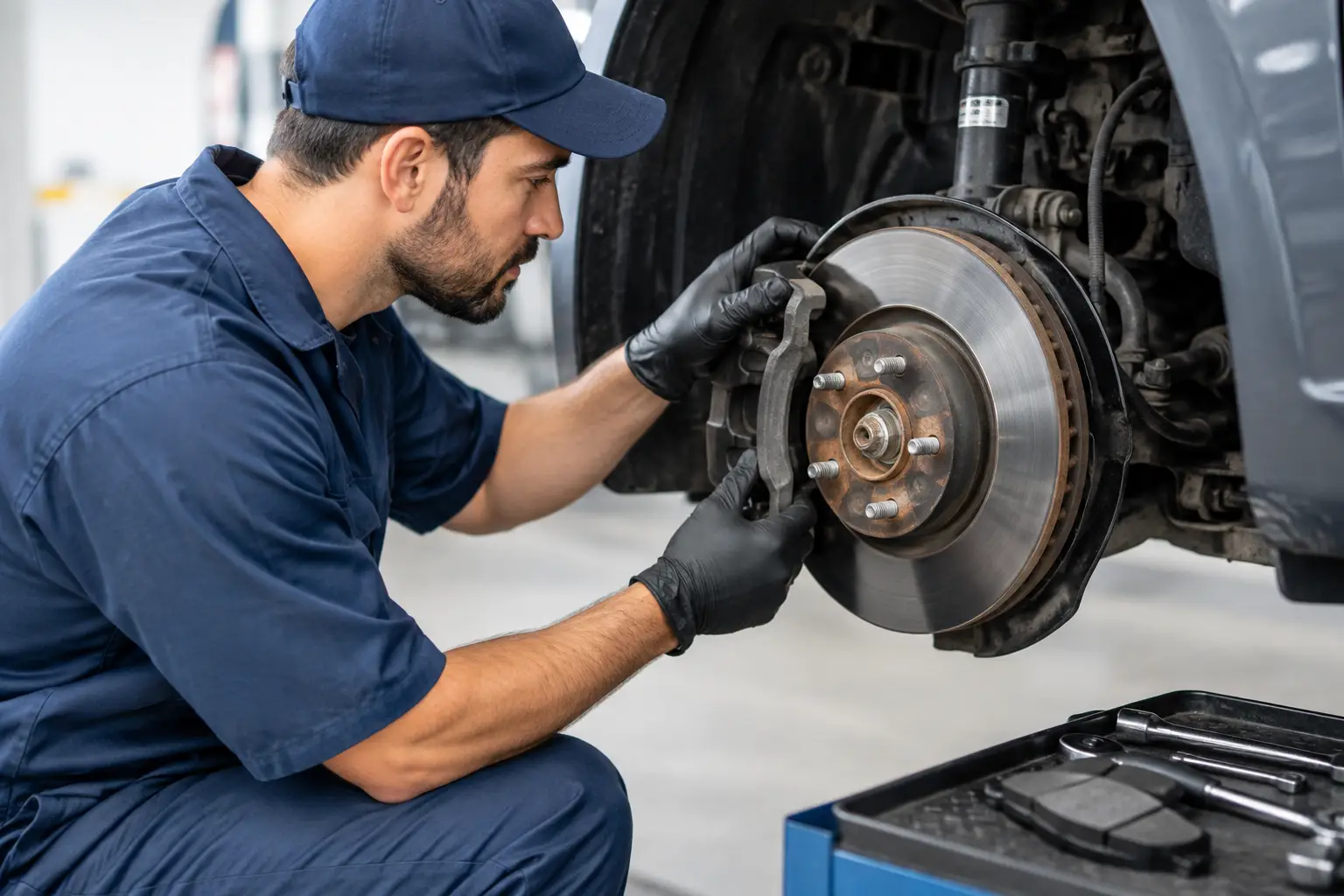
A proper brake inspection is more than a quick look at the pads through the wheel. Professional mechanics should measure pad thickness, inspect rotor condition, check caliper movement, examine brake hoses and lines, and look at the hardware that helps pads move freely. They should also inspect brake fluid condition and verify that the parking brake is operating correctly.
This process matters because brake parts often wear unevenly. An inner brake pad may be much thinner than the outer one, for example, if a caliper slide is sticking. Replacing pads alone without addressing the cause can lead to noise, uneven braking, and early wear on the new parts. Honest brake service starts with finding the full condition of the system and explaining what is needed now, what can be monitored, and why.
For delivery vehicles, a road test can add useful information. It allows the technician to evaluate pedal feel, braking response, pulling, noise, and vibration under normal driving conditions. That helps turn a vague complaint such as “my brakes do not feel right” into clear repair recommendations.
Pads, Rotors, Calipers, and Fluid: What May Need Repair
Brake pads are designed to wear out, so pad replacement is one of the most common services. The correct pad choice depends on the vehicle and its workload. Some drivers want quieter braking and less dust, while a heavily used van may benefit from pads selected for durability and consistent stopping performance. The lowest-cost part is not always the best value if it wears quickly or creates noise under demanding use.
Rotors may be reused, resurfaced, or replaced depending on their thickness, surface condition, and manufacturer specifications. In many modern vehicles, replacing pads and rotors together provides more predictable results, particularly if the old rotors are scored, rusted, overheated, or below the required minimum thickness. A technician should explain the condition rather than recommending parts without a reason.
Calipers apply pressure to the pads. When a caliper sticks, it can cause uneven pad wear, pulling, excessive heat, and reduced fuel efficiency. Brake hardware, including clips and slide pins, also needs attention because corrosion can prevent smooth movement. Brake fluid absorbs moisture over time, and a fluid service may be recommended based on its condition and the vehicle manufacturer’s maintenance schedule. Fluid work is not automatically required with every pad change, but it should not be ignored when inspection or maintenance intervals call for it.
How to Reduce Brake Wear Between Services
Good driving habits can help delivery drivers get more value from their brake service. Leave extra following distance so you can slow gradually instead of braking hard at the last moment. Look ahead for changing lights and traffic backups. When driving downhill, use a lower gear when appropriate for your vehicle rather than holding the brake pedal continuously.
Avoid overloading the vehicle. Excess weight increases stopping distance and puts added strain on pads, rotors, tires, and suspension components. Keep up with tire pressure and wheel alignment as well. Tires are the final contact point between the braking system and the road, so worn or underinflated tires can make even properly working brakes feel less effective.
Do not ignore new noises just because the vehicle still stops. A quick inspection when a squeal first appears can be far less disruptive than losing braking performance during a busy weekend shift. Keep service records, especially if multiple drivers use the same vehicle. Patterns in pad wear, rotor replacement, or caliper issues can help a fleet manager plan maintenance before downtime affects operations.
Choosing the Right Service Schedule
There is no single mileage number that fits every delivery vehicle. A driver who works a few local shifts each week may have very different brake needs than a full-time courier covering dense city routes. Instead of waiting for a dashboard light or a loud grinding sound, include brake inspections with regular oil changes, tire rotations, and seasonal maintenance visits.
Many drivers benefit from having their brakes checked at least twice a year, with more frequent inspections for high-mileage commercial use. The goal is not to replace parts early. It is to measure wear accurately, catch uneven wear before it damages other components, and schedule service at a time that works for your route.
At JAK Tire Service Corp, technicians can assess your brake system clearly and recommend practical repairs based on your vehicle’s condition and workload. You should leave knowing what was found, what was repaired, and what to watch for next.
Your vehicle earns its keep one stop at a time. Give the brakes the same attention you give fuel, tires, and oil, and you can stay safer on the road while avoiding preventable interruptions to your workday.