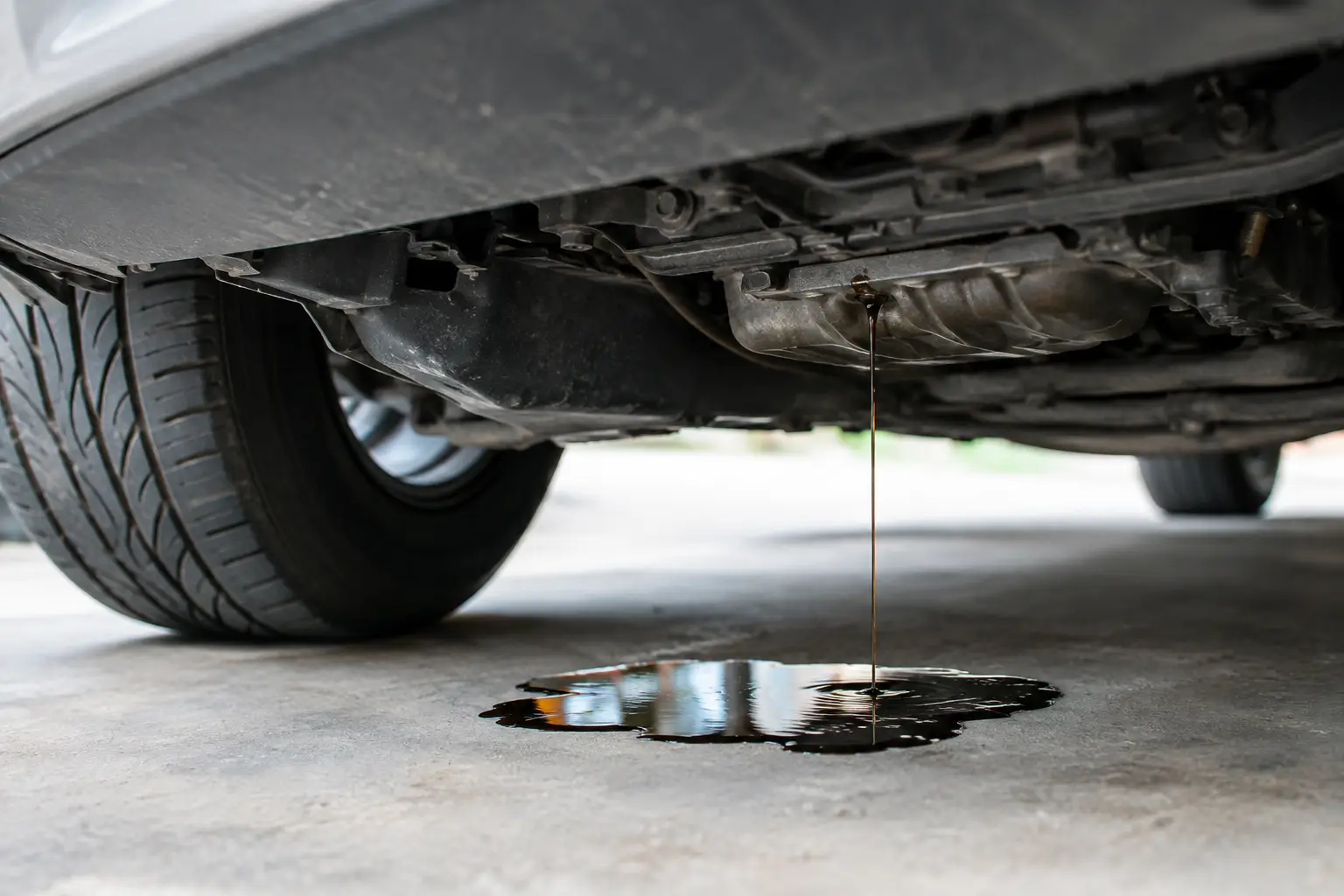
A few dark drops on the driveway may seem minor, but is engine oil leaking dangerous? It can be. The immediate risk depends on where the oil is coming from, how quickly it is leaking, and how low the engine oil level has become. A slow seep may give you time to arrange service, while an active leak can lead to expensive engine damage, smoke under the hood, or a breakdown on a busy road.
The practical rule is simple: do not ignore oil on the ground, a burning-oil smell, or a falling oil level. A professional inspection can identify the source before a small gasket or seal problem turns into a much larger repair.
Is an Engine Oil Leak Dangerous to Drive With?
An oil leak is dangerous when it leaves the engine without enough lubrication or allows oil to reach hot engine and exhaust components. Engine oil creates a protective film between moving metal parts. Without enough of it, friction and heat rise quickly. Bearings, timing components, camshafts, and other internal parts can wear or fail.
A tiny seep around a valve cover gasket is not always an emergency, especially if the oil level remains full and there is no smoke or smell. Even then, it still deserves attention. Seals rarely repair themselves, and oil can spread over belts, hoses, electrical connections, and other components over time.
An active leak needs faster action. If you see fresh oil accumulating under the vehicle, notice smoke from the engine bay, or need to add oil between regular services, schedule diagnosis promptly. If the oil pressure warning light comes on, pull over safely and shut the engine off as soon as you can. That warning can mean the engine has dangerously low oil pressure, and continuing to drive may cause severe damage within minutes.
The Main Risks of Leaking Engine Oil
The most costly consequence is engine damage. Low oil does not always cause an obvious noise right away. A vehicle may still start and drive normally while internal damage is developing. Once the engine begins knocking, ticking loudly, overheating, or losing power, the repair may be far more involved than fixing the original leak.
Oil on hot parts creates a separate concern. When oil lands on an exhaust manifold, catalytic converter area, or other high-temperature component, it can produce a sharp burning smell and smoke. An engine fire from an oil leak is uncommon, but it is possible when enough oil contacts a very hot surface. Smoke from under the hood should never be brushed off as normal.
Leaks can also affect safety outside the engine. Oil on the road or parking surface can make pavement slippery for people, motorcycles, bicycles, and other vehicles. If oil reaches rubber suspension bushings or drive belts, it can shorten their service life. A leaking engine may also fail an inspection if the issue is severe enough or if it creates a visible safety concern.
Signs the Leak Needs Immediate Attention
Not every leak requires a tow truck, but certain symptoms mean it is safer to stop driving and have the vehicle checked right away. Watch for these warning signs:
- The red oil pressure light stays on or comes on while driving.
- You see heavy smoke, smell burning oil, or notice oil dripping onto hot engine parts.
- The dipstick shows oil below the minimum mark, or the level drops quickly after topping it up.
- The engine makes knocking, grinding, loud ticking, or unusual rattling sounds.
- A large puddle forms after the vehicle is parked, rather than a few occasional drops.
If smoke is coming from the engine compartment, pull over in a safe location, turn off the engine, and let the vehicle cool. Do not open a hot radiator cap or reach around hot components to find the leak. If there are flames, move away from the vehicle and call emergency services.
Common Places Engine Oil Leaks Start
Oil leaks often begin at seals and gaskets that have hardened with age and heat cycles. The valve cover gasket is a frequent source, usually leaving oil around the top or sides of the engine. An oil pan gasket or drain plug can leak near the bottom of the engine, especially after damage from road debris or an improperly sealed oil change.
Other possible sources include the oil filter seal, timing cover gasket, crankshaft seals, camshaft seals, oil cooler lines, and the oil pressure sensor. On some vehicles, a leak from higher up can travel down the engine and make it look as though the oil pan is at fault. That is why replacing the first visibly oily part is not always the right repair.
A thorough inspection starts with confirming that the fluid is actually engine oil. Automatic transmission fluid, power steering fluid, coolant, and even water from air conditioning condensation can appear beneath a vehicle. Engine oil is usually amber to dark brown or black, feels slick, and has a distinct petroleum smell. But color alone is not enough for a reliable diagnosis.
What to Do Before Your Appointment
Check the oil level on level ground after the engine has been off for several minutes. Pull the dipstick, wipe it clean, reinsert it fully, and check the level again. If it is low, add the correct type and viscosity of oil listed for your vehicle. Do not overfill it, since too much oil can create its own problems.
Then place clean cardboard under the parked vehicle overnight if it is safe to do so. The location and size of any drips can help show whether the issue is active. Take note of burning smells, smoke, dashboard warnings, and how often you have needed to add oil. These details help a technician diagnose the concern more efficiently.
Avoid relying on stop-leak additives as a permanent fix. Some products may temporarily swell certain seals, but they cannot repair a cracked component, damaged oil pan, loose drain plug, or worn gasket. They can also create trade-offs in older engines or systems with narrow oil passages. The best solution is to identify the source and repair it correctly.
How a Professional Oil Leak Inspection Helps
A proper inspection is more than looking under the hood. A technician may clean the affected area, inspect gaskets and seals, check the oil filter and drain plug, and look for oil patterns that trace back to the true source. In difficult cases, UV dye can be added to the oil so the leak is easier to pinpoint after the engine runs.
The repair cost depends on access and the failed part. Replacing an oil filter seal or drain plug is typically straightforward. A rear main seal, timing cover gasket, or oil pan repair can take more labor because other components may need to be removed first. Honest diagnosis matters here: repairing the confirmed source prevents paying for parts that are not causing the leak.
For commuters, delivery drivers, families, and fleet vehicles, early repair also protects uptime. A planned visit is usually far less disruptive than an engine failure, roadside breakdown, or tow. At JAK Tire Service, certified technicians can inspect oil leaks, explain what is urgent, and recommend the repair that makes sense for your vehicle and budget.
Keep a Small Leak From Becoming a Major Repair
Regular oil changes give technicians a useful opportunity to spot wet gaskets, loose filters, damaged drain plugs, and oil level changes before they become serious. It also helps to check your driveway and dipstick between services, particularly on higher-mileage vehicles or after striking road debris.
Do not wait for a puddle or warning light to take an oil leak seriously. A clear diagnosis and timely repair keep the engine lubricated, reduce safety risks, and help your vehicle stay dependable for every trip ahead.