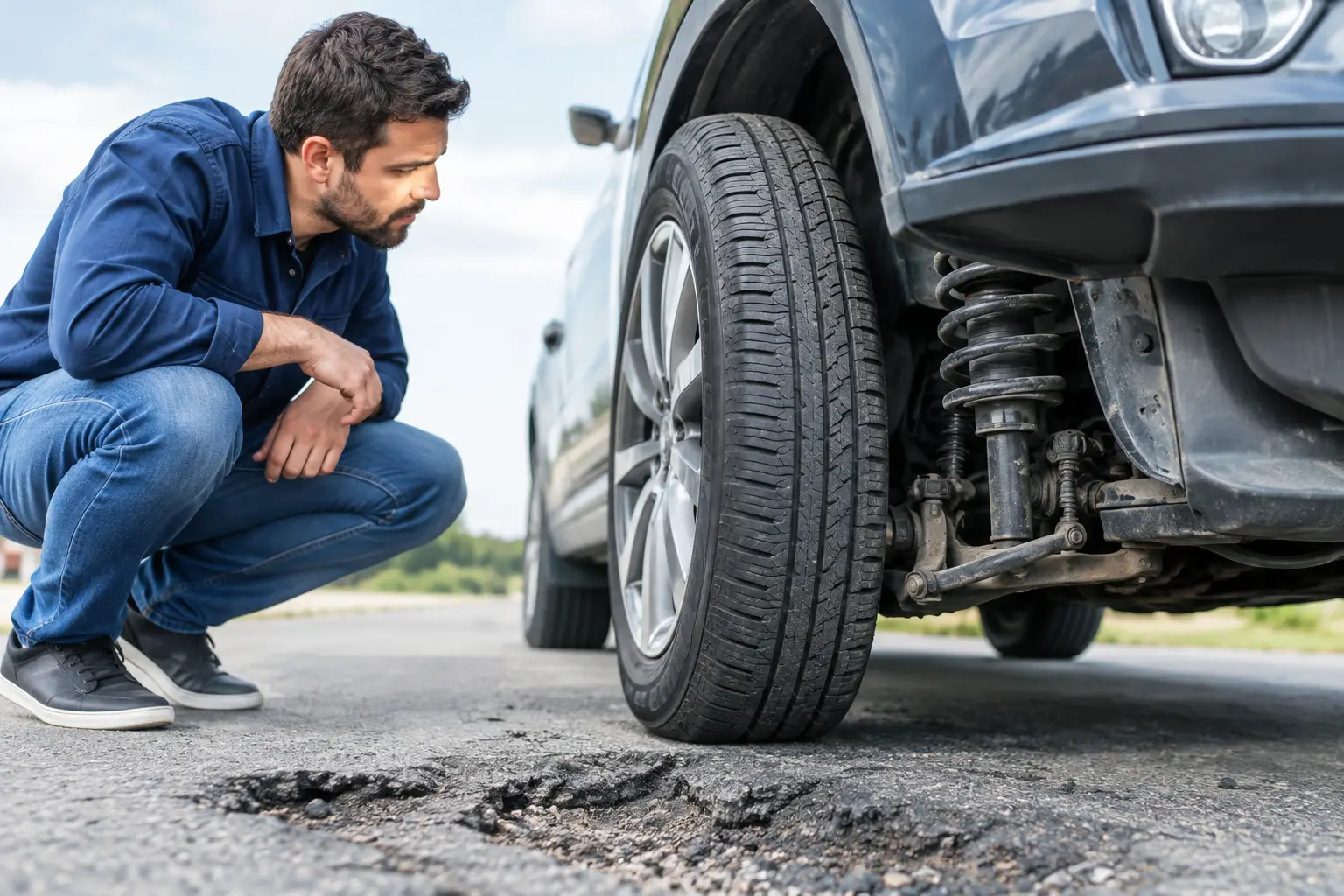
A pothole can look like a minor inconvenience until your steering wheel starts shaking on the highway or your vehicle pulls toward the curb. Pothole suspension damage is common after winter and spring road conditions, but a single hard impact can affect any vehicle. The key is knowing what changed after the hit and getting it checked before uneven tire wear, poor handling, or a longer stopping distance turns a manageable repair into a bigger bill.
What Happens When You Hit a Pothole?
When a tire drops into a pothole, the wheel, tire, suspension, steering system, and wheel alignment absorb the impact together. At low speed, the damage may be limited or nonexistent. At higher speeds, however, the force can be significant enough to bend a wheel, damage a tire, shift alignment angles, or wear and loosen suspension components.
Your suspension is designed to manage normal bumps while keeping the tires in steady contact with the road. It includes parts such as shocks or struts, control arms, ball joints, bushings, springs, and sway bar links. These components work with the steering system to keep the vehicle stable, predictable, and comfortable.
A pothole impact does not always cause an immediate breakdown. Sometimes the vehicle drives normally at first, then develops a vibration, clunking sound, or tire-wear issue over the following days or weeks. That is why it is smart to pay attention after a sharp impact, especially if you drive daily, carry passengers, haul equipment, or depend on your vehicle for delivery or rideshare work.
7 Signs of Pothole Suspension Damage
1. The Vehicle Pulls to One Side
If the car drifts left or right on a level road, the impact may have knocked the wheels out of alignment. A pothole can change camber, caster, or toe angles, which affect how the tires sit and roll. Pulling can also result from a damaged tire or a sticking brake, so an inspection is the right way to identify the actual cause.
2. The Steering Wheel Is Off Center
On a straight road, your steering wheel should sit close to center. If it now points to one side while the vehicle travels straight, wheel alignment may have shifted. It may seem like a small annoyance, but continued driving can wear tires quickly and make the vehicle less stable during braking or lane changes.
3. New Vibration in the Wheel, Seat, or Floor
A vibration that begins after hitting a pothole deserves attention. It may indicate a bent wheel, tire damage, an alignment problem, or a worn suspension or steering component. Vibration that gets worse as speed increases is especially worth having inspected promptly.
Do not assume a vibration will simply go away. Even if it feels mild, it can contribute to uneven tire wear and place additional stress on suspension parts over time.
4. Clunking, Knocking, or Rattling Over Bumps
Loose or worn suspension parts often make themselves known with noise. A clunk when driving over speed bumps, driveway entrances, or rough pavement can point to a damaged sway bar link, worn bushing, ball joint issue, or strut mount problem.
The sound alone cannot confirm which part is at fault. Professional mechanics inspect the suspension under load and check for play in the components rather than replacing parts based on a guess.
5. The Ride Feels Harsh, Bouncy, or Unstable
If your vehicle suddenly feels less controlled after a pothole, pay attention. Worn or damaged shocks and struts can allow excessive bouncing after bumps. You may also notice more body roll when turning, front-end dipping during braking, or a floating feeling at highway speed.
A rough ride does not always mean the shocks or struts are the only issue. Tire pressure, tire damage, wheel condition, and alignment can all affect ride quality. A complete inspection helps avoid paying for a repair that does not address the root cause.
6. Uneven or Fast Tire Wear
Look at your tires regularly, particularly after an impact. Excess wear on the inside or outside edge can signal an alignment issue, while cupping or scalloped patches can be connected to worn shocks, struts, or other suspension concerns.
Tires are expensive, and uneven wear can shorten their useful life dramatically. Correcting an alignment or suspension issue early may protect the tire investment you already made and improve traction in rain, snow, and emergency braking situations.
7. A Visible Tire Bulge, Cut, or Bent Wheel
Not all pothole damage is hidden underneath the vehicle. Check the tire sidewall and wheel after a hard strike when it is safe to do so. A sidewall bulge can mean the tire’s internal structure has been damaged, and it should be inspected right away. A bent wheel may cause air loss, vibration, or poor tire sealing.
Avoid driving on a tire with a visible bulge, deep cut, or rapid pressure loss. This is a safety concern, not a wait-and-see situation.
Why Alignment Alone May Not Fix the Problem
Wheel alignment is often part of the solution after a pothole impact, but it is not always the complete repair. Alignment adjusts wheel angles to manufacturer specifications. If a control arm is bent, a ball joint has excessive play, a bushing is torn, or a strut is damaged, simply setting the alignment may not hold or may not be possible until the worn component is replaced.
That is why a proper inspection comes first. A technician should examine the tires and wheels, check steering and suspension components, look for leaks from shocks or struts, and verify alignment readings. This gives you clear answers about what needs attention now and what can be monitored.
At JAK Tire Service, the goal is straightforward: identify the cause, explain the repair in plain language, and recommend work based on safety and vehicle condition rather than unnecessary upselling.
What to Do After a Hard Pothole Hit
If you hit a pothole hard, reduce speed safely and notice how the vehicle feels. Watch for pulling, vibration, warning lights, unusual sounds, or a tire-pressure warning. If the steering feels loose, the tire is losing air, or the vehicle is difficult to control, do not continue driving farther than necessary. Arrange for professional help instead.
If the vehicle seems normal, check tire pressure and inspect the visible tire sidewalls and wheel rims when you are parked. Then monitor the vehicle over the next few drives. A wheel alignment and suspension inspection is a sensible preventive step if the impact was severe, especially before a long trip or seasonal tire change.
Can You Prevent Pothole Damage?
You cannot avoid every damaged road, but you can reduce the risk. Leave enough following distance to see road hazards, slow down when pavement conditions are poor, and avoid sudden swerving into another lane. Keep tires inflated to the pressure shown on the vehicle’s tire-information label, not the maximum pressure printed on the tire sidewall.
Tires with correct pressure help cushion impacts and support the vehicle properly. Regular tire rotations, balancing, alignment checks, and suspension inspections also make it easier to catch wear before a pothole exposes a weak component.
Potholes are part of driving, but loss of control, worn-out tires, and ongoing steering problems do not have to be. If your vehicle feels different after an impact, trust that change and have it inspected while the repair is likely to be simpler, safer, and more affordable.