
A low growl that rises with road speed is easy to blame on old tires or rough pavement. But wheel bearing failure is another common cause, and waiting too long can turn a manageable repair into a safety concern. A worn wheel bearing can affect steering feel, tire wear, braking stability, and, in severe cases, the wheel’s ability to stay securely supported.
For commuters, families, delivery drivers, and fleet vehicles, the safest move is to have a new noise or vibration checked before it becomes louder, looser, or more expensive. The good news is that a proper inspection can identify the source clearly. You do not have to guess whether the problem is your tires, brakes, suspension, or wheel bearing.
What a Wheel Bearing Does
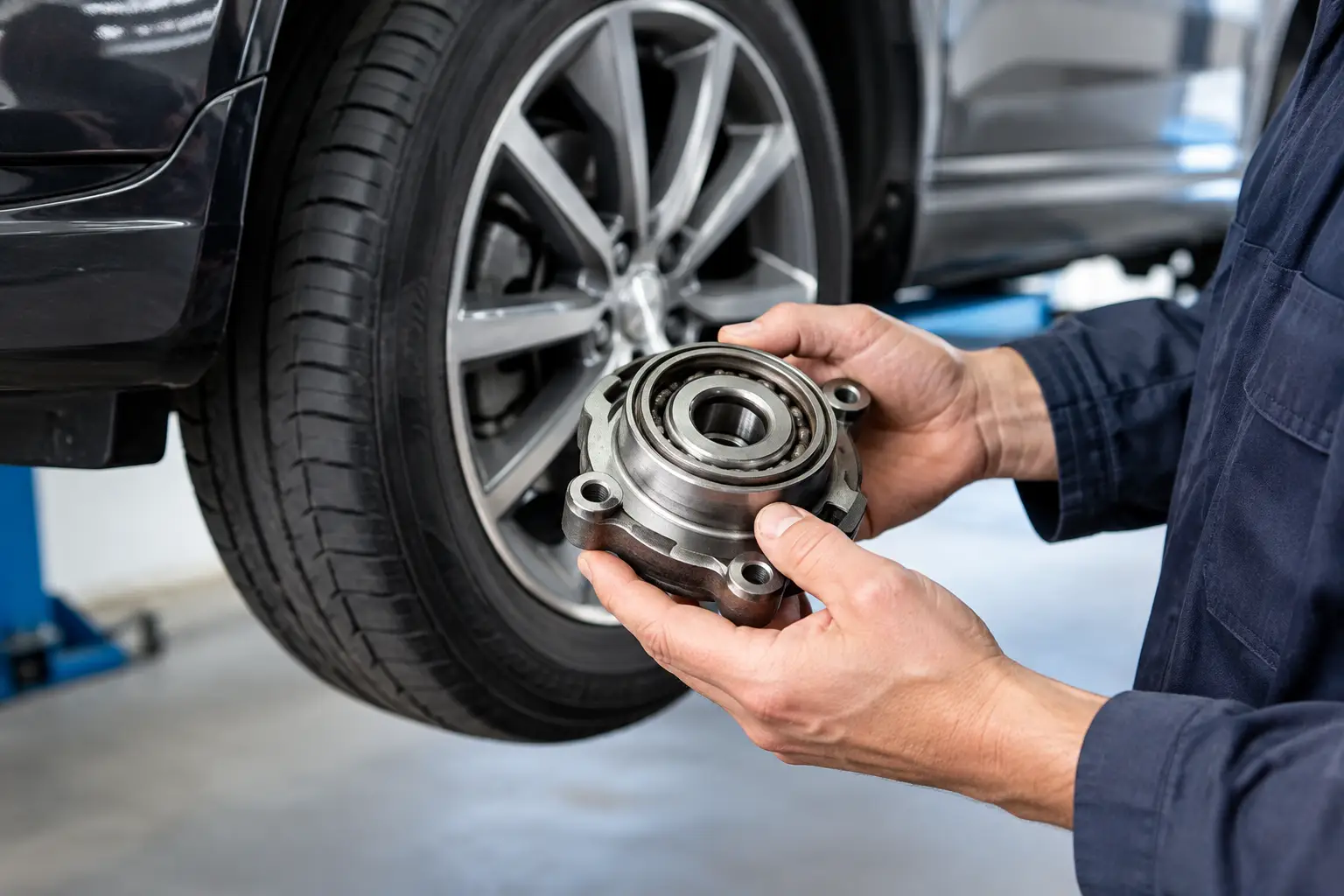
A wheel bearing is a set of precision steel balls or rollers inside a metal assembly at each wheel. It allows the wheel to rotate smoothly while carrying the weight of the vehicle and handling forces from turning, braking, potholes, and road impacts.
On many modern vehicles, the bearing is part of a sealed hub assembly. On others, the bearing can be replaced separately. Either way, it has a demanding job. It operates through heat, moisture, road salt, heavy loads, and thousands of miles of rotation. When its internal components wear, become contaminated, or lose proper lubrication, the bearing can no longer keep the wheel turning with the precision it needs.
Common Signs of Wheel Bearing Failure
The most familiar warning sign is a humming, growling, grinding, or rumbling sound that changes with vehicle speed. Unlike engine noise, it may continue even when you let off the gas. The sound can also get louder or quieter during a gentle turn because the vehicle’s weight shifts from one side to the other.
A bad bearing does not always sound the same. Some drivers describe it as aggressive tire noise, while others notice a helicopter-like hum at highway speeds. That is why a professional inspection matters. Cupped tires, uneven tread wear, a damaged CV joint, and certain differential problems can create similar sounds.
Pay attention to these other symptoms as well:
- Vibration in the steering wheel, floor, or seat, especially as speed increases
- A loose, wandering, or less confident steering feel
- Uneven or unusual tire wear on one corner of the vehicle
- A clicking, grinding, or scraping sound near one wheel
- An ABS or traction-control warning light on vehicles where the hub includes a wheel-speed sensor
- Excess heat near a wheel after driving, sometimes accompanied by a burning smell
Not every symptom appears at once. A bearing may begin with only a faint highway hum, then worsen gradually over several weeks. Other failures progress quickly after a pothole strike or curb impact.
Why Noise Changes When You Turn
When you turn left, more weight transfers to the right side of the vehicle. When you turn right, more weight shifts to the left. A worn bearing often becomes noisier when it is carrying more load. This can provide a clue, but it is not a final diagnosis. Sound can travel through the suspension and body, making it difficult to identify the failed side from the driver’s seat alone.
A technician can road-test the vehicle, inspect the tires, check for wheel play, and listen closely at each hub. That process avoids replacing the wrong part and helps catch related concerns, such as damaged tires or worn suspension components.
What Causes a Wheel Bearing to Wear Out?
Age and mileage are common factors, but wheel bearings do not fail only because a vehicle is older. Road conditions and driving demands make a real difference. Regular encounters with potholes, construction zones, deep water, and winter road salt can shorten bearing life, especially across the GTA.
A hard impact from a curb or pothole can damage the bearing internally even if the wheel looks fine from the outside. Water intrusion is another concern. Sealed bearings are built to resist moisture, but a damaged seal can allow water and debris inside, washing away lubrication and causing corrosion.
Improper installation can also lead to early failure. Bearings must be installed with the correct tools, torque specifications, and procedures. For example, overtightening an axle nut or using an impact tool carelessly can place excessive stress on a new hub assembly. This is one reason professional workmanship matters as much as the replacement part itself.
Heavy loads, frequent stop-and-go driving, towing, and high-mileage commercial use can add stress too. That does not mean every truck, SUV, or delivery vehicle will have bearing problems. It means regular inspections are a smart way to find wear before it affects reliability.
Is It Safe to Drive With a Bad Wheel Bearing?
A faint bearing noise may not mean the vehicle will fail immediately, but it should not be ignored. Bearings can deteriorate from minor wear to excessive looseness. As the play increases, the wheel may wobble, tire wear can accelerate, and braking or handling may become less predictable.
In a severe wheel bearing failure, the bearing can overheat, seize, or allow damaging movement at the hub. This can affect the ABS sensor, brake components, axle, and steering system. The repair may then involve more than a bearing replacement.
If you hear loud grinding, feel major vibration, notice steering looseness, see an ABS warning light with wheel noise, or find one wheel unusually hot, avoid unnecessary driving. Arrange an inspection as soon as possible. If the vehicle feels unstable or the wheel appears tilted, stop driving and have it transported for service.
How a Proper Diagnosis Saves Money
Replacing a wheel bearing without testing the vehicle first can waste money. Tire noise, brake drag, worn ball joints, bent wheels, and drivetrain issues can all be mistaken for a bearing problem. A careful diagnosis starts with the driver’s description of when the noise occurs, followed by a road test and hands-on inspection.
Technicians may check for movement by lifting the vehicle safely and testing the wheel at different positions. They inspect tire condition, listen for roughness while rotating the wheel, examine brake and suspension parts, and scan for wheel-speed sensor faults when applicable. The exact method depends on the vehicle’s design and the symptoms present.
If a bearing has failed, the repair approach depends on whether your vehicle uses a press-in bearing or a complete hub assembly. Hub assemblies can sometimes include wheel studs and an ABS sensor, which may make replacement more straightforward. Press-in bearings can require additional labor and specialized equipment. Honest service means explaining which repair your vehicle needs, why it needs it, and what the estimate includes before work begins.
Can You Prevent Wheel Bearing Problems?
No maintenance schedule can prevent every bearing failure, since these parts eventually wear under normal use. Still, a few habits can reduce avoidable damage. Slow down for potholes and rough pavement when safe to do so, avoid striking curbs, and have impact damage checked after a hard hit.
Keep tires properly inflated and have them rotated, balanced, and aligned as recommended. These services do not directly repair a wheel bearing, but they help maintain predictable handling and can reveal uneven wear or vibration issues early. If your vehicle starts making a new hum, do not wait for your next oil change to mention it.
For drivers who carry heavy loads, tow trailers, or put high mileage on a vehicle for work, routine inspections are especially valuable. Finding a small issue early can protect tires, brakes, suspension parts, and your schedule.
Get Clear Answers Before the Noise Gets Worse
A wheel bearing problem rarely improves on its own. The earlier it is checked, the more likely the repair stays focused, safe, and cost-effective. At JAK Tire Service Corp, our technicians inspect the complete wheel area, explain the cause in clear terms, and recommend only the work your vehicle needs.
If your vehicle is humming, vibrating, pulling, or feeling less stable than usual, schedule an inspection soon. A precise diagnosis now can help you drive smoother, stop safer, and stay confident on every trip.