A tire that looks only slightly soft can create a much bigger problem than most drivers expect. Is low tire pressure harmful? Yes. It can reduce control, increase stopping distances, waste fuel, wear out tires early, and in severe cases contribute to a dangerous tire failure. The good news is that checking and correcting tire pressure is quick, affordable, and one of the simplest ways to protect your vehicle.
Is Low Tire Pressure Harmful? The Short Answer
Low tire pressure is harmful because it changes how the tire supports the weight of your vehicle. An underinflated tire flexes more as it rolls, especially along the sidewalls and outer edges of the tread. That extra flex creates heat, and heat is one of the main enemies of tire durability.
A few pounds per square inch below the recommended setting may not cause an immediate emergency. However, pressure that remains low over days or weeks can quietly shorten tire life and make the vehicle less predictable in rain, during emergency braking, or while turning. The risk rises with highway driving, heavy loads, hot pavement, and vehicles such as SUVs, trucks, delivery vans, and family vehicles carrying passengers and cargo.
The correct pressure is not the maximum number molded onto the tire sidewall. Use the tire-pressure label on the driver’s door jamb, or refer to your owner’s manual. That number is set by the vehicle manufacturer for your specific vehicle, tire size, and load requirements.
What Happens When You Drive on Low Tires
Handling becomes less precise
Underinflated tires do not hold their intended shape against the road. The steering may feel heavier or less responsive, and the vehicle can feel vague through corners or during lane changes. On a daily commute, the change may be subtle. In a sudden maneuver, that loss of precision can matter a lot.
Low pressure can also make a vehicle pull or wander, although pulling may also point to uneven tire wear, alignment concerns, brake issues, or suspension wear. A proper inspection separates these problems instead of guessing.
Braking and wet-road traction can suffer
Tires are designed to place a specific tread shape and contact patch on the road. When pressure is too low, the tread can distort. This may reduce the tire’s ability to channel water effectively and can make wet-road traction less consistent.
Stopping performance depends on many factors, including tread depth, brake condition, road surface, speed, and tire type. Still, properly inflated tires give the braking system the stable foundation it needs to work as designed. If your tire pressure warning light is on, do not treat it as a minor convenience alert.
Tires wear out faster
Low pressure often causes faster wear on the outer shoulders of the tread. As the tire flexes and runs hotter, internal materials can also weaken. This kind of damage is not always visible from the outside, particularly if the tire has been driven underinflated for an extended period.
Replacing one tire early is inconvenient. Replacing two or four early is expensive. For all-wheel-drive vehicles, uneven tire circumference can sometimes create additional drivetrain concerns, so keeping all four tires properly inflated is especially worthwhile.
Fuel economy drops
A low tire has more rolling resistance, meaning the engine has to work harder to keep the vehicle moving. The fuel-cost difference from a small pressure loss may seem minor on one trip, but it adds up for commuters, rideshare drivers, fleets, and delivery vehicles that cover significant mileage.
Correct pressure will not fix every fuel-economy issue, but it is one of the easiest maintenance items to control. It helps your tires roll efficiently without sacrificing the grip and ride quality your vehicle was designed to provide.
Heat buildup can lead to tire failure
This is the most serious concern. Excessive sidewall flex produces heat, and high-speed driving compounds it. If a tire is significantly underinflated, overloaded, damaged, or already worn, the internal structure may fail. A blowout or rapid loss of air can make the vehicle difficult to control, particularly at highway speed.
Not every low tire will fail, and there is no need to panic over a small change in pressure. But a tire that is visibly low, repeatedly losing air, or showing sidewall damage needs attention before a long drive.
How Low Is Too Low?
There is no single PSI number that applies to every vehicle. A pressure of 30 PSI may be correct for one vehicle and too low for another. What matters is the cold tire pressure listed on the vehicle placard.
Tires are considered cold when the vehicle has been parked for at least three hours or driven only a short distance at low speed. Check pressure before driving whenever possible, because pressure rises as tires warm up. Do not release air from a warm tire simply because the reading is above the cold-pressure recommendation.
As a practical rule, check the tires whenever the pressure warning light appears, when the vehicle feels different, before a road trip, and at least once a month. Temperature swings also affect tire pressure. A cold snap can lower it enough to trigger the warning light, which is common during winter weather.
Why a Tire Keeps Losing Pressure
Air does not always escape because of a dramatic puncture. A slow leak can come from a nail or screw in the tread, a leaking valve stem, corrosion around the wheel bead, a damaged wheel, or a tire that was not sealed correctly during installation. Pressure can also drop naturally over time and as outside temperatures fall.
Adding air may get you moving, but it does not identify the cause. If one tire needs air more often than the others, schedule an inspection. Continuing to refill a leaking tire can allow hidden damage to develop and leaves you vulnerable to a sudden flat when you least expect it.
Avoid using a tire sealant unless it is specifically appropriate for your situation and you understand the limitations. Some sealants are temporary only and can complicate a later repair or affect tire-pressure monitoring components.
What to Do When the Tire Pressure Light Comes On
Start by looking at all four tires. If one is visibly flat, damaged, bulging, or making contact with the wheel, do not continue driving on it. Install the spare if you can do so safely, or arrange assistance.
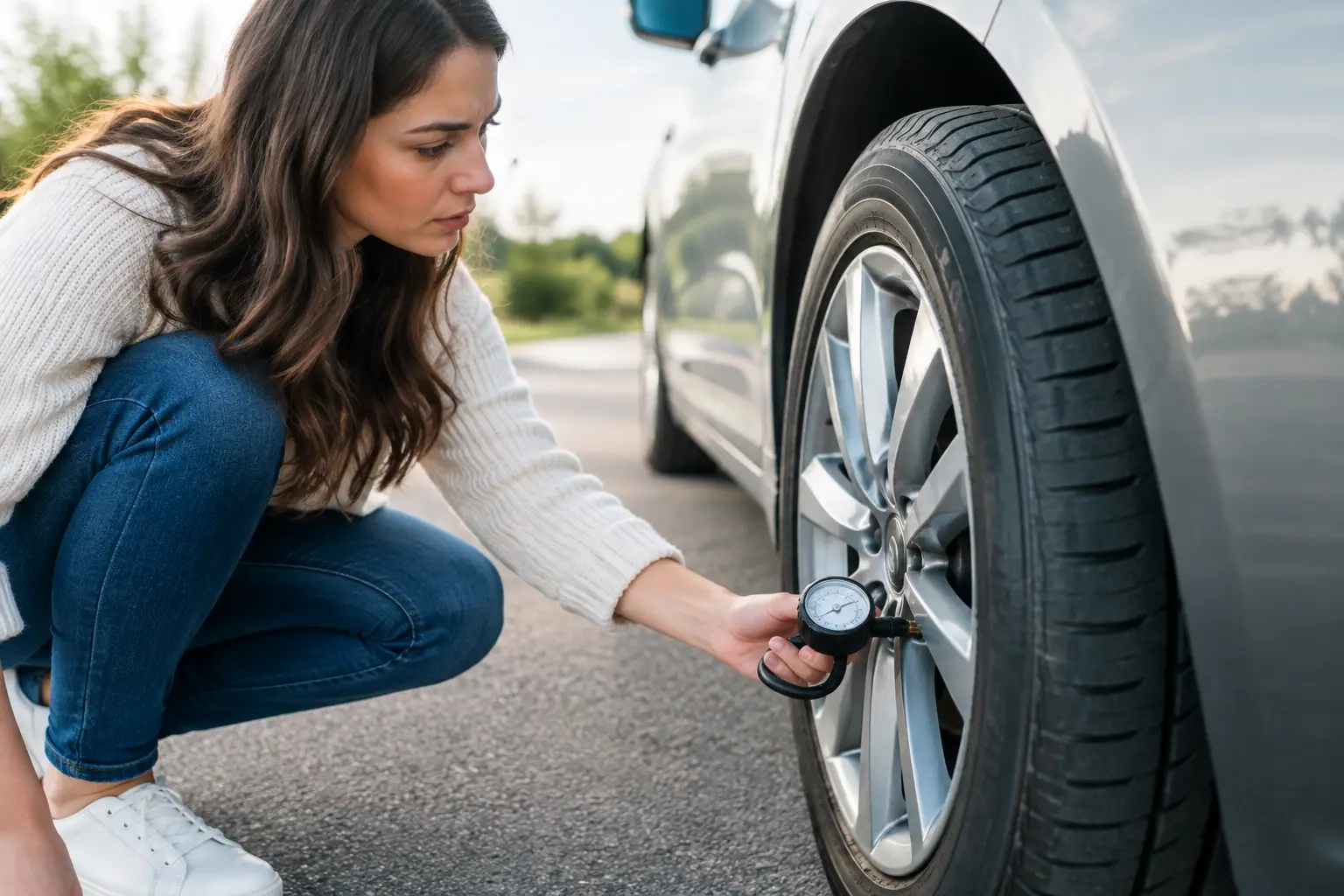
If the tires look normal, use a reliable gauge and compare each reading with the door-jamb placard. Add air to the recommended cold pressure, including the spare if your vehicle has a full-size spare and the manufacturer provides a specification for it. Then monitor the tires over the next several days.
The warning light may stay on briefly after air is added because some systems need a short drive to update. If the light flashes, stays on after the pressures are corrected, or returns soon afterward, the tire-pressure monitoring system or a tire itself may need professional diagnosis.
Prevent Low Pressure From Becoming a Bigger Repair
A monthly pressure check takes only a few minutes. Check all four tires, not just the one that looks low, and inspect the tread for nails, cracks, uneven wear, and embedded debris. Also pay attention to vibration, steering pull, frequent pressure loss, or a tire that looks lower than the others.
Tire pressure works alongside wheel alignment, tire rotation, balancing, suspension condition, and tread depth. For example, adding air will not correct uneven wear caused by poor alignment, and an alignment will not repair a tire with an internal belt problem. Clear answers come from inspecting the full picture.
At JAK Tire Service, our technicians can check for leaks, inspect tire condition, set pressures correctly, and explain what needs attention without unnecessary complexity. Whether you drive across North York every day or spend long hours on GTA highways, proper tire pressure helps you stop safer, drive more confidently, and get more life from the tires you already own.
If a tire keeps losing air or your pressure light returns, do not wait for a roadside flat to force the issue. A quick inspection now is usually the easiest path to safer, more reliable driving.