A low-tire warning on the way to work is stressful, especially when you have passengers, a delivery schedule, or highway miles ahead. The decision between run flat versus regular tires affects what happens next: whether you can drive carefully to a tire shop, how your vehicle rides every day, and what a replacement may cost. Neither option is automatically better. The right choice depends on your vehicle, driving habits, road conditions, and whether you value convenience over ride comfort and replacement cost.
Run flat versus regular tires: the core difference
A conventional tire relies on air pressure to support the vehicle. When it loses significant air, the sidewall can collapse, the tire can come off the wheel, and continuing to drive may damage both the tire and wheel. A regular tire usually requires you to stop promptly and install a spare, use a tire mobility kit, or arrange roadside assistance.
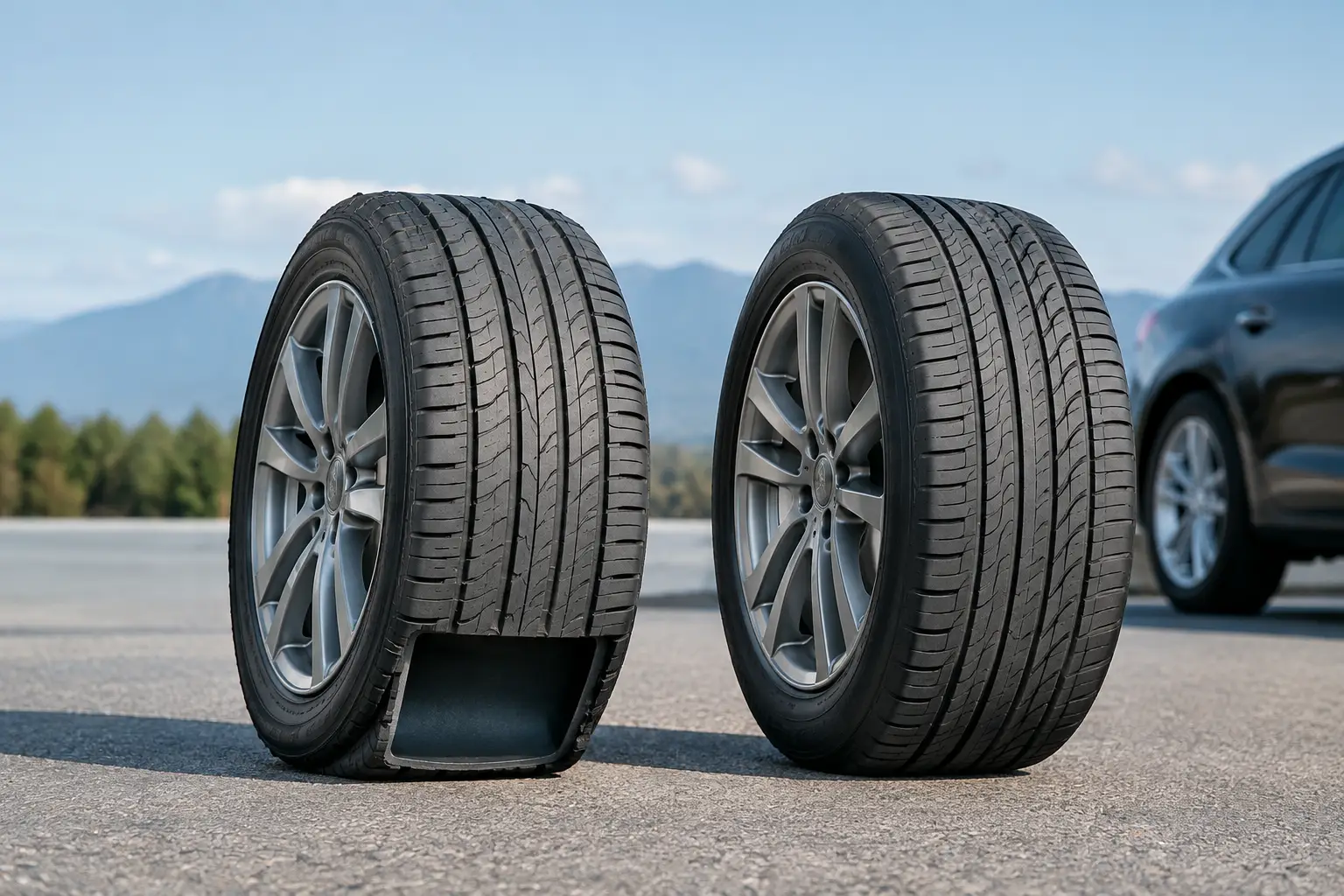
Run-flat tires are designed to support the vehicle temporarily after a loss of air pressure. Most use reinforced sidewalls that can carry the vehicle’s weight for a limited distance at a reduced speed. Many run-flat systems allow about 50 miles at up to 50 mph, but the exact limit is set by the tire and vehicle manufacturer. Always follow the instructions in your owner’s manual and on the tire itself.
That temporary mobility is the main benefit. It can get you off a busy road, through unsafe weather, or to a nearby service center without changing a tire on the shoulder. It does not mean a run-flat tire can be driven normally after a puncture.
Your vehicle needs a working TPMS
Run-flat tires must be used with a functioning tire pressure monitoring system, or TPMS. Because a run-flat may not look obviously flat when pressure is low, the dashboard warning is what tells you to slow down and have the tire inspected. Ignoring that warning can turn a repairable puncture into a damaged tire and wheel.
Ride comfort and handling: where regular tires often win
The reinforced sidewalls that make run-flats possible are also stiffer. On rough pavement, potholes, expansion joints, and patched city streets, many drivers notice a firmer ride than they would get with comparable regular tires. This can matter for commuters, families, and rideshare drivers who spend long hours behind the wheel.
Regular tires generally provide more sidewall flex. That can produce a quieter, more cushioned ride and can help absorb smaller road impacts. Depending on the tire model, regular tires may also offer a broader range of tread designs for touring comfort, all-weather capability, performance handling, or truck and SUV use.
Handling is not a simple win for either design. A quality run-flat fitted in the correct size can feel precise and stable. A quality regular tire can also provide excellent steering response and grip. The best choice is the tire that meets your vehicle’s required size, load rating, and speed rating while matching how you actually drive.
Cost, repairs, and replacement availability
Run-flat tires commonly cost more than comparable regular tires. They can also be harder to source in some sizes, which may affect replacement timing if you need a specific model quickly. Installation requires proper equipment and experienced technicians because the stiff sidewalls are more challenging to mount and dismount without damage.
Repair policies deserve careful attention. Some punctured run-flat tires cannot be safely repaired after they have been driven with low or no pressure, even for a short distance. Internal sidewall damage is not always visible from the outside. A professional inspection is the only reliable way to determine whether repair is appropriate.
Regular tires are usually less expensive to buy and more widely available. A simple tread-area puncture may often be repairable if the tire was not driven flat and the damage meets industry repair guidelines. Sidewall punctures, large holes, and tires driven while deflated typically require replacement regardless of tire type.
The savings from regular tires should be weighed against your backup plan. If your vehicle has no spare tire, you may need roadside assistance coverage, a tire mobility kit, or a compact spare where compatible. Some vehicles equipped with run-flats do not include a spare, which saves cargo space and vehicle weight.
Winter, potholes, and everyday road conditions
For drivers in areas with cold winters and frequent potholes, tire choice should start with the conditions you face most often. Run-flats can provide peace of mind after a puncture on a cold night or a busy highway. However, their firmer construction may make harsh pavement feel more noticeable, and severe pothole impacts can damage any tire or wheel.
Winter traction depends much more on the tire’s tread compound and design than on whether it is run-flat or conventional. A dedicated winter tire is designed to remain flexible in low temperatures and provide better grip in snow and ice. An all-season run-flat is not automatically a winter tire, and an all-season regular tire is not automatically adequate for severe winter conditions.
For GTA drivers, proper inflation and tread depth are especially important when temperatures swing. Pressure drops as temperatures fall, and an underinflated tire generates extra heat, wears unevenly, and responds less predictably in wet or snowy conditions. Check pressure monthly and before longer trips, using the pressure listed on the driver’s door placard rather than the maximum pressure printed on the tire sidewall.
When run-flat tires make the most sense
Run-flats are a strong fit for drivers who prioritize the ability to continue safely after a puncture. They can be especially practical for vehicles that came equipped with them from the factory, commuters who regularly use high-speed roads, and drivers who do not want to change a tire at the roadside.
They may also make sense when cargo space is limited and the vehicle was designed without room for a spare. If you travel with children, drive late at night, or work in areas where a sudden stop would feel unsafe, the added mobility can be worth the higher purchase price and firmer ride.
Do not assume that replacing factory run-flats with regular tires is a simple swap. The tire size, load capacity, speed rating, wheel fitment, suspension tuning, spare-tire plan, and vehicle manufacturer recommendations all matter. A technician can help you determine whether conventional tires are appropriate and what changes, if any, are needed to keep the vehicle safe and properly equipped.
When regular tires may be the better value
Regular tires are often the better choice for drivers focused on comfort, lower replacement cost, and a wider selection of models. They can be a practical option for sedans, SUVs, trucks, fleet vehicles, and daily drivers where a spare tire or roadside assistance is available.
They are also appealing if you want more choices in winter, touring, performance, or all-terrain tire categories. For many drivers, a high-quality regular tire paired with a reliable spare and routine inspections delivers dependable performance at a more manageable cost.
The key is preparation. Know where your spare, jack, and wheel-lock key are stored. If your vehicle has a mobility kit instead of a spare, check its expiration date and understand its limitations. A sealant kit cannot fix every puncture, and it is not suitable for sidewall damage.
Tire care matters more than the label
Whether you choose run-flats or regular tires, basic maintenance protects your investment. Have tires rotated at the recommended interval, maintain correct pressure, and schedule a wheel alignment if the vehicle pulls, the steering wheel is off-center, or tread is wearing unevenly. An alignment issue can shorten tire life quickly and affect braking and handling.
Inspect tires regularly for cuts, bulges, embedded objects, and uneven wear. A bulge in the sidewall usually indicates internal damage and should be checked immediately. After a pothole strike, watch for vibration, pulling, or a new loss of pressure. These are signs that the tire, wheel, or suspension may need professional attention.
At JAK Tire Service Corp, the goal is straightforward: inspect the tire honestly, explain the options clearly, and help you choose a solution that keeps your vehicle safe and road-ready. A good tire decision is not about buying the most expensive option. It is about choosing the right tire for your vehicle and having a plan for the road ahead.