A flat tire rarely happens at a convenient time. It may be during a morning commute, after a curb strike in a parking lot, or on a dark stretch of highway with passengers in the car. This emergency spare tire guide gives you a clear plan for handling the situation safely, using your spare correctly, and getting back to a tire professional before a small roadside problem becomes a larger repair.
Start With Safety, Not the Tire
The first decision is where to stop. A tire that is losing air can make the steering feel heavy, pull the vehicle to one side, or create a rhythmic thumping sound. Slow down gradually, avoid sudden steering inputs, and turn on your hazard lights. Do not brake hard unless traffic conditions require it.
Pull as far from moving traffic as practical onto firm, level ground. A parking lot, wide shoulder, or side street is far safer than a narrow roadside. Avoid soft dirt, snowbanks, slopes, and any location where the vehicle could shift while lifted. If you cannot reach a safe place, call for roadside assistance rather than trying to change the tire beside fast-moving traffic.
Set the parking brake, shift into Park, and turn the vehicle off. If you have wheel chocks, use them. If not, a solid block placed behind or in front of a tire on the opposite end of the vehicle can help reduce movement. Keep children and passengers away from traffic, and never allow anyone to sit in the vehicle while it is on a jack.
What to Check Before You Need a Spare
Many drivers discover they have no usable spare only after getting a flat. A quick inspection during routine maintenance can prevent that surprise. Check your trunk, cargo area, or underbody spare carrier to confirm the spare is present, inflated, and accessible. A spare tire can lose pressure just like a regular tire, even when it has never been used.
You should also locate the jack, lug wrench, wheel lock key, and vehicle owner’s manual. If your wheels use locking lug nuts and the key is missing, a roadside tire change may not be possible. Keep these items together and make sure the jack is not damaged or heavily corroded.
A useful emergency kit includes:
- A properly inflated spare tire
- A jack and lug wrench that fit your vehicle
- Gloves, a flashlight, and reflective warning triangles
- A tire pressure gauge and portable inflator
- A rain jacket or blanket for poor-weather roadside stops
For North York and GTA drivers, this check matters even more before winter. Cold temperatures lower tire pressure, slush can hide potholes, and roadside conditions become more difficult after dark.
Emergency Spare Tire Guide: Know What You Have
Not every spare is designed for the same use. Your vehicle may have a full-size spare, a compact temporary spare, or no spare at all.
A full-size spare is similar to the tires already on your vehicle. It may be the same wheel and tire size, or it may be a matching tire mounted on a basic steel wheel. If it matches the other tires and is in good condition, it can usually be used more normally. Even then, have the damaged tire inspected promptly, especially if it was driven while low on air.
A compact temporary spare, often called a donut spare, is smaller and lighter. It is made to get you to a repair facility, not to support regular driving. The sidewall label provides the exact maximum speed and pressure, but 50 mph is a common speed limit. Avoid highways when possible, keep the trip short, and do not use a compact spare for towing, heavy loads, or long-distance travel.
Some newer vehicles have a tire repair kit instead of a spare. These kits usually include sealant and an air compressor. They can help with a small puncture in the tread area, but they will not fix a sidewall cut, bent wheel, damaged valve stem, or tire that has come off the rim. Tire sealant can also make a later repair more complicated, so tell the technician if you used it.
How to Install a Spare Tire Safely
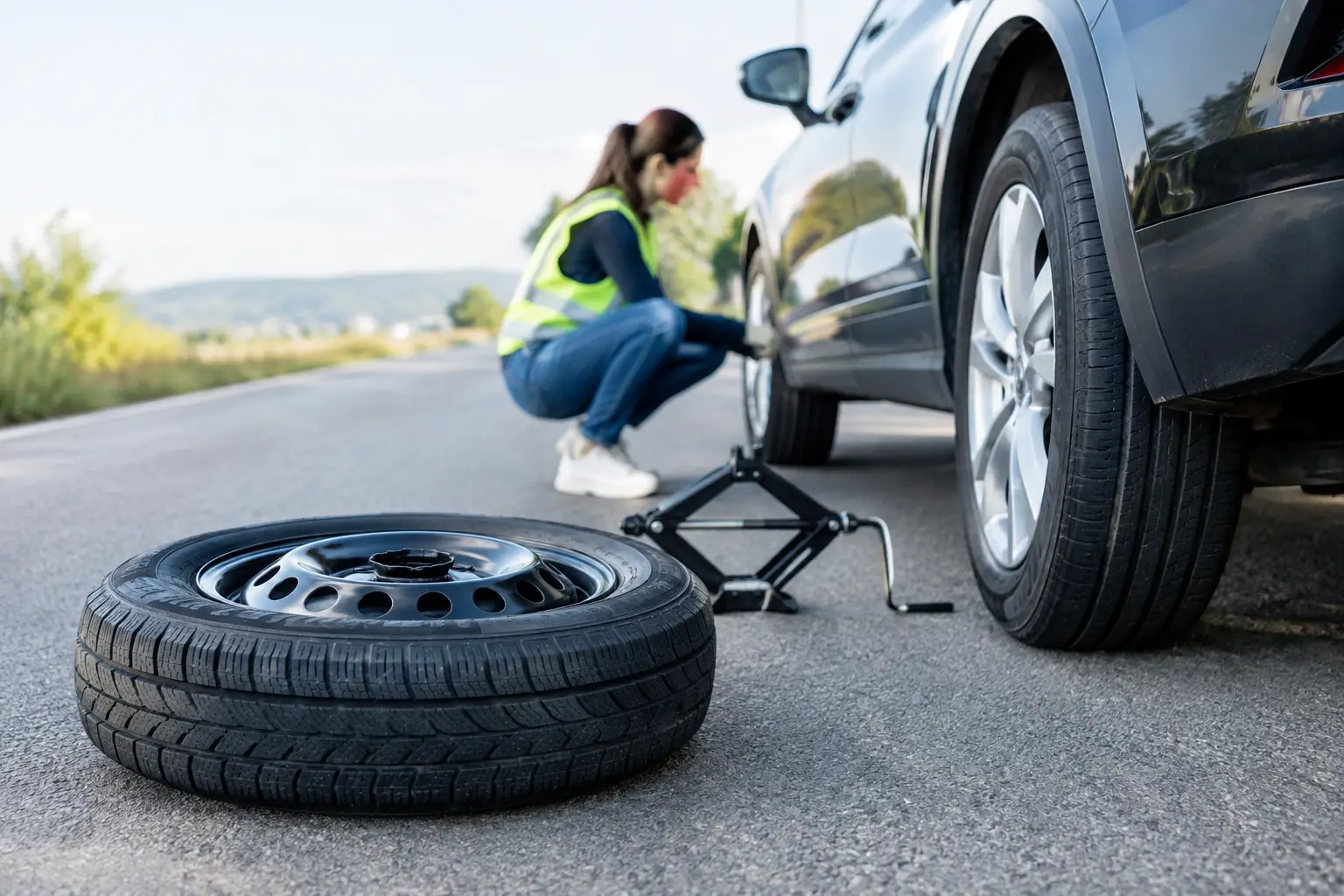
Once the vehicle is secure, remove the spare, jack, and tools. Check the spare’s sidewall for damage and confirm it has enough air. Do not install a spare that is visibly cracked, flat, or badly weathered.
Before lifting the vehicle, remove the wheel cover if necessary and loosen the lug nuts about a half turn. Keep the tire on the ground while doing this. Trying to break loose tight lug nuts after the wheel is in the air can cause the vehicle to move on the jack.
Place the jack only at the manufacturer-designated lifting point. These reinforced areas are identified in the owner’s manual and are commonly located along the vehicle’s pinch weld or frame. Placing a jack under a plastic panel, suspension component, or floor pan can damage the vehicle and create an unstable lift.
Raise the vehicle only until the flat tire clears the ground. Remove the lug nuts, take off the damaged wheel, and place it flat under the vehicle near the jack as an added precaution. Lift the spare onto the wheel studs, thread the lug nuts by hand, and tighten them in a star pattern.
Lower the vehicle until the tire touches the ground, then tighten the lug nuts again in a star pattern. Lower the vehicle fully and give each nut a final firm tightening. A torque wrench is the proper tool for final tightening, so have the lug nuts checked to the manufacturer’s specification as soon as possible. Over-tightening can damage studs, while under-tightening can allow the wheel to loosen.
Where the Spare Goes Matters
On many front-wheel-drive vehicles, the best location for a compact spare depends on which tire is flat. If a front tire fails, some manufacturers recommend moving a good rear tire to the front and installing the compact spare on the rear. This helps preserve steering, braking, and traction at the front axle.
The right approach depends on the vehicle, tire size, drivetrain, and owner manual instructions. All-wheel-drive vehicles require extra attention because significant differences in tire diameter can place stress on drivetrain components. If you are unsure, use the spare only as directed in the manual and travel directly to a tire shop.
Do not mix up left and right if you have directional tires, and do not assume a compact spare can go on every axle. Some performance vehicles and vehicles with larger brake components have specific spare-tire restrictions.
Drive Differently on a Temporary Spare
A compact spare changes how the vehicle handles. Acceleration, braking, cornering, and traction will not feel the same. Leave more following distance, take turns slowly, and avoid abrupt lane changes. Keep the temporary spare at the pressure printed on its sidewall, which is often much higher than regular tire pressure.
If the tire pressure monitoring system warning remains on after installing a spare, that is normal on many vehicles. The temporary spare may not have a sensor, or the system may still detect the removed wheel. Do not ignore other warning lights or a vehicle that vibrates, pulls sharply, or makes grinding noises after the tire change. Those symptoms can point to wheel, brake, suspension, or alignment damage from the same impact that caused the flat.
A temporary spare is not a reason to postpone repair for days or weeks. It has limited tread, limited load capacity, and a limited service life. Treat it as transportation to a professional inspection, not as a fifth regular tire.
Can the Flat Tire Be Repaired?
A puncture may be repairable when it is in the central tread area, small enough, and the tire was not driven while flat. A professional inspection is needed because internal damage is not always visible from the outside. A tire that ran with low pressure can develop sidewall damage that makes repair unsafe.
Tires with punctures in the sidewall or shoulder generally need replacement. Replacement is also usually necessary for large holes, separated tread, exposed cords, major impact damage, or a tire that has been driven flat. If a pothole or curb caused the failure, have the wheel checked for bends and the alignment checked for damage. Replacing only the tire without correcting a bent wheel or alignment issue can lead to vibration and uneven wear.
At JAK Tire Service, certified technicians can inspect the tire, wheel, and surrounding components, explain what is safe to repair, and provide clear options when replacement is the better choice. Honest recommendations matter most when you need to get back on the road quickly.
The best time to learn where your spare and tools are is not on the shoulder of a busy road. Check them during your next vehicle service, keep your spare properly inflated, and you will be better prepared to stop safe and drive confident when a flat tire interrupts the day.