
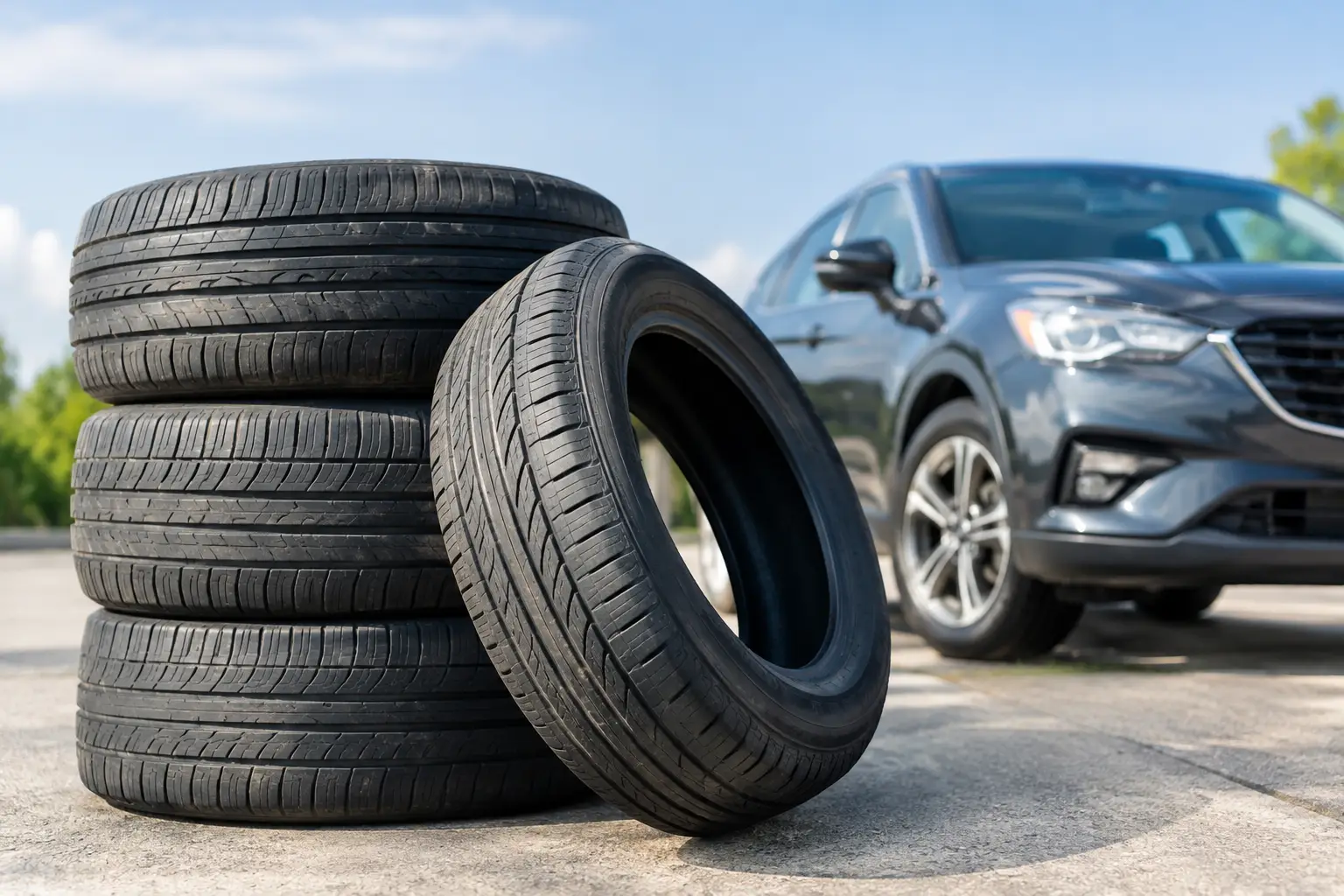
A low price on a used tire can look like a smart save – until the first heavy rain, emergency stop, or highway commute reveals what you actually bought. This used tire buying guide helps you look beyond the surface so you can choose tires that fit your vehicle, perform reliably, and protect the people riding with you.
Used tires can make sense when the tire is in genuinely good condition, matches your vehicle’s specifications, and costs enough less than a new tire to justify the remaining life. They are not the right answer for every driver. Families, daily commuters, delivery drivers, and anyone facing frequent highway or winter driving should be especially careful about tread depth, age, and hidden damage.
Start With the Right Tire Size and Rating
Before inspecting any used tire, confirm what your vehicle requires. The correct tire size is printed on the driver’s door placard and in the owner’s manual. A size such as 225/65R17 includes the tire width, sidewall profile, construction type, and wheel diameter. All of those numbers need to match the approved specifications for your vehicle.
Also check the load index and speed rating. These markings tell you how much weight the tire can safely carry and the speed it is designed to handle. An SUV, pickup, passenger car, or loaded work vehicle may need a higher load rating than a similar-looking tire offers. Installing a tire with the wrong rating can affect handling, braking, and tire life.
Do not buy a used tire simply because it fits the wheel. It should also be the right type for your driving conditions. All-season tires are practical for many drivers, while winter tires are designed for cold temperatures, snow, slush, and ice. Performance, all-terrain, and commercial tires each have different priorities. The best choice depends on how, where, and how often you drive.
Used Tire Buying Guide: Check Tread Depth First
Tread depth is one of the fastest ways to judge whether a used tire is worth considering. In the United States, 2/32 inch is generally considered the legal minimum tread depth for a passenger tire. But legal does not mean ideal. Wet-road traction drops as tread wears down, which means a tire near that limit may be a poor value even if it can still be sold.
For dependable rain performance, many drivers should consider replacing tires around 4/32 inch of remaining tread. If you drive in snow or regularly encounter winter conditions, 6/32 inch or more is a better target. A tire with 8/32 or 9/32 inch of even tread may still offer useful service life, provided it passes the other inspections in this guide.
Use a tread-depth gauge if possible. They are inexpensive and more accurate than guessing. The built-in wear bars across the tread are another useful reference: when the surrounding tread is level with those bars, the tire is worn out.
Even wear matters as much as the number. Run your hand carefully across the tread surface and look for smooth, consistent wear from one side to the other. Excessive wear on one shoulder can point to alignment problems. Cupping or scalloped patches can indicate suspension wear or poor wheel balance. A tire with uneven wear may be unsafe, noisy, or short-lived even when the deepest section appears to have plenty of tread.
Read the Date Code Before You Pay
Tires age whether they are driven or not. Heat, sunlight, storage conditions, and time gradually affect the rubber compounds inside the tire. That is why a tire with deep tread can still be a questionable purchase if it is too old.
Find the four-digit DOT date code on the sidewall. The first two digits show the week of manufacture, and the final two show the year. For example, a code ending in 2323 means the tire was made in the 23rd week of 2023.
There is no single expiration date that works for every tire, because storage, climate, and use all matter. Still, an older tire deserves closer scrutiny. Many vehicle and tire manufacturers advise heightened inspection after five years and replacement around ten years from the manufacturing date, regardless of tread. For a used-tire purchase, choosing a much newer tire generally gives you more confidence and better value.
Avoid tires with visible cracking in the sidewall, between tread blocks, or around the bead area. Small cracks can be a sign of dry rot and aging rubber. Do not assume tire shine or a freshly cleaned sidewall means the tire is healthy.
Look Closely for Repairs and Structural Damage
A proper repair is not automatically a reason to reject a used tire. A small puncture in the center of the tread can often be professionally repaired with an internal patch and plug combination. However, the repair must be in the repairable area and completed correctly from inside the tire.
Be cautious if you see a plug inserted from the outside with no proof of a proper internal repair. More importantly, do not buy a tire with a puncture, cut, or repair in the sidewall or shoulder. Those areas flex constantly and cannot be safely repaired.
Inspect the tire carefully for the following issues:
- Bulges, bubbles, or raised areas on the sidewall or tread
- Deep cuts, exposed cords, or separated rubber layers
- Bead damage where the tire seals against the wheel
- Objects embedded in the tread, including screws and nails
- Signs the tire was driven while flat, such as internal rubber dust or a worn inner liner
A sidewall bulge is a firm no. It often means the tire’s internal cords have been damaged, creating a weak spot that can fail without warning. A tire that was run flat may also have hidden internal damage even if it holds air when you inspect it.
Buy Matching Tires When Your Vehicle Needs Them
Ideally, tires on the same axle should match in size, tread pattern, construction, and similar tread depth. Mismatched tires can create unpredictable braking and handling, especially on wet pavement. If you are replacing only one tire, finding the same model with closely matched tread depth is the safest approach.
This is even more critical for all-wheel-drive and four-wheel-drive vehicles. Significant differences in tire circumference can place extra stress on the drivetrain. Some manufacturers specify a maximum tread-depth difference between tires, so check the owner’s manual or ask a qualified technician before replacing a single tire on an AWD vehicle.
If you buy a pair, have the better-tread pair installed on the rear axle. This can help reduce the risk of a rear-tire loss of traction in wet conditions. It may feel counterintuitive on a front-wheel-drive vehicle, but stable rear traction is essential for maintaining control.
Compare the Real Cost, Not Just the Sticker Price
A used tire that costs half as much as a new one is not necessarily half the value. Compare its usable tread, age, condition, and expected mileage against the price of a new tire with a warranty. Include mounting, balancing, valve service, disposal fees, and any alignment work your vehicle may need.
For example, a lightly worn, recent-model tire with 8/32 inch of even tread may be a practical short-term solution if it is priced fairly. A tire with 4/32 inch remaining tread, an unknown history, and no warranty may not be worth buying once installation costs are added.
Ask the seller where the tire came from and why it was removed. A tire taken off a nearly new leased vehicle is different from one pulled from a collision-damaged car or a vehicle with suspension problems. Honest answers and a willingness to let you inspect the tire are good signs. Pressure to buy quickly is not.
Have Used Tires Professionally Inspected and Installed
The final check should happen at a professional tire shop. A technician can inspect the inner liner, bead, tread condition, and previous repairs more thoroughly than a curbside or online inspection allows. They can also confirm whether the tire is compatible with your vehicle and whether the wheel itself is bent, corroded, or damaged.
Professional mounting and balancing are not optional extras. Incorrect installation can cause air leaks, vibration, uneven wear, and poor handling. Once the tires are installed, check tire pressure regularly and pay attention to pulling, steering-wheel vibration, or unusual noise. Those symptoms may point to a balance, alignment, suspension, or tire issue that should be addressed promptly.
At JAK Tire Service, the priority is simple: tires should help your vehicle stop safely, track straight, and handle the road with confidence. A careful inspection can turn a used tire into a sensible value, while a rushed purchase can create a safety risk that costs far more than the savings.
The right used tire is not the cheapest one in front of you. It is the one with enough healthy tread, a recent manufacture date, no structural damage, and the correct fit for the way you drive.