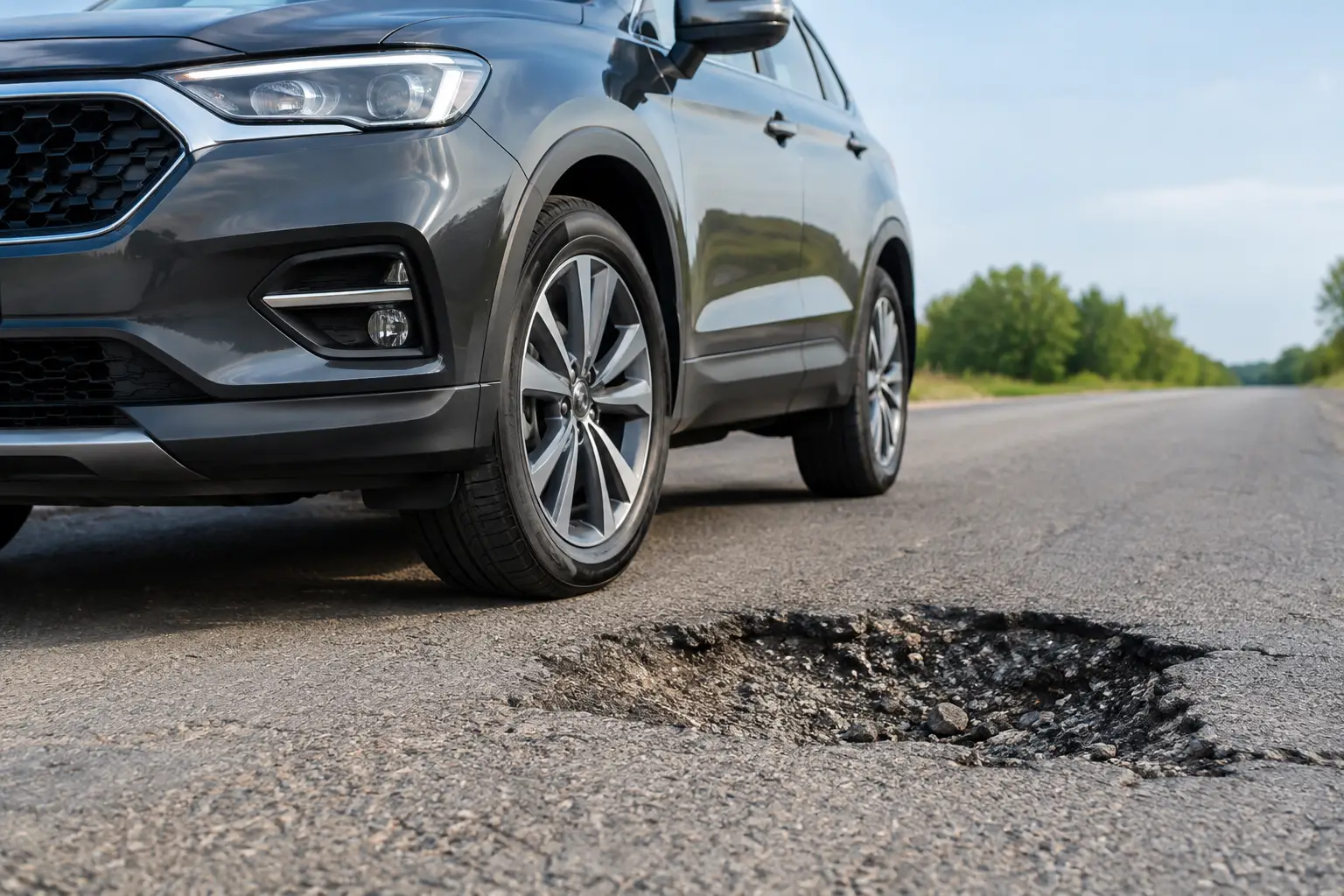
A pothole can turn a normal commute into a sharp bang through the steering wheel, floor, and seat. So, are potholes bad for suspension? Yes. One deep impact can damage a healthy vehicle, while repeated smaller hits can steadily wear down suspension and steering parts, affect alignment, and shorten tire life.
The risk depends on the pothole’s depth, your speed, the angle of impact, tire pressure, wheel size, and the condition of your vehicle before the hit. Not every pothole means an immediate repair, but a change in the way your vehicle drives deserves attention. Catching damage early can help prevent a relatively simple repair from becoming a tire, wheel, steering, and suspension problem.
Why Potholes Are Hard on Suspension
Your suspension is designed to absorb bumps and keep the tires in contact with the road. Shocks or struts, springs, control arms, bushings, ball joints, tie rods, and sway bar links all work together to control wheel movement. A pothole forces the wheel downward and then upward very quickly, placing a sudden load on those components.
At low speed, a shallow pothole may cause little more than an uncomfortable jolt. At higher speed, or with a deep, sharp-edged hole, the tire and wheel can drop into the hole and strike its far edge with substantial force. The suspension may bottom out, the tire sidewall can pinch, and the wheel can bend or crack.
Toronto-area winter weather makes this especially relevant. Freeze-thaw cycles, road salt, and heavy traffic can create potholes quickly. Drivers who travel daily, use larger wheels with low-profile tires, carry work equipment, or drive loaded SUVs and trucks should be particularly alert after a hard impact.
What a Pothole Can Damage
A pothole does not always damage one part in isolation. The impact can affect several systems at once, which is why a proper inspection looks beyond the tire.
Tires and wheels
Tires are often the first parts to show pothole damage. A hard hit may cause a bulge in the sidewall, a cut, a puncture, or internal damage that is not obvious from the outside. A sidewall bulge is a safety concern, not a cosmetic issue. It means the tire’s internal cords may be damaged and the tire should be replaced.
Alloy wheels can bend, while steel wheels can become distorted. Either condition may cause vibration, air loss, or an uneven ride. In more severe cases, a wheel may crack. If your steering wheel shakes after a pothole or you need to add air repeatedly, have the tire and wheel checked promptly.
Wheel alignment
A pothole impact can knock the wheels out of alignment. Alignment angles determine how the tires point and meet the road. Even a slight change can make the vehicle pull to one side, leave the steering wheel off-center, or cause rapid uneven tire wear.
Alignment alone is not always the answer. If a bent component or worn joint caused the alignment change, adjusting the angles without addressing that issue may not hold. A professional inspection should identify whether the vehicle simply needs an alignment or needs a suspension or steering repair first.
Shocks, struts, and springs
Shocks and struts manage bouncing after a bump. They can weaken gradually with mileage, but a significant impact can worsen an existing problem or damage a mounting point. A broken spring is less common, yet corrosion and repeated impacts can increase the possibility.
When these parts are not working properly, the vehicle may bounce more than usual, feel unstable over rough pavement, nose-dive while braking, or lean excessively in turns. Those symptoms affect ride comfort, but more importantly, they can reduce tire grip and braking control.
Steering and suspension joints
Control arm bushings, ball joints, tie rod ends, sway bar links, and related hardware all absorb movement while keeping the wheels positioned correctly. Potholes can tear rubber bushings, bend arms, or accelerate wear in parts that were already loose.
Clunking or knocking over bumps, wandering at highway speed, loose steering, and uneven tire wear can point to suspension or steering wear. These issues should not be ignored. A loose joint can affect handling and may create a serious safety risk if it fails.
Signs Your Vehicle Needs a Suspension Check
You may not see visible damage after hitting a pothole, but you can often feel or hear it. Pay attention if the vehicle pulls left or right, the steering wheel is no longer centered, or the car feels different during turns and braking.
Vibration through the steering wheel, especially at certain speeds, can indicate a bent wheel, tire damage, imbalance, or alignment concern. A new clunk, rattle, squeak, or metal-on-metal sound over bumps also calls for an inspection. Do not assume the sound will go away on its own.
Check your tires when it is safe to do so. Look for a bulge, cut, missing chunk of rubber, or a wheel that appears damaged. If the tire is losing pressure quickly, the wheel is visibly cracked, or the vehicle handles unpredictably, avoid driving it farther than necessary. Arrange for service or towing based on the severity of the problem.
What to Do After Hitting a Pothole
First, stay calm and keep a firm, steady grip on the wheel. Avoid sharp braking or sudden steering corrections unless traffic conditions require them. Once you can safely pull over, inspect the tires and wheels for obvious damage and listen for new noises as you drive away.
If the vehicle drives normally after a minor impact, continue to monitor it over the next few trips. Check tire pressure, watch for pulling or vibration, and look at the tread for unusual wear. A quick inspection is a smart precaution after a major hit, even when the vehicle seems fine.
For a hard pothole strike, ask for a tire and wheel inspection, suspension and steering check, and wheel alignment measurement. This gives you clear answers instead of guessing. At JAK Tire Service, technicians can identify visible damage, check for loose or worn components, and explain which repairs are necessary now and which maintenance can be planned.
Can You Prevent Pothole Suspension Damage?
You cannot avoid every pothole, but a few driving habits reduce the odds of damage. Keep tires inflated to the pressure listed on the driver’s door placard. Underinflated tires are more likely to suffer sidewall damage, while overinflation can make impacts feel harsher and reduce the tire’s ability to absorb them.
Leave enough following distance to spot road hazards, especially at night, in rain, or when snow and standing water can hide a hole. Slow down before a pothole when it is safe to do so. Braking hard while the tire is already in the hole can place extra stress on the wheel and suspension. If you cannot avoid it, hold the wheel straight and let off the brake just before impact when conditions allow.
It also helps to stay current on tire rotations, alignment checks, and suspension inspections. Worn shocks, weak bushings, and aging tires make a vehicle less prepared for rough roads. Preventive service cannot make potholes harmless, but it gives your vehicle its best chance of handling them safely.
A pothole is easy to dismiss when the car keeps moving, but new vibration, pulling, noise, or tire damage is your vehicle asking for attention. A timely inspection protects safer handling today and can help you avoid a larger repair down the road.