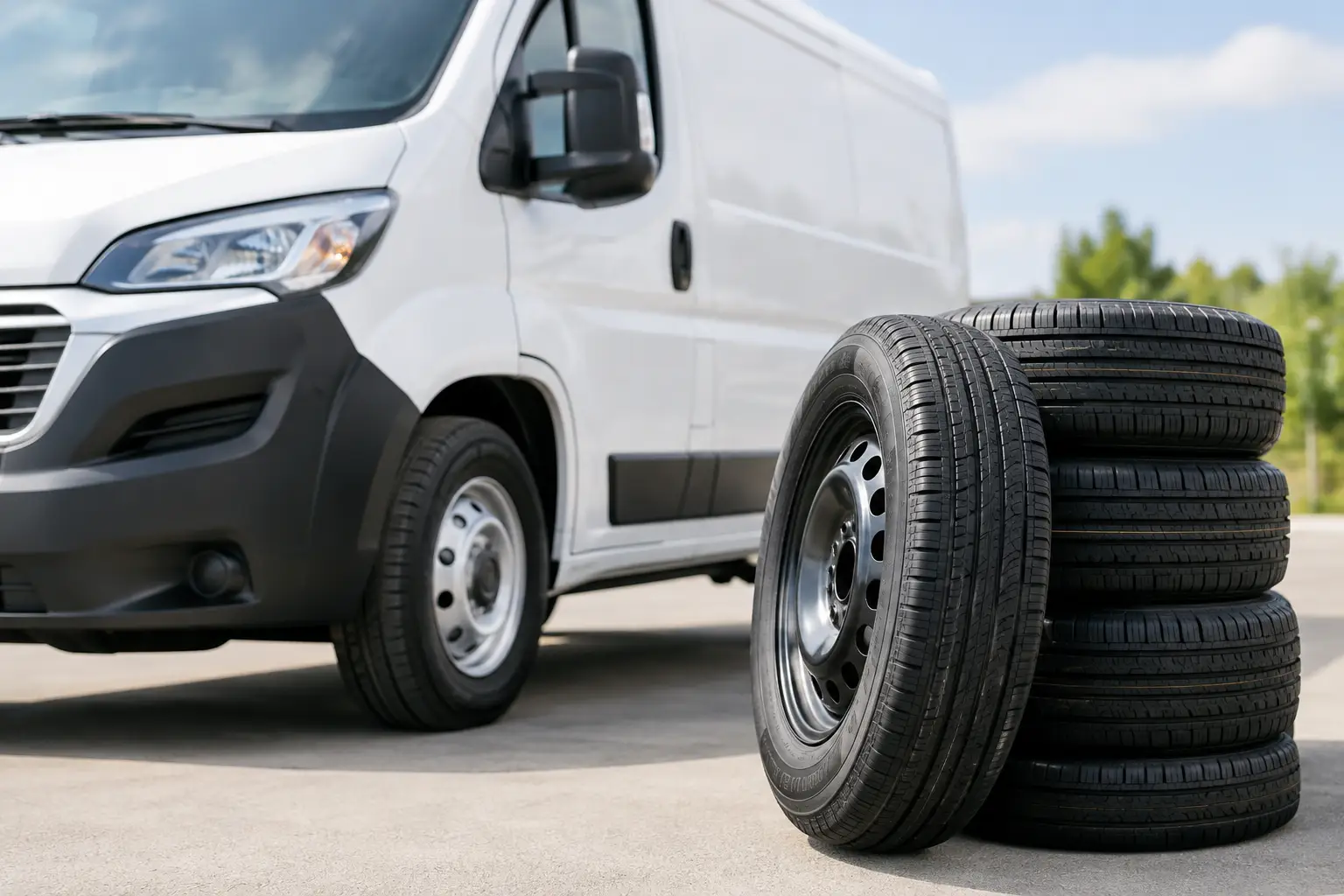
A delivery vehicle can cover more miles in one month than many personal vehicles do in several months. That makes choosing the best tires for delivery vehicles less about finding the lowest price and more about preventing missed stops, poor wet-weather traction, uneven wear, and expensive downtime. The right tire helps your driver stop safely, carry the required load, and stay productive through long days of starts, turns, and curbside parking.
For a compact delivery car, cargo van, pickup, or SUV, there is no single tire that fits every route. A driver making short urban trips needs different qualities than a vehicle running highway routes with a full load. The best choice balances durability, traction, load capacity, ride comfort, and operating cost.
What Makes the Best Tires for Delivery Vehicles?
Delivery work is tough on tires in ways a normal commute is not. Frequent braking builds heat and wears tread quickly. Tight turns, potholes, curb contact, and repeated stops can affect the tire shoulders and sidewalls. Cargo weight adds another layer of stress, especially in vans and pickups.
A tire that lasts a long time but struggles to grip on rain-slick roads is not a good value. Likewise, a tire with excellent traction may wear too quickly for a high-mileage route. Look for a well-matched commercial, touring, or all-weather tire rather than choosing based on tread life alone.
The right category usually depends on how the vehicle is used:
| Vehicle use | Tire type often worth considering | Main benefit | | — | — | — | | City courier car or small SUV | Premium all-season touring tire | Comfortable ride, predictable wet handling, good tread life | | Cargo van with regular loads | Commercial-grade all-season or all-weather tire | Stronger construction and higher load capability | | Pickup used for deliveries | All-season highway or light-truck tire | Stable handling, load support, and durable tread | | Snowy or severe winter routes | Dedicated winter tire | Better cold-weather braking and snow traction |
The vehicle manufacturer’s recommended tire size and load rating should remain the starting point. Those details are listed on the driver-side door placard. Changing sizes or selecting a lower load index to save money can reduce handling control, increase wear, and put extra stress on the tires.
Load Rating Matters More Than Many Drivers Expect
The load index tells you how much weight each tire can safely carry at its specified pressure. For delivery vans, pickups, and vehicles that frequently carry packages, this number is critical. A tire may look identical to another model but have a different load capacity or construction.
Many delivery vehicles require XL, or extra-load, tires. Some vans use LT, or light-truck, tires designed for heavier-duty service. Do not assume an XL or LT tire is automatically better for every vehicle. It can ride firmer, cost more, and may not be appropriate for a small car. Match the tire to the vehicle’s placard and the actual load carried on a typical route.
Also consider where the weight sits. A van loaded heavily at the rear can wear rear tires faster, while front-wheel-drive vehicles often use up their front tires through acceleration, braking, and steering. Regular rotation helps spread that wear across the set.
Wet Braking Should Be a Priority
Rain, standing water, road paint, and oil near intersections create real risks for drivers who spend all day on the road. A delivery tire needs tread channels that move water away from the contact patch and a rubber compound that maintains grip as the tire ages.
When comparing options, ask about wet braking and hydroplaning resistance, not just a tire’s mileage warranty. A very high treadwear rating can sound appealing, but harder compounds may trade away some wet grip. For a delivery vehicle, confident wet braking often pays for itself by helping protect the driver, cargo, vehicle, and business reputation.
Choose Your Winter Strategy Honestly
An all-season tire is designed for a range of conditions, but it is not a dedicated snow tire. In areas with long, cold winters, regular snow, or steep routes, a separate winter tire set offers stronger cold-weather grip and shorter stopping distances.
All-weather tires are a useful middle ground for some delivery drivers. They are intended for year-round use and are commonly available with the three-peak mountain snowflake symbol. They can be a practical option when storing a second set is difficult or routes vary every day. The trade-off is that they may not match a dedicated winter tire in severe snow, or an all-season touring tire in warm-weather tread life and fuel efficiency.
For a fleet, consistency matters. Running the same approved tire type across similar vehicles makes inspections, rotations, replacements, and driver feedback easier to manage.
Tire Features That Save Money on a Delivery Route
A lower purchase price is only one part of tire cost. A tire that needs replacing early, causes uneven wear, or reduces fuel economy can cost more over its service life. Consider the total cost per mile, including installation, rotations, alignment checks, repairs, and downtime.
Tread depth is especially important for delivery drivers. Once tread gets low, wet traction can decline well before the tire is completely worn out. Waiting until the tire is at the legal minimum is not a smart plan for a vehicle that is constantly carrying people, goods, or equipment.
Pay attention to these four details when comparing tires:
- A suitable load index and speed rating for the vehicle and its normal cargo.
- Strong wet traction and water evacuation for frequent stop-and-go driving.
- A tread pattern designed for even wear and stable highway performance.
- A warranty that fits your expected annual mileage, while recognizing that warranty coverage does not replace proper maintenance.
Road-hazard protection may also be worthwhile for vehicles that regularly travel construction areas, industrial parks, alleys, and poorly maintained streets. Punctures and impact damage are common delivery interruptions, but coverage terms vary, so read them carefully before relying on them.
Installation and Maintenance Make the Tire Last
Even the right tire will wear prematurely if the vehicle has alignment or suspension problems. If a steering wheel is off-center, the vehicle pulls to one side, or the tires show wear on one edge, arrange an inspection promptly. Misalignment can remove thousands of miles from a tire’s useful life.
For delivery vehicles, tire pressure should be checked at least monthly and before heavier-than-normal runs. Underinflation creates heat, reduces fuel economy, and wears the outer edges of the tread. Overinflation can reduce the contact patch and make the ride harsher while increasing center tread wear. Always use the pressure shown on the vehicle placard, not the maximum pressure printed on the tire sidewall.
A practical service routine includes rotations about every 5,000 to 6,000 miles, or according to the vehicle and tire manufacturer’s guidance. Have the tires inspected at the same time for nails, sidewall cuts, irregular wear, and damage from potholes. A wheel balance check is also worthwhile if vibration appears at highway speeds.
Do not ignore suspension and brake issues. Worn shocks or struts can cause cupping, while a dragging brake can create heat and abnormal wear. Tire care works best when it is part of complete vehicle maintenance, not a separate afterthought.
When It Is Time to Replace Delivery Tires
Replace tires when tread is worn, sidewalls are damaged, cords are visible, or repeated repairs make the tire unreliable. A patchable puncture in the center tread can often be repaired safely by a qualified technician. Damage near the sidewall, a large puncture, or driving while flat can require replacement instead.
If only one tire needs replacement, matching the remaining tires as closely as possible is usually the safest approach. On all-wheel-drive vehicles, differences in tire circumference can affect the drivetrain. A professional tire shop can measure the remaining tread and advise whether one, two, or four tires are the sensible choice.
The best tire is the one that fits the vehicle, the load, the weather, and the route it works every day. Before your next busy week begins, have your tread, pressure, alignment, and load requirements checked by a trusted tire professional. A few careful decisions now can keep your deliveries moving and help every driver stop safe and drive confident.