A brake pedal that suddenly feels soft on the way to work is not a problem to put off until the weekend. When you search for brake service near me, you need clear answers, qualified mechanics, and repairs that help your vehicle stop safely in real traffic – not guesswork or unnecessary add-ons.
Your brakes handle every school run, highway merge, delivery route, and stop-and-go commute. In North York and across the GTA, changing weather, road salt, potholes, and heavy traffic can all add wear to a braking system. Knowing what to watch for helps you book service at the right time and avoid turning a manageable repair into a larger one.
When to Search for Brake Service Near Me
Some brake wear happens gradually, so drivers often adapt without realizing stopping performance has changed. Other symptoms need prompt attention. If your vehicle pulls to one side when braking, takes longer to stop, shakes through the steering wheel, or produces a grinding sound, schedule an inspection as soon as possible.
A high-pitched squeal may come from a built-in wear indicator on the brake pads. It is designed to alert you before the friction material is fully worn away. Squealing can also be caused by moisture, surface rust, or debris, particularly after rain or an overnight temperature drop. The sound alone does not always mean an emergency, but it does mean the brakes deserve a professional look.
Grinding is more serious. It can indicate that the brake pad material has worn down and metal is contacting the rotor. Continuing to drive can damage the rotors, reduce stopping performance, and raise the final repair cost. If the brake warning light comes on, the pedal sinks closer to the floor than usual, or you notice a burning smell after normal driving, do not delay service.
Common signs your brakes need attention
Brake concerns do not always feel the same. Your vehicle may have one issue or several at once. Watch for these changes:
- Squealing, scraping, grinding, or clicking when you press the brake pedal
- Vibration in the pedal, steering wheel, or vehicle during braking
- A soft, spongy, unusually hard, or low brake pedal
- Pulling left or right when slowing down
- Longer stopping distances or reduced confidence in emergency stops
- A brake, ABS, or traction-control warning light
If you are unsure whether a symptom is urgent, use caution and have the vehicle inspected. Braking is a safety system, and a clear diagnosis is better than relying on assumptions.
What a Proper Brake Inspection Should Include
A quality brake service begins with an inspection, not an automatic recommendation to replace parts. Professional mechanics should assess the entire system and explain what they find in plain language. The goal is to identify worn components, confirm the source of the symptom, and recommend only work that supports safe, reliable driving.
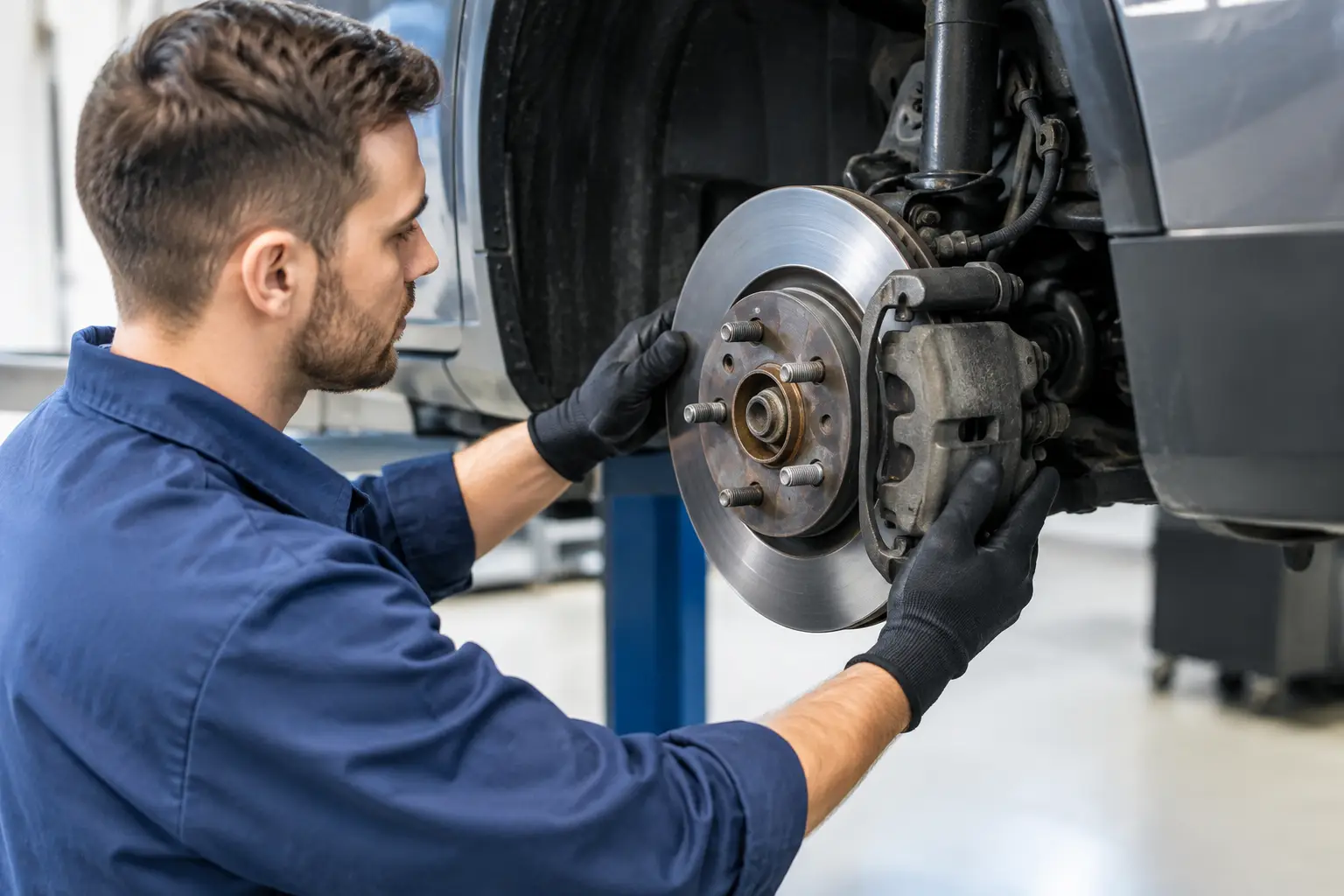
Brake pads are often the first component people think about, but they are only one part of the system. A technician should measure remaining pad material, inspect rotor condition and thickness, check calipers for smooth operation, and examine brake lines and hoses for leaks or corrosion. They may also inspect hardware, fluid condition, parking-brake components, and the ABS system when warning lights or diagnostic codes are present.
Rotor service depends on the condition of the rotor and the manufacturer’s specifications. Some rotors can be machined if they have enough material and an appropriate surface condition. In other cases, replacement is the safer and more cost-effective option. Installing new pads on severely grooved, warped, or undersized rotors can lead to noise, vibration, uneven pad wear, and poor braking feel.
Brake fluid matters as well. Over time, it can absorb moisture, which lowers its boiling point and can contribute to internal corrosion. A fluid flush may be recommended based on the manufacturer’s maintenance schedule, the vehicle’s age, test results, or repair needs. It is not required with every pad replacement, which is why an honest explanation of the recommendation matters.
Brake Pads, Rotors, and Calipers: What May Need Repair
The right brake repair depends on what is worn, damaged, or malfunctioning. There is no one-size-fits-all brake package, especially for SUVs, trucks, fleet vehicles, hybrids, and vehicles used for frequent city driving.
Brake pads create friction against the rotors to slow the vehicle. They wear naturally and should be replaced before the friction material gets too thin. Pads are available in different materials, including ceramic, semi-metallic, and organic options. Ceramic pads are often quieter and produce less dust, while semi-metallic pads can offer strong performance under heavier loads. The best choice depends on the vehicle, driving habits, towing needs, and manufacturer recommendations.
Rotors are the metal discs clamped by the brake pads. Heat, wear, rust, and repeated hard braking can affect their surface and thickness. A pulsation while braking may point to rotor issues, although suspension or wheel problems can sometimes create a similar feeling. This is another reason a complete inspection is more valuable than replacing parts based on symptoms alone.
Calipers apply pressure to the pads. A sticking caliper can cause uneven pad wear, pulling, excess heat, or a burning odor. Brake hoses, lines, master cylinders, and electronic brake components can also affect pedal feel and stopping power. Precision diagnostics help separate a simple wear-item replacement from a hydraulic or electronic issue that needs more detailed repair.
Why Brake Problems Can Feel Worse in Winter
Cold weather does not usually wear out brake pads by itself, but winter driving can reveal problems that were already developing. Road salt and moisture can accelerate corrosion on rotors, calipers, brake lines, and hardware. Surface rust on rotors is common after a vehicle sits overnight, and it often clears after a few normal stops. Rust that persists, causes noise, or affects braking performance needs inspection.
Slush, ice, and low traction also increase the importance of responsive brakes and properly functioning ABS. Tires play a major role in stopping distance, too. Even well-maintained brakes cannot overcome tires with low tread depth or incorrect tire pressure on wet, snowy, or icy roads. For safer seasonal driving, brake checks, tire inspections, and wheel alignment checks work best as part of one practical maintenance plan.
How Often Should Brakes Be Checked?
There is no single mileage interval that fits every driver. Brake wear depends on vehicle weight, traffic conditions, driving style, cargo loads, terrain, and the quality of previous brake work. A commuter who spends hours in stop-and-go traffic may wear pads sooner than a driver who mainly travels on open highways. Delivery and rideshare vehicles may need more frequent inspections because of their daily mileage and repeated braking.
A smart approach is to have your brakes inspected during regular tire rotations, oil changes, seasonal tire changes, or any time you notice a difference in how the vehicle stops. Regular inspections make it easier to plan repairs before metal-to-metal contact damages other components.
For many vehicles, front brake pads wear faster because the front brakes handle more of the stopping load. That does not mean rear brakes can be ignored. Rear pads, rotors, parking-brake systems, and electronic components still need inspection to keep braking balanced and predictable.
Choosing a Brake Repair Shop You Can Trust
Convenience matters when your vehicle needs service, but the closest shop is not always the best choice. Look for a repair center that takes time to inspect the concern, explains the findings clearly, provides a fair estimate, and uses quality parts appropriate for your vehicle.
Ask what parts are being replaced and why. A trustworthy shop should be able to explain whether the repair involves pads only, pads and rotors, caliper service, brake fluid, or a diagnosis for a warning light. You should also understand whether a recommendation is needed now, should be planned soon, or is simply something to monitor.
At JAK Tire Service Corp, certified technicians focus on precise inspections, professional brake repairs, and straightforward recommendations. Whether you drive a family SUV, work truck, commuter car, or commercial vehicle, the priority is the same: safe stopping, dependable performance, and service completed efficiently.
Can I drive with squeaky brakes?
Sometimes a brief squeak is caused by moisture or light surface rust, especially after the vehicle has been parked. Persistent squealing, vibration, reduced braking response, or any grinding should be inspected promptly. Do not wait for the noise to become louder before booking service.
Do new brakes need a break-in period?
Yes. New pads and rotors typically need a bedding-in period to transfer an even layer of pad material to the rotor surface. Follow the shop’s guidance, and avoid repeated hard stops unless necessary during the first period of driving. Proper break-in helps reduce noise and supports consistent braking performance.
A brake repair is not just about replacing worn parts. It is about restoring the confidence that your vehicle will respond when traffic stops suddenly, weather turns poor, or a quick decision is required. If something feels different at the pedal, wheel, or stopping distance, trust that signal and arrange a professional inspection.