A dashboard warning light comes on during your commute. Your brakes begin to squeal. The dealership can fit you in next week, while a neighborhood shop has an opening tomorrow. The dealer versus independent auto repair decision is not just about price. It affects your time, your warranty coverage, the parts used, and how confidently you can get back on the road.
For most drivers, there is no single right answer. Dealerships and independent repair shops each have real strengths. The best choice depends on your vehicle, the repair needed, and whether you have found a service team that explains the work clearly and stands behind it.
Dealer Versus Independent Auto Repair: The Main Difference
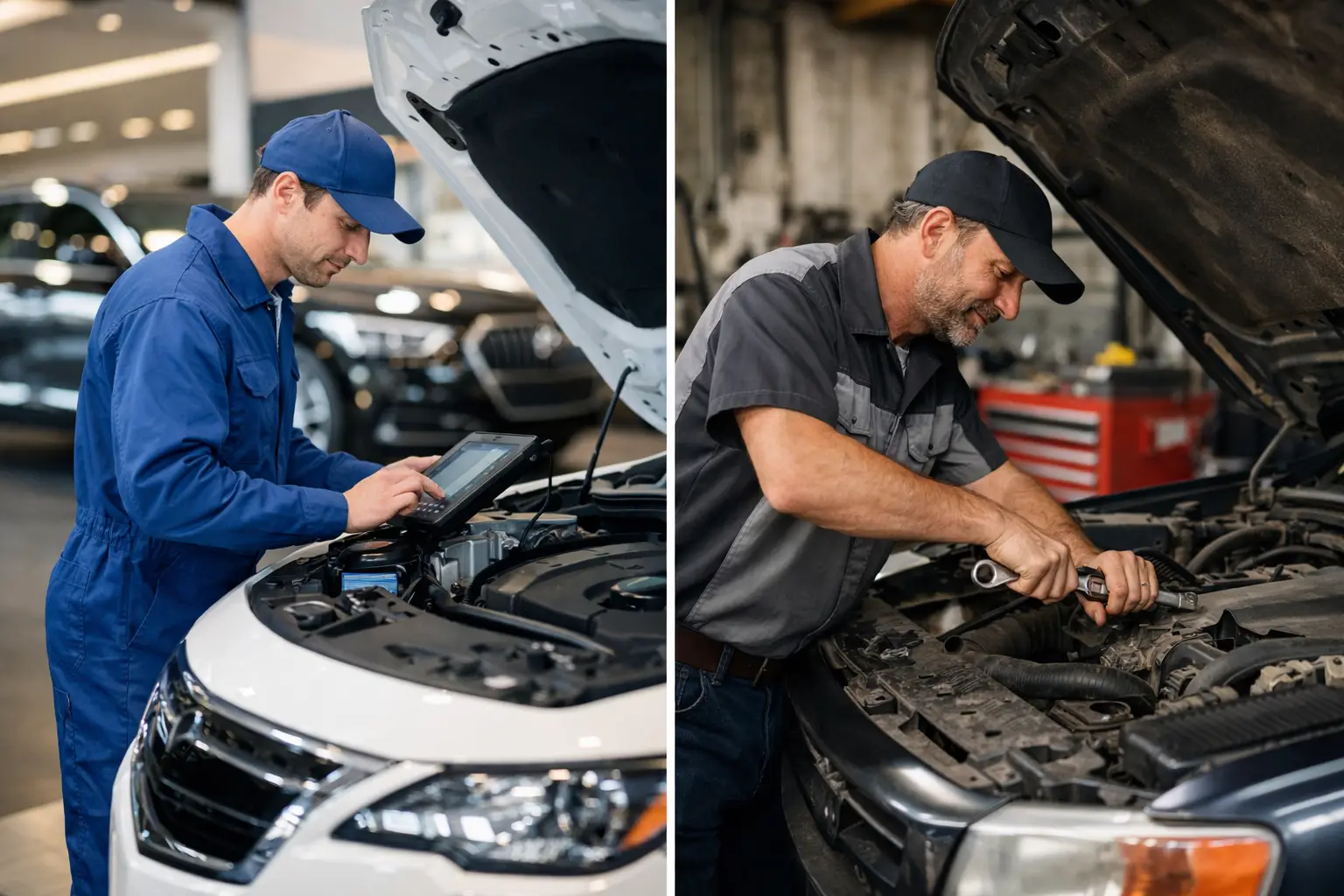
A dealership service department is connected to a particular vehicle manufacturer. Its technicians commonly work on one brand or brand family, use factory procedures, and have access to manufacturer technical bulletins, recall information, and brand-specific diagnostic equipment.
An independent repair shop services many makes and models. A well-equipped independent shop can handle routine maintenance, tires, brakes, suspension work, batteries, diagnostics, alignments, and many repairs for domestic, Asian, and European vehicles. Independent technicians often see a broad range of problems every day, which can be valuable when a vehicle issue does not follow a simple pattern.
The key distinction is specialization versus flexibility. Dealers are often the most direct route for manufacturer-specific concerns. Independent shops can provide skilled, practical service with more personal communication and competitive pricing for a large share of everyday vehicle needs.
When a Dealership Makes Sense
Dealer service is often the right call when your vehicle is under a manufacturer warranty and the problem may be covered. Warranty repairs, recalls, and certain extended warranty claims can be handled with less paperwork when the dealer is involved. If your vehicle needs a software update, a factory campaign, or repair for a known manufacturer defect, the dealership may have the most direct process.
Dealers can also be a strong option for very new models, highly specialized vehicles, or complex issues involving proprietary electronics. Modern vehicles rely on modules, sensors, cameras, and software that must communicate correctly. When a brand-new model has an unusual drivability issue or an advanced driver-assistance system needs manufacturer calibration, factory-level tools and current technical information matter.
That does not mean every oil change or brake job needs to happen at a dealer. It means the dealer has an advantage when the repair is closely tied to the manufacturer, warranty coverage, or vehicle software.
Where Independent Shops Often Deliver More Value
For routine maintenance and common repairs, an independent shop can be an excellent fit. Oil changes, tire installation, wheel balancing, brake service, battery replacement, suspension repairs, and wheel alignments do not automatically require dealer service. What they require is proper equipment, trained technicians, quality parts, and careful work.
Independent shops often have lower operating costs than large dealerships. That can translate into fairer labor rates and more options for replacement parts. A good shop should explain the difference between original equipment, aftermarket, and premium replacement parts so you can choose based on your vehicle, budget, and driving needs.
Communication is another advantage. At an independent shop, you may speak directly with the service advisor or technician who inspected your vehicle. Instead of being handed a long list of recommendations without context, you should receive clear answers: what failed, why it matters, what needs attention now, and what can be monitored for later.
For drivers who depend on their vehicles for work, school runs, deliveries, or daily GTA commuting, that clarity saves more than money. It helps prevent unexpected downtime.
Warranty Myths That Can Cost You Money
Many drivers believe they must return to the dealership for every maintenance visit to keep a new-car warranty valid. In most cases, routine service can be performed by a qualified independent repair facility without voiding the manufacturer warranty. The important part is following the maintenance schedule and keeping detailed records.
Save invoices that show the date, mileage, services completed, fluids used, and parts installed. If your owner’s manual calls for a specific oil grade or inspection interval, make sure the work follows those requirements. A professional shop will document this information clearly.
There is one practical exception: if a repair may be covered by the vehicle warranty, contact the dealer or warranty provider before approving paid work elsewhere. Paying out of pocket first can create unnecessary complications if the issue should have been covered.
Price Is Important, but Compare the Right Things
A lower estimate is not always a better repair, and a higher estimate is not always overcharging. Before comparing prices, make sure both estimates cover the same work. One quote may include new brake rotors, hardware, and a fluid service, while another only lists pads. One may use premium parts with a longer warranty, while another uses a basic replacement part.
Ask what parts will be installed, whether labor includes related hardware or shop supplies, and what warranty applies to parts and labor. You should also ask whether the shop found a safety issue that needs immediate attention or a maintenance item that can wait.
Honest service does not pressure you into every recommendation. It gives you the information needed to prioritize. Worn tires, brake problems, steering looseness, overheating, and a flashing check-engine light deserve prompt attention because they can affect safety or cause additional damage. A cabin filter or minor seepage may be something you plan for instead.
Diagnostics Matter More Than Parts Swapping
Today’s vehicles can store dozens of trouble codes, but a code is a starting point, not a final diagnosis. For example, a check-engine light related to an oxygen sensor does not always mean the sensor itself has failed. The cause could be wiring damage, an exhaust leak, an engine vacuum issue, or another condition affecting the sensor reading.
This is where the quality of the repair process matters more than the shop type. A professional technician tests the system, checks relevant data, confirms the failure, and explains the recommended repair. Replacing parts without testing can turn a manageable problem into a series of unnecessary bills.
Both dealerships and capable independent shops can perform advanced diagnostics. If you own an older vehicle, a high-mileage SUV, or a work truck, an experienced independent technician may have seen the same real-world failure many times. If the concern involves a factory software issue or a model-specific technical bulletin, the dealer may have the edge.
How to Choose a Repair Shop With Confidence
Whether you choose a dealer or independent shop, look for evidence of professionalism before the repair begins. A reliable service center provides a written estimate, communicates before adding work, and explains findings in plain language. It should not make you feel rushed or confused about a safety-related decision.
Ask a few direct questions: Is the technician trained to work on my make and model? What testing was performed? Are the parts original equipment, equivalent-quality aftermarket, or another grade? What warranty is provided? When will the vehicle be ready?
Pay attention to the answers. Clear, specific communication is a good sign. So is a shop that distinguishes between urgent repairs and future maintenance. At JAK Tire Service Corp, the goal is to give drivers clear answers, precise repairs, and fair recommendations that support safe, reliable driving.
A Practical Choice for Common Repairs
For tires, brakes, alignments, oil service, batteries, and many suspension concerns, a trusted independent shop is often the practical choice. These services need correct procedures and quality parts, but they also benefit from quick scheduling, honest pricing, and a team that understands how you use your vehicle.
A dealership may be worth the trip for recall work, warranty repairs, factory programming, or highly specialized new-vehicle concerns. For everything else, do not assume dealer service is automatically required. Choose the provider that can accurately diagnose the issue, complete the work properly, and stand behind the result.
When your car gives you an early warning – a vibration, brake noise, slow starting, uneven tire wear, or a warning light – schedule an inspection before it becomes a roadside problem. The right repair decision starts with a clear diagnosis and a service team you can trust.