A steering wheel that starts to shake at 60 mph can turn an ordinary trip down Highway 401 into an uncomfortable drive. This North York tire balancing guide explains what causes that vibration, what a proper balancing service does, and when it is time to have your wheels checked by a professional.
Tire balancing is a small service with a big effect on ride quality, tire life, and vehicle control. It is especially relevant for GTA drivers who deal with potholes, rough pavement, long commutes, construction zones, and seasonal tire changes. A wheel can be only slightly out of balance, yet that small imbalance becomes much more noticeable as speed increases.
What Tire Balancing Actually Does
A tire and wheel assembly should rotate evenly around its center. In real life, the tire, wheel, valve stem, and tire pressure monitoring sensor do not always distribute weight perfectly. Even a new tire can have a slightly heavier area.
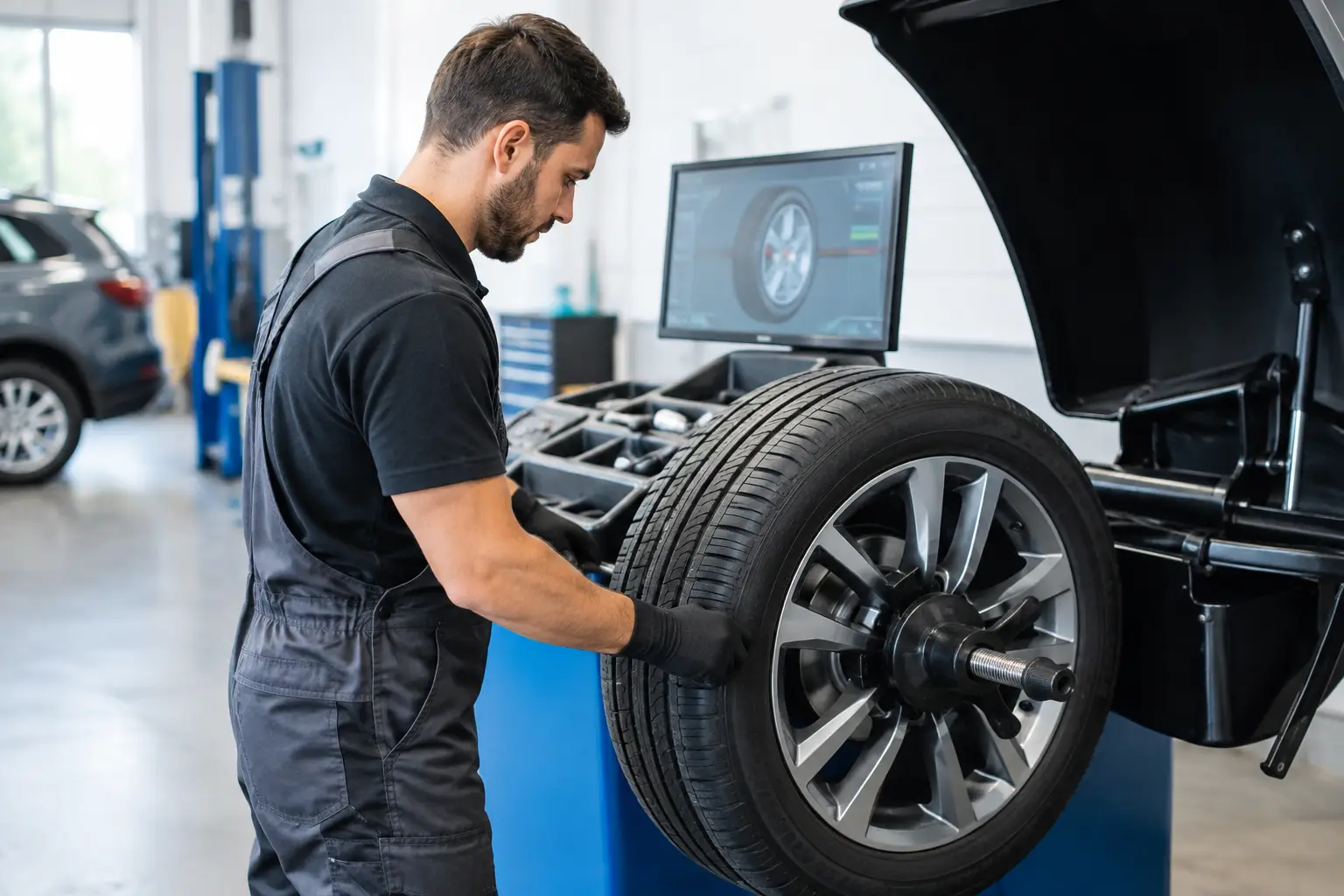
During balancing, a technician mounts the wheel and tire on a calibrated balancing machine. The machine spins the assembly and identifies where weight needs to be added to counter the heavy spots. Small wheel weights are then installed in precise locations so the tire rotates smoothly.
This is different from wheel alignment. Balancing corrects weight distribution in the rotating tire and wheel. Alignment adjusts the angles of the wheels so the vehicle tracks straight and the tires meet the road correctly. Both services protect your tires, but one does not replace the other.
Signs Your Wheels May Need Balancing
The most common warning sign is vibration that appears at certain speeds, often around 50 to 70 mph. The vibration may come through the steering wheel, the seat, or the floor. Where you feel it can offer a clue: front-wheel imbalance often affects the steering wheel, while rear-wheel imbalance may be felt more through the seat. Still, a proper inspection is the only way to confirm the cause.
Watch for these common symptoms:
- A steering wheel that shakes or buzzes at highway speed
- Vibration in the seats, floor, or entire vehicle cabin
- Uneven or scalloped tire wear
- A humming or thumping sensation that gets worse as speed rises
- Wheel weights missing after hitting a pothole or curb
- A rougher ride soon after installing new tires or seasonal wheels
Not every vibration means the wheels are out of balance. A bent wheel, damaged tire, worn suspension component, loose wheel bearing, brake issue, or driveline problem can create similar symptoms. That is why a dependable shop should inspect the tires and wheels rather than simply add weights and send you on your way.
When Should You Balance Tires?
Tires should be balanced whenever new tires are installed on wheels. They should also be checked when tires are remounted for a seasonal change, such as switching between winter and all-season sets. If your winter tires are already mounted on separate wheels, balancing is still worthwhile when vibration appears or when a weight has fallen off.
There is no single mileage rule that works for every vehicle. Many drivers have their wheels checked every 5,000 to 7,500 miles when they rotate tires, while others only need service when they notice vibration. The right interval depends on road conditions, driving habits, tire type, and whether the vehicle has recently hit a pothole.
For commuters, rideshare drivers, delivery vehicles, SUVs, and work trucks, earlier checks can save money. More miles and heavier loads place greater demands on tires and suspension. Catching a balance concern before it creates irregular wear can help you get more usable life from an expensive set of tires.
After a Pothole or Curb Strike
North York roads can be tough on wheels, particularly after winter freeze-thaw cycles. A hard pothole impact can knock off a wheel weight, bend a rim, damage a tire sidewall, or affect alignment. If you feel a new vibration after an impact, do not assume it will go away on its own.
Check the tire for visible bulges, cuts, low pressure, or damage to the wheel. A sidewall bulge requires prompt attention because it can indicate internal tire damage. If the tire looks normal but the ride has changed, schedule an inspection. Balancing may solve the issue, but the technician should also check for a bent wheel and other damage.
Why an Imbalance Wears Tires Faster
An unbalanced wheel does not roll evenly. Instead, it repeatedly creates a small bouncing force as it turns. At city speeds, you may barely notice it. At highway speeds, that force increases and can make the tire skip or pound against the road surface.
Over time, this can contribute to cupping, scalloping, or patchy tread wear. Once a tire develops severe irregular wear, balancing the wheel may stop the vibration from getting worse, but it cannot restore the worn tread pattern. The tire may remain noisy or rough and could need replacement sooner than expected.
Imbalance also transfers extra stress to suspension and steering components. It is not usually the sole cause of a worn shock, strut, or ball joint, but it adds unnecessary strain. Addressing vibrations early is a practical form of preventive maintenance.
The Difference Between Standard and Road Force Balancing
Standard computerized balancing works well for most tire and wheel assemblies. It measures the distribution of weight and tells the technician where to place correction weights. For a large number of everyday vehicles, this is the right service and provides a smooth, reliable result.
Road force balancing is a more advanced process used when a standard balance does not fully resolve a vibration. It applies pressure to the tire while measuring how the tire and wheel behave under a simulated load. This can help identify tire stiffness variation, wheel runout, and match-mounting opportunities.
Road force balancing is not automatically necessary for every tire change. It can be especially helpful for persistent highway-speed vibration, low-profile tires, larger wheels, performance vehicles, and vehicles that are sensitive to small ride-quality changes. A professional technician can recommend it based on the condition of your tires, wheels, and vehicle.
What a Professional Tire Balancing Visit Should Include
A good balancing service is more than placing weights on a wheel. The technician should inspect tire tread, pressure, wheel condition, and visible damage before the wheel goes onto the balancer. If the tire has uneven wear, a nail, a sidewall concern, or a bent rim, those issues need to be discussed clearly.
The wheel mounting surface also matters. Rust, dirt, or debris between the wheel and hub can prevent the wheel from sitting flush. Proper cleaning and correct wheel-nut torque help prevent vibration and protect the wheel studs. For vehicles with tire pressure monitoring sensors, careful handling is also necessary to avoid damage.
After balancing, the vehicle should be road-tested when appropriate or evaluated based on the customer’s reported concern. If vibration remains, the next step is diagnosis, not guessing. This may include checking wheel runout, alignment, suspension condition, brake components, or driveline parts.
How to Help Your Tires Stay Balanced
Careful driving helps, although no driver can avoid every pothole or rough patch. Keep tires inflated to the pressure listed on the vehicle placard, not the maximum pressure printed on the tire sidewall. Correct pressure supports even tread wear and gives the technician a more accurate starting point when diagnosing ride concerns.
Rotate tires on schedule and have the wheels inspected during tire changes. If your vehicle begins to shake, do not wait until the vibration becomes severe. A quick check may prevent tire damage that costs far more than balancing service.
Also pay attention after any tire repair. A quality repair should be performed from the inside when the tire is safely repairable, and the tire should be rebalanced after it is remounted. External plug-only repairs and skipped balancing can create problems that show up later on the road.
A Smoother Drive Starts With a Clear Answer
Vibration is your vehicle telling you that something deserves attention. It may be a simple balance correction, or it may point to tire, wheel, alignment, or suspension damage that needs a closer look. Either way, prompt service protects your comfort, your tires, and your confidence behind the wheel.
At JAK Tire Service Corp, the goal is straightforward: inspect the cause, explain the work clearly, and provide precise tire service at a fair price. When your ride no longer feels smooth, a professional wheel balance check is a smart next step before a small issue becomes an expensive one.