A steering wheel that shakes at highway speed and a vehicle that drifts toward one side can both make driving feel wrong. But they point to different services. Understanding tire balancing versus wheel alignment helps you address the real problem, avoid uneven tire wear, and keep your vehicle safer and more comfortable on every trip.
These services are often mentioned together because both affect how your tires perform. They are not interchangeable. Tire balancing corrects uneven weight around a wheel and tire assembly. Wheel alignment adjusts the angles of the wheels so they meet the road and track straight as designed.
Tire Balancing Versus Wheel Alignment: The Main Difference
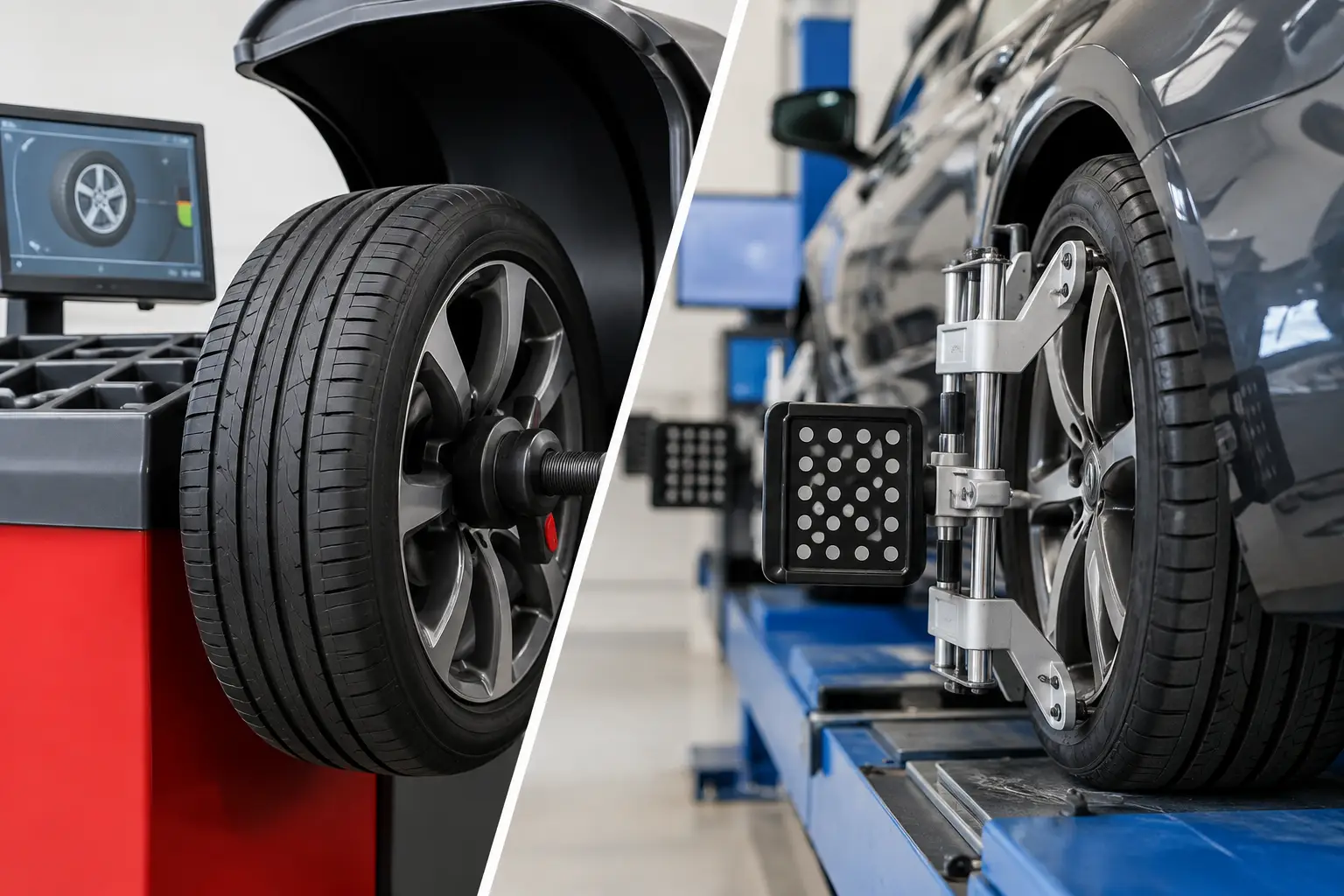
Think of tire balancing as making each wheel spin evenly. A tire and wheel may look perfectly round, but tiny differences in weight can cause one area to pull harder as it rotates. At higher speeds, that imbalance turns into vibration. A technician uses a balancing machine to identify where small counterweights are needed, then attaches weights to correct the imbalance.
Wheel alignment is about direction and geometry. Your vehicle’s suspension connects the wheels to the chassis at carefully specified angles. Potholes, curb contact, worn suspension parts, and normal road use can move those angles out of specification. An alignment technician measures and adjusts them so the tires point and sit correctly.
In simple terms, balancing addresses how a wheel rotates. Alignment addresses how the wheels travel down the road.
Signs Your Tires Need Balancing
The most common sign of an unbalanced tire is vibration that gets stronger as speed increases. You may feel it through the steering wheel, seat, or floor. Front-wheel imbalance often shows up in the steering wheel, while rear-wheel imbalance can be felt more through the vehicle body or seats.
Vibration does not always mean the wheels need balancing. A bent wheel, damaged tire, loose component, or suspension concern can produce a similar feeling. That is why a proper inspection matters, especially if the vibration began after hitting a pothole or curb.
Tire balancing is commonly needed after new tires are installed, a tire is repaired, a wheel is replaced, or a tire is remounted. It can also be worthwhile when a balance weight falls off. A clean, even balance helps reduce vibration and can prevent irregular wear caused by the tire bouncing against the road surface.
What a Balance Service Includes
A professional tire balance starts with mounting the wheel and tire assembly on calibrated equipment. The machine spins the assembly and measures where weight is unevenly distributed. The technician then installs the correct amount of weight in the proper locations and rechecks the result.
Good service also includes a visual check for tire damage, missing weights, bent rims, and signs of abnormal wear. If a tire cannot balance correctly, the answer may not be more weight. The wheel or tire may need further inspection.
Signs You Need a Wheel Alignment
Alignment problems often show up in the way a vehicle tracks and wears its tires. If you need to hold the steering wheel slightly off-center to drive straight, the vehicle pulls to one side on a level road, or the steering feels unsettled, an alignment check is a smart next step.
Uneven tire wear is another major clue. Excessive wear on the inner or outer edge of a tire can indicate an alignment issue, although incorrect tire pressure and worn suspension components can contribute as well. Feathering, where the tread feels smooth in one direction and sharp in the other, can also point to improper alignment angles.
A technician measures several angles, including toe, camber, and caster. Toe describes whether tires point slightly inward or outward. Camber is the inward or outward tilt of a wheel when viewed from the front. Caster affects steering stability and return-to-center feel. The right settings depend on your vehicle’s manufacturer specifications, not a one-size-fits-all adjustment.
Alignment Is Not Just a Steering Wheel Adjustment
Centering the steering wheel alone does not fix an alignment problem. Professional wheel alignment uses precision equipment to compare the vehicle’s current angles with factory specifications. The technician then makes the available adjustments and confirms that the steering wheel is centered when the vehicle tracks properly.
If worn tie rods, ball joints, control arm bushings, struts, or other suspension components are preventing accurate adjustment, those parts should be addressed first. An alignment performed around loose or damaged components may not hold, and it does not solve the underlying safety concern.
Can You Need Both Services at Once?
Yes. Tire balancing and wheel alignment solve separate problems, so it is possible to need both at the same visit. For example, you may install a new set of tires that requires balancing, then discover that the old tires wore unevenly because the alignment was out of specification.
The services are especially worth considering together after a significant pothole impact, curb strike, or suspension repair. A pothole can knock off a wheel weight, bend a rim, damage a tire, and affect alignment angles. The best repair depends on what an inspection finds.
For drivers who spend long hours commuting, driving for rideshare, or making deliveries, small handling issues can become expensive tire problems quickly. Correcting the cause early supports a smoother drive and helps you get more usable life from your tires.
How Often Should You Check Each Service?
Tires should be balanced whenever they are installed or remounted. Beyond that, schedule an inspection when you notice vibration, after a tire repair, or if a weight may have come loose. There is no need to balance tires on a fixed schedule if they are rotating smoothly and showing no symptoms.
Wheel alignment is often checked about once a year or whenever new tires are installed. However, the better rule is to pay attention to your vehicle. Book an alignment inspection sooner after a hard impact, suspension work, or any change in steering behavior or tire wear.
Regular tire rotations and pressure checks also make alignment and balance problems easier to spot. During a rotation, a technician can see tread patterns that may not be obvious when the tires are on the vehicle.
Why Delaying Service Costs More
Ignoring vibration can make every drive less comfortable, but the concern goes beyond comfort. Persistent vibration can add stress to tires, wheels, suspension components, and steering parts. It can also make it harder to notice when a more serious issue develops.
Driving with poor alignment can wear out a tire far earlier than expected. Once the tread is severely worn on one edge, an alignment cannot restore it. Replacing tires before their time is often far more costly than correcting alignment when the first warning signs appear.
There is also a safety factor. Tires are your vehicle’s only contact with the road. Even contact across the tread supports predictable handling, braking, and wet-weather traction. That matters for family vehicles, work trucks, and daily commuters alike.
What to Tell Your Technician
Clear details help a technician diagnose the problem efficiently. Mention when the issue occurs, whether it changes with speed, and whether it started after a specific impact or repair. For example, say whether the steering wheel shakes at 60 mph, the vehicle pulls only while braking, or the vibration began after a pothole.
Also mention any recent tire, wheel, or suspension work. These details help separate a likely balance concern from an alignment, tire, brake, or suspension issue. Honest diagnostics should identify what your vehicle needs and avoid recommending services that do not address the symptom.
Keep the Ride Smooth and the Tires Working Evenly
A balanced tire helps your vehicle roll without vibration. Proper alignment helps it track straight and protects the tread from uneven wear. If your drive has become shaky, crooked, or less confident than it should be, a timely inspection can provide clear answers before a small concern turns into a larger repair. JAK Tire Service Corp can inspect the condition of your tires, wheels, and suspension and recommend the right service with straightforward guidance and professional care.