

A vehicle that suddenly revs higher without gaining speed can make even a routine commute feel unsafe. Transmission slipping symptoms often start subtly, then become more noticeable during acceleration, hill climbing, merging, or stop-and-go traffic. Paying attention early can help prevent a smaller service issue from turning into a major transmission repair.
Your transmission transfers engine power to the wheels at the correct ratio for the speed and load of your vehicle. When it slips, that transfer is interrupted or delayed. The result may be poor acceleration, rough shifting, reduced fuel economy, or a vehicle that feels unpredictable when you need power most.
Common Transmission Slipping Symptoms
Slipping does not always feel the same from one vehicle to another. Automatic transmissions, manual transmissions, and continuously variable transmissions (CVTs) have different operating characteristics. Still, several warning signs should prompt a professional inspection.
Engine RPM rises but the vehicle does not accelerate normally
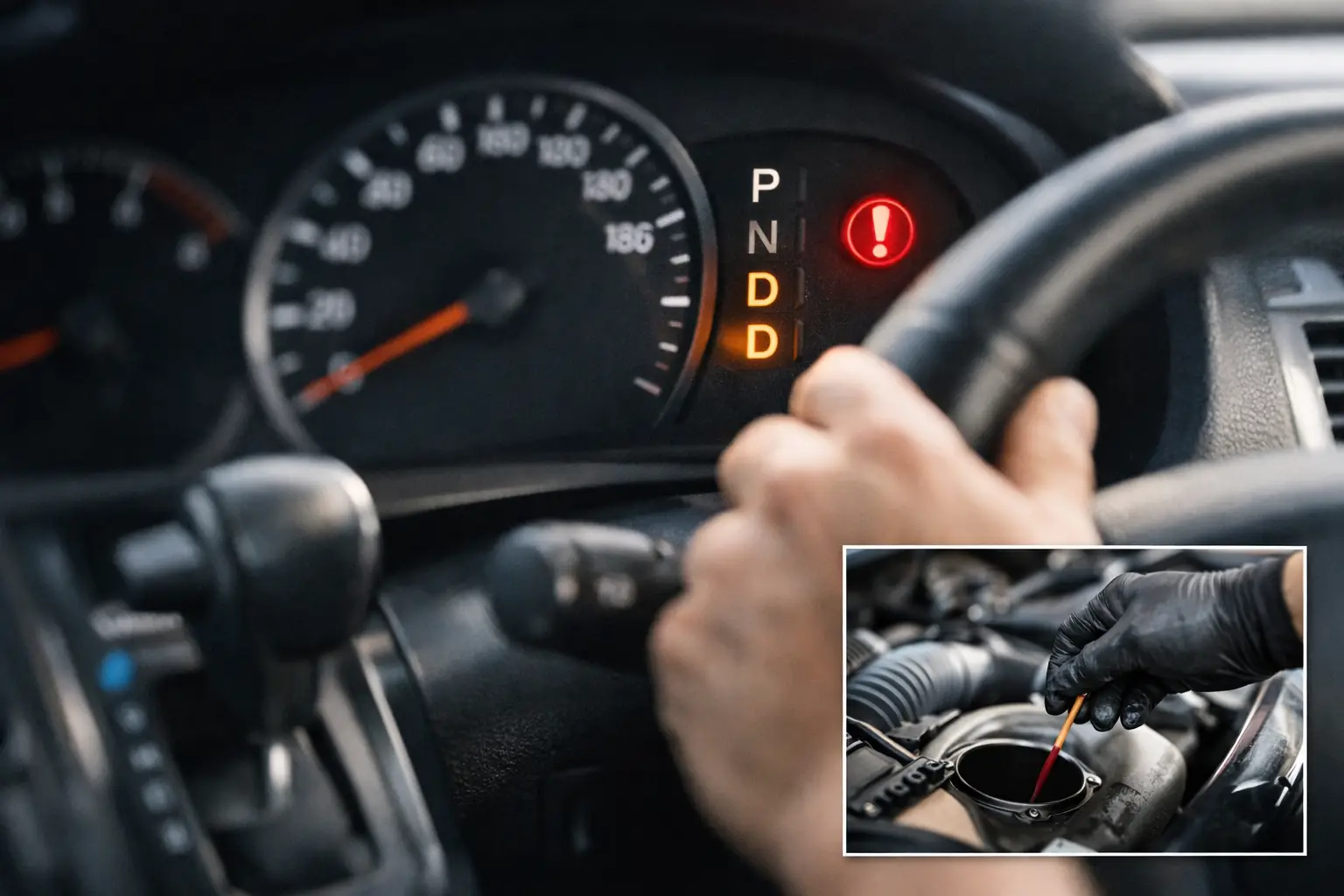
This is one of the clearest signs. You press the accelerator, the tachometer climbs, but the vehicle does not pick up speed as expected. It can feel similar to a car with a slipping clutch, even in an automatic vehicle.
You may notice this most clearly while entering a highway, passing another vehicle, carrying a load, or driving uphill. Do not assume the engine is the problem. A transmission that cannot hold the selected gear may allow RPM to flare without delivering the power you requested.
Delayed engagement when shifting into Drive or Reverse
A healthy transmission should engage promptly when you move the selector from Park into Drive or Reverse. A short, smooth pause can be normal in some vehicles, particularly in cold weather. A long delay, a harsh thump when the gear finally engages, or the need to press the accelerator before the vehicle moves is not normal.
This can point to low or degraded transmission fluid, an internal hydraulic pressure issue, worn components, or a control problem. Because delayed engagement can worsen quickly, it is worth having checked before the vehicle becomes difficult to maneuver safely.
Rough, inconsistent, or unexpected shifts
A slipping transmission may shift too early, too late, or seemingly at random. You may feel a shudder between gears, a flare in RPM during an upshift, or a hard bang as the transmission catches up. Some drivers describe the feeling as the vehicle briefly falling out of gear.
Not every rough shift means the transmission is failing. Engine misfires, worn mounts, software issues, and driveline problems can create similar sensations. Precision diagnostics matter because replacing transmission parts without confirming the cause can be expensive and unnecessary.
Burning smell, unusual noises, or fluid leaks
Transmission fluid helps cool and lubricate internal parts. When it is old, low, contaminated, or overheated, it can produce a sharp burning smell. You may also hear whining, humming, grinding, or clunking sounds that change with vehicle speed or gear selection.
Red or reddish-brown fluid beneath the vehicle may be transmission fluid, although fluid color varies by manufacturer and age. Fresh fluid is often red or amber, while badly worn fluid can look dark and smell burnt. Any suspected fluid leak deserves prompt attention because low fluid can accelerate internal damage.
Warning lights and reduced-power operation
Modern vehicles monitor transmission performance through sensors and control modules. A check engine light, transmission temperature warning, or message such as “Transmission Service Required” should never be ignored, even if the vehicle still drives.
Some vehicles enter a reduced-power or “limp” mode when the system detects a serious fault. The transmission may stay in one gear, limit acceleration, or refuse certain shifts to protect itself. Driving gently to a repair facility may be possible, but continuing regular use can make the problem worse.
What Causes a Transmission to Slip?
The cause depends on the transmission design, mileage, service history, and how the vehicle has been used. Low fluid is a common concern, especially when a seal, pan gasket, cooler line, or transmission housing is leaking. Fluid that is old or overheated may no longer provide the pressure and lubrication the transmission needs.
Internal wear is another possibility. Automatic transmissions use clutch packs, bands, valves, solenoids, and seals that can wear over time. A manual transmission can slip because its clutch disc, pressure plate, or hydraulic clutch system is worn. CVTs use a different design and may develop belt, pulley, fluid, or electronic-control issues that feel like slipping, shuddering, or surging.
Towing heavy loads, frequent city driving, repeated hard acceleration, overheating, and skipped maintenance can all shorten transmission life. That does not mean every high-mileage vehicle needs a replacement transmission. Some problems can be corrected with a leak repair, fluid service, solenoid replacement, software update, sensor repair, or valve body work. A proper inspection determines which path makes sense.
Can You Keep Driving With a Slipping Transmission?
It depends on the severity, but it is rarely a good idea to keep driving as usual. Mild symptoms may allow you to drive carefully to a shop, but hard shifting, loss of acceleration, a burning odor, loud noises, or a warning light require more caution. If the vehicle cannot maintain speed, lurches into gear, or feels unsafe in traffic, stop driving and arrange for assistance.
Continuing to drive while a transmission slips creates heat and friction. Those conditions can damage internal clutches and other components that might otherwise have been saved. For families, commuters, delivery drivers, and fleet vehicles, addressing the issue early can reduce downtime and help avoid a breakdown during a busy day.
Avoid towing, hauling, rapid acceleration, and long highway trips until the vehicle has been diagnosed. Do not add random fluid or use a stop-leak product without knowing the manufacturer’s requirements. The wrong fluid can cause shift problems, and additives may complicate an accurate diagnosis.
How a Professional Transmission Diagnosis Works
A reliable diagnosis starts with listening to the driver. When does the problem happen? Is it worse when cold, after a long drive, under load, or during a particular shift? Details such as these help narrow the possibilities.
A technician should then check for leaks, inspect fluid condition where applicable, scan the vehicle for fault codes, and road-test it when it is safe to do so. Depending on the vehicle and symptoms, further testing may include checking transmission pressure, electrical circuits, solenoid operation, mounts, axle components, or engine performance. The goal is clear answers, not guesswork.
At JAK Tire Service Corp, the practical approach is to identify the actual cause, explain the recommended repair in plain language, and help you understand the urgency. Some concerns need immediate attention; others can be scheduled with a clear plan. Honest advice and professional workmanship help you make the right decision for your vehicle and budget.
Preventing Future Transmission Problems
Follow your vehicle manufacturer’s maintenance schedule, including the correct transmission fluid service when it is recommended. Service intervals vary widely, so there is no one mileage rule that fits every vehicle. Some manufacturers call for regular fluid replacement, while others describe the fluid as long-life but still require inspection under severe driving conditions.
Check for leaks, keep the engine cooling system in good condition, and avoid exceeding towing limits. If your vehicle has started shifting differently, do not wait for a warning light to appear. Early changes in shift quality are often the best time to schedule an inspection.
A transmission should feel controlled and predictable, not hesitant, noisy, or uncertain. When something feels off, getting a professional opinion early can protect your safety, your schedule, and the long-term reliability of your vehicle.